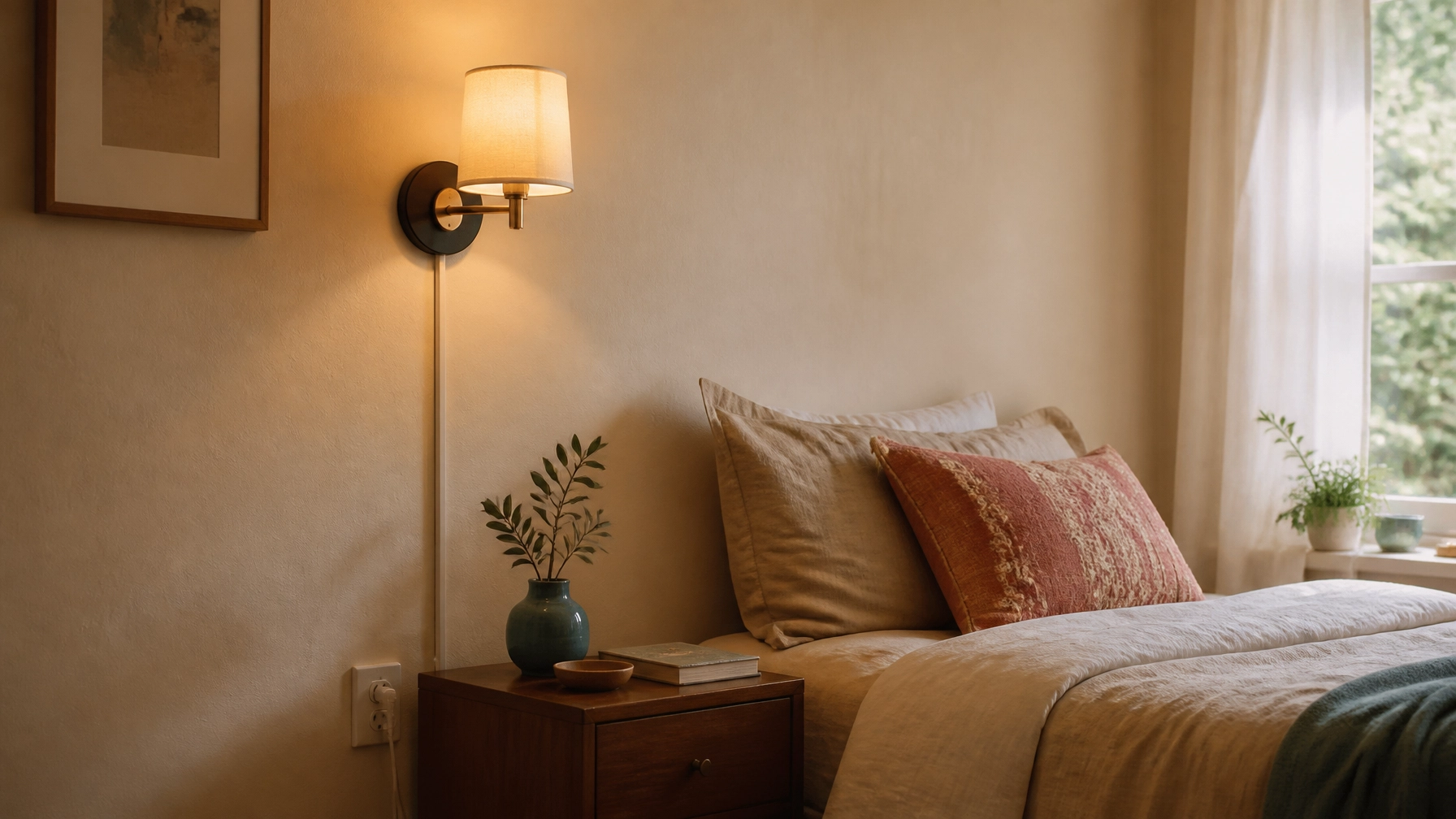
A plug-in wall sconce can solve a specific small-space problem: you want useful light near a bed, chair, desk, or hallway, but you do not want to sacrifice floor space for a lamp or begin a hardwiring project.
The catch is that “plug-in” describes how a fixture gets power: not necessarily how easy it is to install, hide, move, or live with. Most wall-mounted sconces still require screws or anchors, and every plug-in model has a cord that must reach an outlet somehow.
We researched currently listed sconces from manufacturers and major retailers, paying particular attention to dimensions, cord length, bulb flexibility, switch placement, adjustment, and the visual weight each fixture adds to a wall. The five below serve different needs rather than repeating the same design in slightly different finishes.
For the broader philosophy behind choosing useful improvements for a smaller home, see The Small Home Upgrades Worth Making. This guide is narrower: which specific plug-in wall sconces are worth considering, and when should you skip one altogether?
Disclosure: Some links in this guide are affiliate links. If you make a purchase through them, Things Well Chosen may earn a commission at no additional cost to you.
Our Quick Picks
- Globe Electric 1-Light Matte Brass Plug-In or Hardwire Wall Sconce with White Metal Shade : Best for most small rooms: A compact pivoting shade, E26 bulb, dimmable listing, and restrained mid-century shape make it unusually adaptable for the price.
- Kira Home Cambridge 15″ Swing Arm Wall Lamp : Best for reading: Its extended swing arm and adjustable shade give a chair- or bedside reader more control over where the light falls.
- Nathan James Millie Plugin Wall Sconce, Set of 2 : Best for paired bedside lighting: A coordinated set with cotton shades, brass backplates, replaceable E26 bulbs, and a cord-cover design.
- TRLIFE Wall Sconce Plug In, Dimmable Swing Arm, Two Arms : Best budget-conscious adjustable option: A low-priced dual-arm fixture with a six-foot cord, dimmer, and multiple adjustment points.
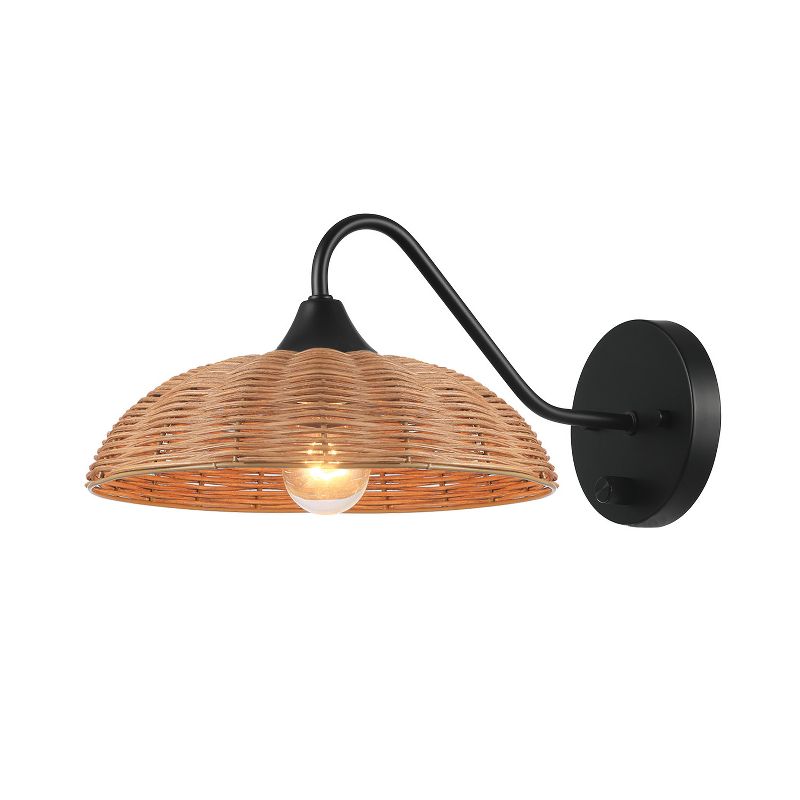
- Globe Electric 1-Light Matte Black Plug-In or Hardwire Wall Sconce with Blonde Paper Twine Shade : Best for a warmer decorative look: The paper-twine shade adds texture and softens the more utilitarian character of a typical metal plug-in sconce.
Prices and availability noted in this guide were checked on August 23, 2026, and may change.
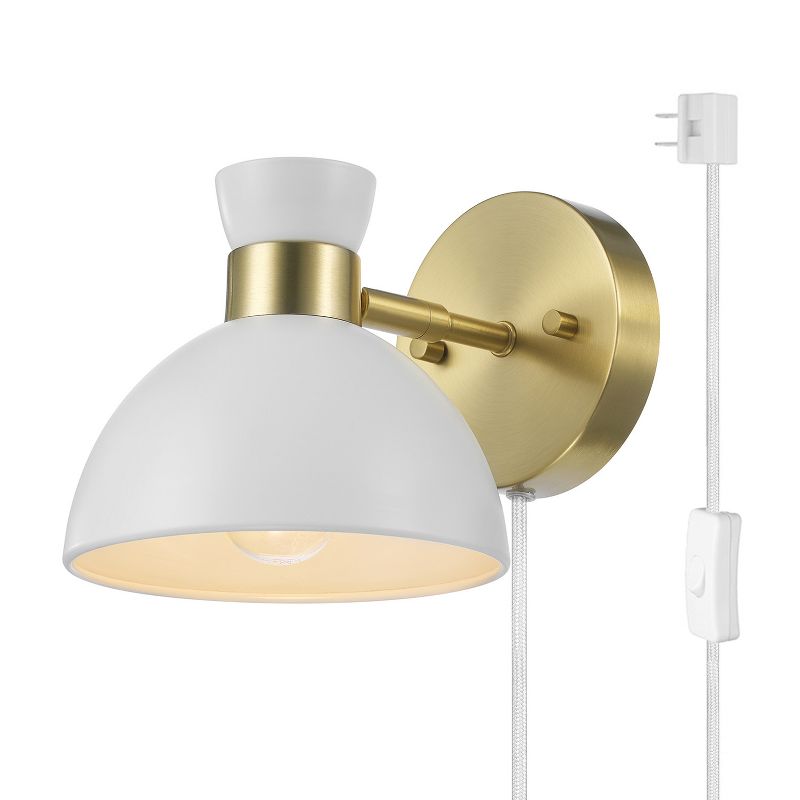
Globe Electric Matte Brass Wall Sconce: Best for Most Small Rooms
Why we selected it
This Globe Electric sconce has the most balanced combination of size, adjustability, bulb flexibility, and price among the products reviewed. Its white metal bell shade and matte brass finish have a clear mid-century influence without committing the room to a strongly decorative style.
The shade pivots, so it can provide more directed light beside a bed or reading chair while still looking appropriate in a hallway or small living room. It is also listed for either plug-in or hardwired installation, which gives homeowners a future option if they later remodel.
Best suited for
- Bedside lighting where the shade needs to angle toward a book
- Small living rooms where a floor lamp would crowd a walkway
- Narrow hallways that need a compact wall profile
- Renters who want a replaceable bulb rather than an integrated LED
Important details
- Overall dimensions listed by Target: approximately 6.5 inches high by 6.5 inches wide by 8.75 inches deep
- One E26 standard medium-base bulb
- Maximum 60 watts
- Compatible with LED and incandescent bulbs
- Pivoting metal shade
- Plug-in or hardwired installation
- Six-foot fabric-covered cord, according to the listed product specifications
- Mounting hardware and installation instructions are listed as included
- Target lists the fixture as dimmable
- Price checked: $38.49
What we like
The compact footprint is useful in rooms where a larger shade would compete with artwork, a headboard, or a nearby piece of furniture. The E26 socket also leaves you free to choose a warm decorative bulb, a more functional LED bulb, or a dimmable option suited to the room.
The pivoting shade is a meaningful feature rather than a decorative flourish. It allows the same sconce to work as a small task light or a softer accent light, depending on how it is aimed.
What to consider
The cord is still part of the installation. The plug-in configuration does not create a cordless appearance, and the six-foot length may be limiting if the nearest outlet sits low on an opposite wall. The shade is metal, so it may look more directional and less diffused than a fabric-shaded fixture.
Target lists an inline rocker switch on the cord. For bedside use, plan the cord route so the switch remains conveniently reachable.
Skip it if
You want a fabric shade, a long swing arm, or a switch that is clearly positioned on the fixture. In those cases, the Kira Cambridge or Nathan James Millie may be more suitable.
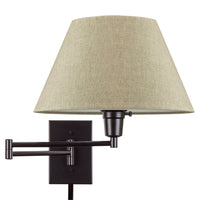
Kira Home Cambridge 15″ Swing Arm Wall Lamp: Best for Reading
Why we selected it
The Cambridge is the most function-oriented choice in this group. Its arm extends well beyond the wall, making it useful when the light needs to reach over a nightstand, desk, or reading chair rather than simply illuminate the wall nearby.
It can be plugged in or hardwired, and the official product page includes more installation information than many comparable listings. It is also listed as UL Listed for dry locations, with mounting hardware included.
Best suited for
- Bedside reading when the light needs to reach toward the reader
- A reading corner with limited floor space
- A home office where a desk lamp would take up working area
- Rooms where cord covers can be routed vertically toward an outlet
Important details
- Body: 13 inches wide by 25 inches deep by 14.5 inches high, according to Kira Home
- Shade: 7.5 inches high by 13 inches in diameter
- Backplate: 6 inches high by 4.25 inches wide
- Six-foot cord
- One medium-base bulb; bulb not included
- Compatible with LED, CFL, or incandescent bulbs
- Up to 150 watts is listed for traditional incandescent bulbs
- Two included 12-inch cord covers
- Adjustable swing arm
- Smart-plug and three-way-bulb compatible, according to the manufacturer
- UL Listed for dry locations
- Plug-in or hardwired installation
- Price checked: $79.99
What we like
The reach is its central advantage. A fixed sconce may look tidy but leave the light too far from the person using it. The Cambridge can be positioned closer to a chair or bed, which makes it a more logical choice for reading than a purely decorative wall light.
The replaceable bulb is another practical advantage. You can choose the bulb’s color temperature and brightness rather than accepting a built-in light source. Its three-way-bulb compatibility also offers a form of control without requiring a wall dimmer.
What to consider
Fully extended, this is not a small fixture. The listed 25-inch depth means it needs meaningful clearance from the wall, and the arm can visually project into a narrow walkway or over a nightstand. Its fabric shade and multiple joints also give it more visual weight than the compact Globe Electric sconce.
The six-foot cord may not be sufficient for every room. The included cord covers help organize the visible run, but they do not make it disappear. Kira lists a three-way bulb and smart-plug as compatible, but that is not the same as having a built-in bedside switch.
Skip it if
Your room is too narrow for a 25-inch extended projection, or you want a low-profile fixture for a hallway. The Cambridge is most useful when you will actually take advantage of its reach.
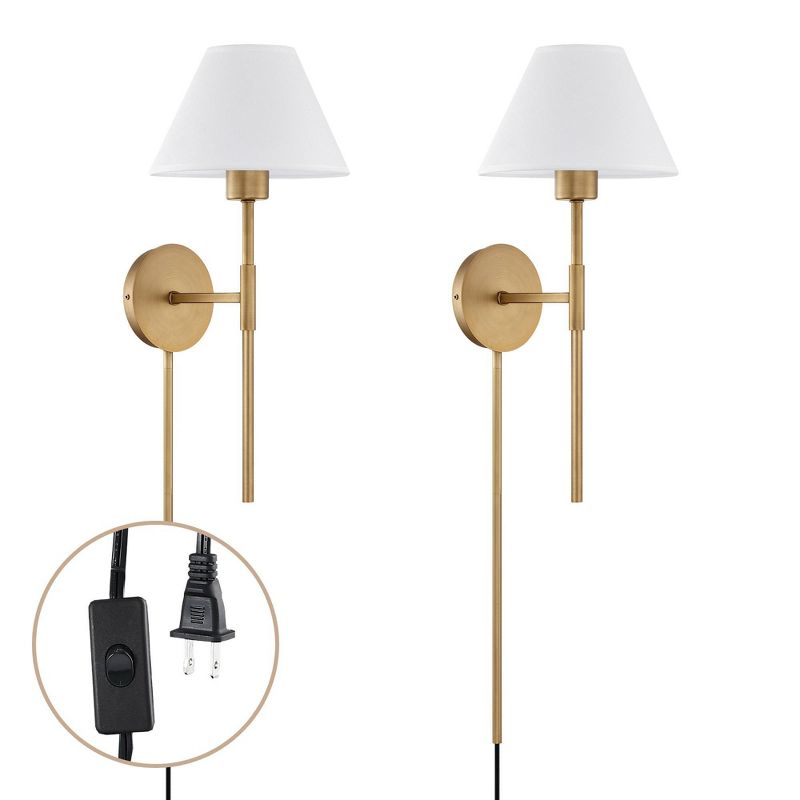
Nathan James Millie Plugin Wall Sconce: Best for Paired Bedside Lighting
Why we selected it
The Millie is sold as a set of two, which makes it a natural choice for either side of a bed or for two matching locations in a compact living space. Its white cotton shade and brass backplate are softer and more traditional than the Globe Electric metal sconces, while remaining relatively uncomplicated.
It is also a useful example of why buying a pair can make sense for a wall-mounted fixture: matching sconces are harder to source later, and small differences in height or finish are especially noticeable when installed on opposite sides of a bed.
Best suited for
- Two-sided bedside lighting
- A bedroom with a headboard wide enough to balance matching fixtures
- A living room with two reading chairs or a sofa and side chair
- Readers who prefer shaded, less exposed bulbs
Important details
- Set of two fixtures
- Listed dimensions: approximately 21 inches high by 9 inches wide by 10 inches deep
- Vintage brass metal backplate
- White linen or cotton shade, depending on the retailer’s product wording
- One E26 medium-base bulb per fixture
- Maximum 60 watts
- Dimmable when paired with a dimmable bulb, according to the listing
- Bulbs not included
- Plug-in or hardwired installation
- Cord cover included, according to the product description
- Exact cord length was not clearly stated in the accessible listing
- Price checked: $169.99 per set of two
What we like
The covered shade makes the fixture read more like a conventional room light and less like a utility lamp. That is useful beside a bed, where a bare metal shade can feel visually sharp or expose the bulb directly to the person lying down.
The set format also offers a coherent solution rather than requiring you to match two individual fixtures. Replaceable E26 bulbs keep the lighting flexible, and the option to use the sconces with or without wiring gives the product some long-term adaptability.
What to consider
The dimensions are substantial compared with the compact Globe Electric option. A 21-inch-high sconce can compete with a tall headboard, artwork, or wall-mounted television. Measure the full shade and backplate area against the bed before ordering rather than judging scale from the product photograph.
Target currently lists a 72-inch cord and an inline cord rocker switch. A cord cover can improve the appearance of the run, but you should confirm the actual route and control method before committing to a pair.
Skip it if
You need one small, directional light rather than two substantial shaded fixtures, or if your lease does not permit the wall modification required for mounting both sconces.
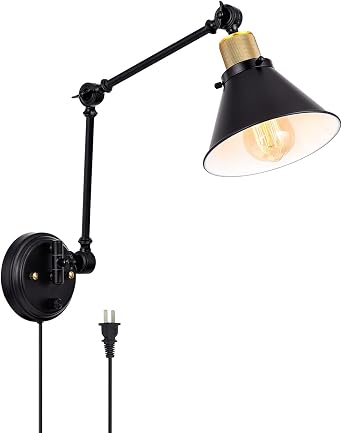
TRLIFE Two-Arm Dimmable Wall Sconce: Best Budget-Conscious Adjustable Option
Why we selected it
The TRLIFE offers the most adjustment at the lowest verified price in this guide. Its dual-arm structure can swing from side to side, and the product description lists multiple angle adjustments for the arms and shade.
That makes it practical for a desk, craft area, reading chair, or bedside position where the light may need to move. It is less restrained visually than the Globe Electric fixture, but its replaceable bulb and dimmer give it useful flexibility.
Best suited for
- A fixed desk or work surface
- A reading corner where directional control matters
- A small room where a low-cost pair of lights is appealing
- Readers who want a fixture-mounted dimmer rather than only a smart plug
Important details
- Metal construction
- Six-foot plug-in cord
- E26 bulb base
- Maximum 60 watts
- Dimmable with a compatible dimmable bulb
- Bulb not included
- Shade listed as 7 inches high by 8.5 inches wide
- Two arms listed as 11 inches each
- Base listed as 5.1 inches in diameter
- Two-arm swing capability
- Product description states that mounting hardware is included
- Product listing states that both plug-in and hardwired installation are possible
- UL-listed plug-in cord and socket are claimed in the product listing
- Dimmer knob on the backplate; the detailed description also references a button switch on the cord
- Price checked: $31.99
What we like
The E26 socket and dimmer are strong practical features at this price. You can select a bulb suited to the task, then adjust the fixture rather than relying on one fixed output.
The wide range of stated movement also gives it more potential uses than a fixed hallway sconce. For a desk or reading nook that will not be rearranged often, the ability to redirect the shade may be worth the more mechanical appearance.
What to consider
The product page contains several versions and dimensions, so confirm that you are selecting the two-arm, one-pack configuration described here. Switch information is also presented in more than one way, with a dimmer on the backplate and a cord switch referenced in the detailed description. That may be useful, but it is worth verifying the exact configuration before purchase.
The visible joints, black body, brass head, and exposed cord give this fixture an industrial character. It will not blend into every room, and the arm’s reach may be more visual bulk than you want beside a bed.
Skip it if
You care most about a quiet, design-forward silhouette or want a fixture with a clearly documented, easy-to-reach bedside switch. The Globe Electric or Nathan James options may be easier to integrate visually.
Globe Electric Paper Twine Wall Sconce: Best for a Warmer Decorative Look
Why we selected it
The paper-twine shade gives this Globe Electric model a different role from the others. It is less suited to precise reading light than a swing arm, but it brings texture and a warmer decorative presence to a small living room, bedroom, or hallway.
This is the kind of sconce to consider when the fixture itself is part of the room’s visual composition: not merely a way to get light onto a wall.
Best suited for
- Small living rooms with natural wood, linen, or woven accents
- Bedrooms where softer decorative lighting is more important than reach
- Hallways that need a visually interesting wall element
- Apartments where a wall-mounted fixture can replace a side table lamp
Important details
- Overall dimensions listed by Target: 6.63 inches high by 10 inches wide by 14.5 inches deep
- Matte black metal body
- Blonde paper-twine shade
- One E26 standard medium-base bulb
- Maximum 60 watts
- Compatible with LED and incandescent bulbs
- Plug-in or hardwired installation
- Six-foot cord listed in product specifications
- Mounting hardware and instructions listed as included
- Price checked: $58.99
What we like
The woven shade helps the corded fixture look considered rather than temporary. Its warm material also offsets the black metal, making it a better fit for rooms that already include wood, rattan, woven baskets, or textured textiles.
The standard bulb socket allows you to control the character of the light through the bulb you choose. A warm, dimmable LED bulb can make the fixture more suitable for evening use. Target lists no switch on the fixture, so confirm how you intend to control the light in your chosen plug-in or hardwired setup.
What to consider
The 14.5-inch projection is not insignificant in a narrow hallway or beside a small bed. Paper twine is also a more specialized material than a plain metal shade, so think about dust, cleaning, and whether the texture works with the rest of the room.
This is an ambient or decorative choice rather than the most precise reading light. If the fixture must illuminate a book or keyboard, a pivoting or swing-arm model will generally give you more control.
Skip it if
You need the smallest possible wall profile, direct task lighting, or an easy-to-reach built-in switch.
How to Choose a Plug-In Wall Sconce
Measure the cord route, not just the room
Before buying, measure from the intended mounting point to the outlet along the route the cord will actually take. Include the vertical distance down the wall, any horizontal path around furniture, and at least a little slack for routing.
A six-foot cord may work beside an outlet located directly below the sconce. It may not work if the outlet is behind a sofa, across a section of wall, or near the floor on the other side of a nightstand.
A plug-in fixture never creates a completely cordless look. You can use a cord cover, paintable raceway, adhesive clips, or deliberate cord routing, but the power path remains visible to some degree. Choose a fixture with a cord color and shade that will tolerate that reality.
Understand mounting and wall damage
Plug-in means no in-wall electrical work. It does not mean no holes.
Most true wall sconces attach to a mounting plate, backplate, or canopy with screws. Depending on the wall and the fixture’s weight, anchors may be necessary. That is different from:
- No electrical work: The fixture gets power from a standard outlet.
- Minimal wall modification: The fixture requires a limited number of screws or anchors.
- Damage-free mounting: The manufacturer specifically supports a mounting method designed to be removed without wall damage.
Do not call a conventional screw-mounted sconce damage-free simply because it plugs in. Check your lease, ask the landlord if needed, and plan for patching holes at move-out.
Choose directional or ambient light
A reading corner benefits from directional control. Look for a pivoting shade, adjustable head, swing arm, or a position that brings the light close to the book.
A hallway or decorative bedside fixture may be better served by a shade that softens the bulb and casts a gentler pool of light. A sconce intended mainly to add atmosphere does not need the same range of motion as a reading light.
Swing-arm versus fixed
Swing arms provide reach and adjustability, especially when the sconce is mounted beside a bed or chair. They can also add visual bulk, extend into a walkway, and include moving joints that must be adjusted or tightened.
Fixed sconces usually have a calmer profile and are better for narrow halls, artwork, or locations where the light only needs to point in one direction. The tradeoff is less flexibility if furniture moves or the fixture does not land where you expected.
Decide between replaceable bulbs and integrated LEDs
Replaceable bulbs offer flexibility. You can change the color temperature, choose a different shape, and replace the bulb without replacing the entire fixture.
Integrated LEDs can allow slimmer designs and fewer visible parts, but the fixture depends on its built-in light source. If the integrated light source eventually stops working, replacement may involve the fixture rather than simply a new bulb. Do not assume either format is automatically better; choose based on whether bulb flexibility or a slim silhouette matters more to you.
Check switch placement
Switch placement matters more at bedside than almost anywhere else.
- A switch on the fixture can be convenient if it is reachable without leaving bed.
- A cord switch may be easier to place at hand level, but it adds another visible element to the cord.
- An inline switch is located along the cord and may be hidden behind furniture.
- A smart plug can provide remote or app-based control, but it generally controls power rather than offering the same dimming function as a fixture-mounted dimmer.
A beautiful sconce with a switch behind a nightstand is not a well-suited bedside light. Confirm the control method before focusing on the finish.
Compare scale carefully
Measure the fixture against the bed width, headboard height, nightstand, hallway width, nearby artwork, and surrounding furniture.
A 21-inch-high sconce can dominate a narrow headboard. A 25-inch extended swing arm can project farther than expected into a walkway. A 6-inch metal shade may look larger or smaller in a product photograph depending on the camera angle and styling.
Use the listed height, width, and projection: not the product photograph: as your planning guide.
Are Plug-In Sconces Actually Good for Renters?
Sometimes.
They are useful when hardwired electrical work is prohibited, too expensive, or impractical. They can also be a good fit for a renter who is comfortable installing a few screws, routing a cord, and patching small holes later.
They are not automatically renter-friendly simply because they plug into an outlet. Before buying, consider:
- Whether your lease permits wall-mounted fixtures
- Whether screws or anchors are allowed
- How you will patch the wall at move-out
- Whether an outlet is close enough for the listed cord length
- Whether the cord can be routed without crossing a walkway
- Whether a freestanding lamp would be easier to move
- Whether the fixture’s size makes sense for your room
For some renters, a small table lamp or floor lamp remains the more flexible choice. The best plug-in sconce is not the one that avoids every installation issue; it is the one whose benefits justify the wall modification and visible cord.
Who Should Skip a Plug-In Sconce?
Skip one if:
- Visible cords will bother you every day
- There is no conveniently located outlet
- Your lease prohibits wall mounting
- You expect to rearrange furniture frequently
- You need whole-room illumination rather than local light
- A floor lamp or table lamp would offer more flexibility
- The intended wall has no sensible route for the cord
- You are choosing a sconce only because the room feels unfinished, without a specific lighting problem to solve
A plug-in sconce is a focused lighting tool. It is not a substitute for a ceiling fixture, and it should not be used to force light into a room that would be better served by a portable lamp.
The Things Well Chosen Recommendation
For most small rooms, the Globe Electric Matte Brass Wall Sconce is the most balanced choice. It is compact, uses a replaceable E26 bulb, has a pivoting shade, and offers a restrained shape at a relatively accessible price.
Choose the Kira Cambridge instead when reading reach matters more than a slim profile. Its extended swing arm earns the extra wall projection when it brings light closer to a chair or bed.
The Nathan James Millie makes more sense when you need a coordinated pair and prefer fabric shades. The TRLIFE is the value-oriented choice for a fixed desk or reading area where adjustability and a dimmer matter more than a quiet silhouette. Choose the Globe Electric Paper Twine model when texture and ambient character are the main reasons for adding a wall light.
Before ordering, measure the cord path, mark the fixture’s actual dimensions on the wall with painter’s tape, and confirm your lease permits the mounting method. If those checks make the project feel more complicated than the lighting problem deserves, a normal lamp may be the better choice.