Category: Pets

  • Best Dog Beds for Living Rooms That Don’t Look Like Dog Beds

    Best Dog Beds for Living Rooms That Don’t Look Like Dog Beds

    The dog bed usually ends up in the corner, behind the sofa, or in a back room, not because your dog does not deserve a comfortable place to sleep, but because the bed looks like pet gear.

    The best dog beds for living rooms solve a more specific problem: they need to look intentional in the room, fit the dog properly, and survive daily use. Those requirements do not always align. The beds that look most like furniture can be the hardest to clean, while the easiest beds to wash are often the ones you would rather hide.

    These recommendations are research-based, using published product specifications and care instructions. We did not personally test or use these beds. Confirm the selected size and care label before ordering.

    Things Well Chosen may earn a commission from qualifying purchases made through links in this guide, at no additional cost to you.

    What matters in a living-room dog bed

    A stylish dog bed is still a dog bed. Appearance matters, but it should come after fit, support, cleanability, and the realities of how your dog lives.

    Start with sleeping style, not breed

    Measure your dog while they are lying down, then consider how they actually sleep.

    A dog who curls into a tight ball may prefer bolsters or a chaise-style bed with a protected corner. A sprawler needs a generous open surface, even if they only use every inch occasionally. A bed that looks perfectly proportioned in a product photograph can feel cramped once your dog turns, stretches, or rests their head on the edge.

    Do not rely on weight recommendations alone. Compare the usable sleeping surface, not just the outside dimensions, to your dog’s length and preferred posture.

    Look beyond “washable”

    “Machine-washable cover” usually means the cover can be removed and washed. It does not mean the foam or bolster inserts can go in the washing machine.

    For everyday living-room use, check:

    • Whether the cover is fully removable or only partially removable
    • Whether the insert has a water-resistant or waterproof liner
    • Whether the foam must be spot-cleaned
    • Whether replacement covers are available
    • Whether the care instructions require air-drying or low heat

    A waterproof liner is particularly useful for drool, damp paws, and occasional accidents. It is not a substitute for a washable cover, and some beds protect only the sleeping surface, not the bolsters or side panels.

    Pay attention to what happens after the photograph

    Plush faux fur, velvet, and soft fleece can look inviting, but they also reveal hair, hold odors, or become matted with frequent use. Dark suede-like fabric may blend beautifully with charcoal furniture while making pale hair obvious. Light upholstery can look calm and sophisticated but require more frequent vacuuming.

    The question is not whether a bed looks good on day one. It is whether the fabric will still look acceptable after hair, drool, digging, washing, and daily naps.

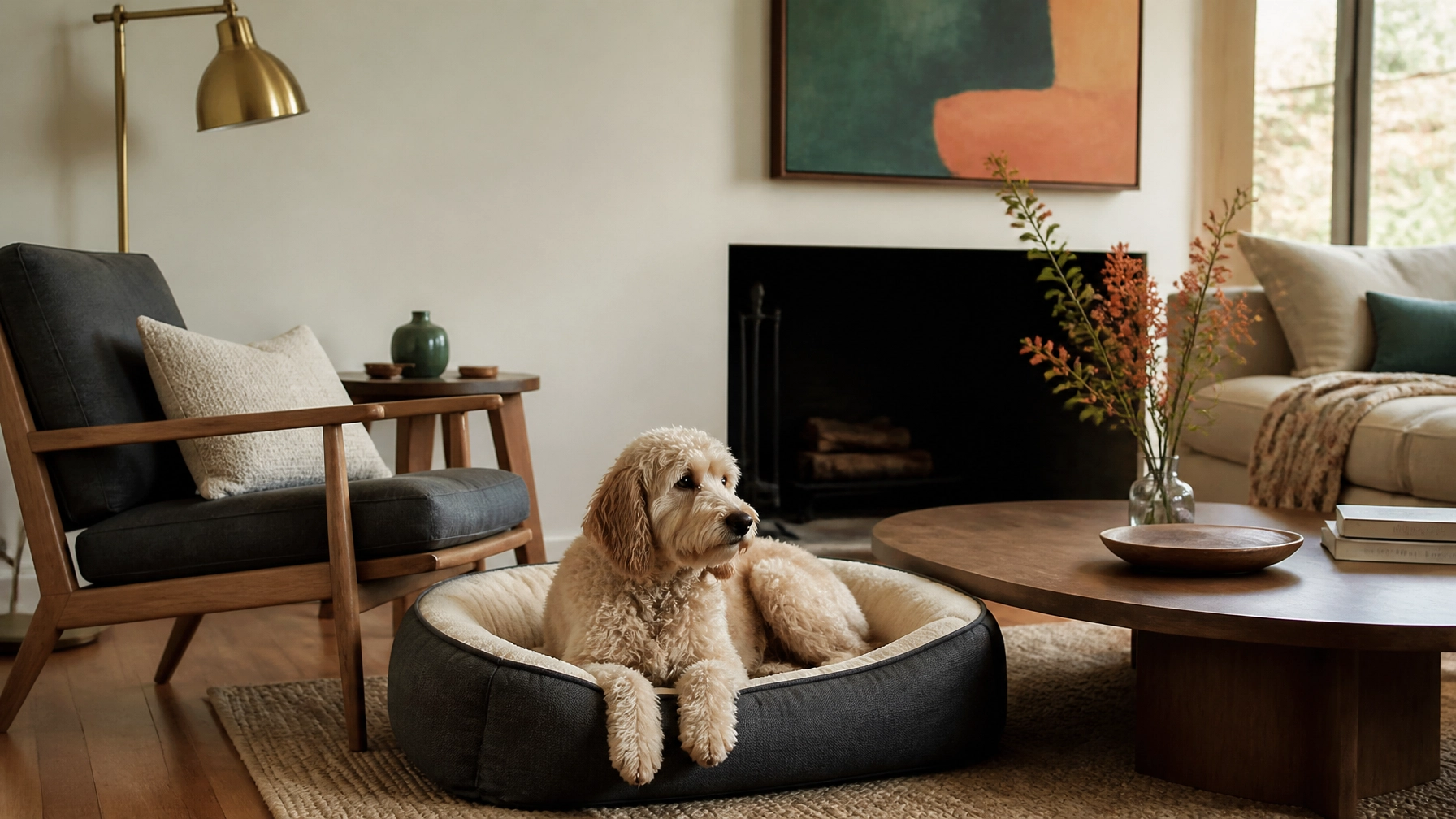
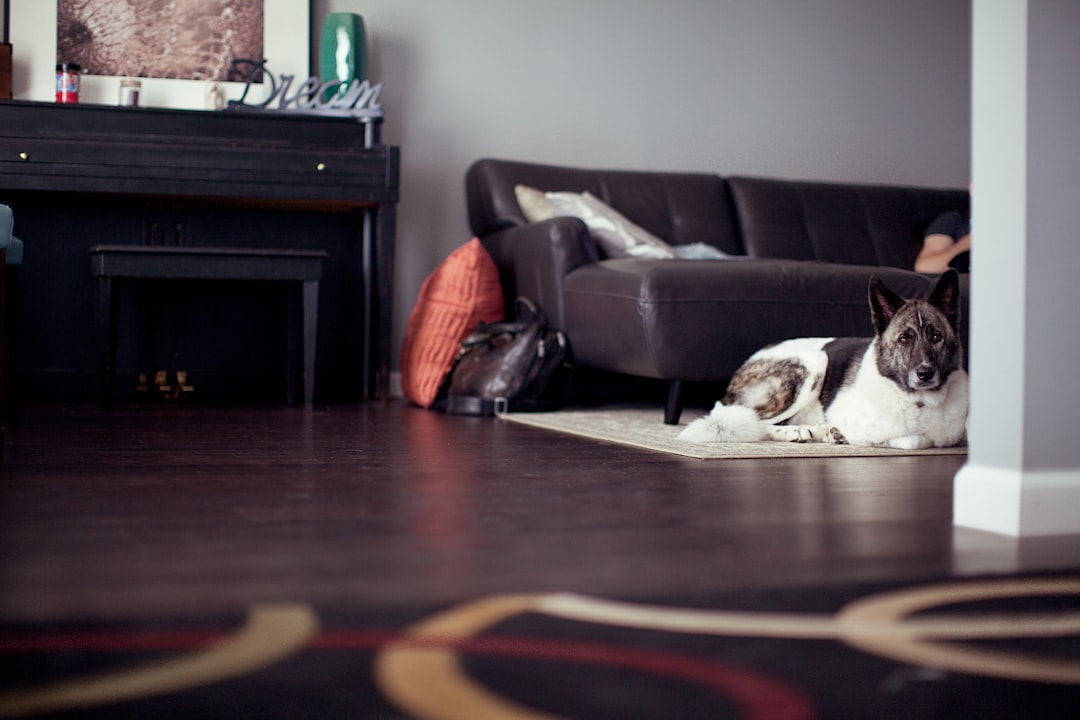
    Dog resting on a bed in a shared indoor space, illustrating how a dedicated resting space works
    Dog-bed placement inspiration—not a photograph of the products recommended below. Photo: Brett Wharton / Unsplash.

    Five stylish dog beds worth considering

    Availability notes below reflect product listings as they appeared at the time of writing and may change.

    Best furniture-like design: Friends Forever Chester Sofa Dog Bed

    Check current sizes and availability on Amazon

    The Friends Forever Chester is one of the clearest examples of a dog bed designed to read as a small piece of furniture. Its raised, sofa-like shape and pewter-gray suede cover are more at home beside a sofa than a brightly patterned pet cushion.

    The Chester offers a foam mattress, plush raised bolsters, a water-resistant liner, and a removable machine-washable cover. The 36-by-28-by-9-inch version has a usable sleeping surface of approximately 27 by 24 inches. Match the sleeping dimensions to your dog rather than relying on size labels.

    Best for: A dog who likes to rest their head on a bolster and a living room that needs a bed with some visual structure.

    What to consider: The raised sides create a more substantial footprint than a flat mat. It may also be less convenient for a dog who has difficulty stepping over edges. The darker gray upholstery can show light-colored hair.

    Best for large dogs: Furhaven Classic Quilted Sofa, Jumbo Plus

    Check current sizes and availability on Amazon

    Large dogs are often where stylish dog beds become impractical. A bed may look furniture-like in a small or medium size but become flimsy, cramped, or oversized in the dimensions a large dog actually needs.

    The Furhaven Classic Quilted Sofa is available in a Jumbo Plus size measuring 53 by 40 by 9.5 inches, with a usable sleeping surface of approximately 41 by 34 inches and a listed weight guideline of up to 125 pounds. It combines a broad open sleeping surface with three-sided bolsters, a quilted polyester cover, and an orthopedic foam base. The cover is removable and machine washable, and replacement covers for the Jumbo Plus model are listed separately.

    Best for: Large dogs who sprawl, lean against a bolster, or need a bed substantial enough to support their full body.

    What to consider: This is a very large bed. Measure the available floor area before ordering, and leave enough room around it for people to walk comfortably. In a smaller living room, it may become the dominant piece of soft furniture rather than a subtle addition.

    Best for everyday cleanup: EHEYCIGA Orthopedic Dog Bed with Sides

    Check current sizes and availability on Amazon

    If your dog regularly tracks in moisture, drools, or treats their bed as an outdoor-to-indoor landing pad, cleanability should carry more weight than a polished photograph.

    The EHEYCIGA bed uses memory foam and egg-crate foam, with three-sided bolsters and a removable machine-washable cover. The listing describes a waterproof film between the fleece sleeping surface and the lower fabric. It also notes an important limitation: the faux-linen sides are not waterproof.

    A version around 36 by 27 inches is a useful middle ground for medium and larger dogs without taking over the room. Multiple sizes and neutral colors are available.

    Best for: Dogs who need a washable, supportive sofa-style bed for everyday use.

    What to consider: The waterproof protection is not uniform across the entire bed. If your dog drools heavily onto the bolsters or has frequent accidents, inspect the construction closely and consider an additional washable layer.

    Best low-profile design: IHAPPYDOG Faux Fur Orthopedic Dog Bed

    Check current sizes and availability on Amazon

    Some living rooms do not have space for a sofa-style dog bed. The IHAPPYDOG Faux Fur Orthopedic Dog Bed takes a different approach: it is a low-profile mat designed to look more like a decorative rug than a pet bed.

    The medium model measures 40 by 25 inches and uses a memory-foam base, a waterproof liner, and a removable machine-washable faux-fur cover. Its low entry is useful for senior dogs or dogs who do not like stepping over raised edges.

    Best for: Smaller and medium-sized dogs, low-profile rooms, and owners who prefer a bed that visually recedes into the space.

    What to consider: It does not provide the raised edge support of a substantial sofa bed. The white faux fur will also require more maintenance if your dog sheds heavily, digs, or comes in from wet ground.

    Best accessible sofa-style option: Furhaven Plush & Suede Sofa, Jumbo

    Check current sizes and availability on Amazon

    The Furhaven Plush & Suede Sofa offers the visual language of a small couch without the weight or rigid construction of a framed pet sofa. Its espresso faux-fur and suede combination is especially easy to place beside brown, camel, charcoal, or walnut furniture.

    The Jumbo model measures 40 by 32 by 8 inches and is listed for dogs up to 95 pounds. It has an egg-crate orthopedic foam base, three-sided bolsters, and a removable machine-washable cover. The foam and bolsters are not machine washable, so the cover is the part that can be routinely laundered.

    Best for: Owners who want a traditional sofa-style bed with removable upholstery, especially for dogs who curl or lean.

    What to consider: The soft sleep surface is attractive but may collect hair and show wear more readily than a tightly woven performance fabric. It is also not intended for dogs with destructive chewing habits.

    What we would skip

    Some dog beds are best left out of the living room, or skipped altogether.

    • Fixed, non-washable covers: A bed that cannot be opened is difficult to keep fresh, particularly when the foam absorbs moisture and odor.
    • Oversized beds that consume the room: Your dog needs enough space to sleep comfortably, not a mattress that eliminates the room’s walking paths.
    • Loose shredded-foam fills without lasting support: Fluffy fill can look generous at first and flatten or clump unevenly with use.
    • Aesthetic-first beds with no replacement covers: If the cover wears out or a zipper fails, the entire bed may become disposable.
    • Beds sized for the dog’s weight but not their posture: A dog who sleeps stretched out may outgrow the usable surface long before reaching the listed weight limit.

    A practical decision framework

    Before choosing among stylish dog beds for living rooms, measure both the dog and the room.

    1. Measure your dog lying down. Record the length from nose to tail base and the width across the shoulders or hips. Add several inches if your dog sprawls.
    2. Measure the actual floor area. Include clearance for walking, furniture doors, vents, and the direction your dog enters the bed.
    3. Check the usable sleeping surface. Bolsters can reduce the interior space considerably.
    4. Read the care section, not just the feature bullets. Confirm exactly what can be washed, what must be spot-cleaned, and whether the liner protects the whole insert.
    5. Search for replacement covers before purchasing. Their availability can matter more than a slightly nicer fabric.
    6. Match the material to your dog. Consider hair color, drool, digging, wet paws, chewing, and how often you are realistically willing to wash the cover.
    7. Decide what “worth it” means for your home. A prettier bed may be worthwhile if it means the bed can stay in the living room and your dog will use it. But if the fabric will frustrate you every week, a simpler, washable design may be the better choice.

    The right living-room dog bed is not necessarily the most decorative one. It is the one that fits your dog’s real sleeping posture, earns its footprint, and looks good enough that you are willing to keep it where your dog actually wants to be.

    For more considered pet upgrades, see our guide to dog bowls that don’t look like pet gear and our roundup of pet-friendly finds that blend into the home. You can also browse the Things Well Chosen Pets category.

    Featured photograph: Florian Schindler on Unsplash.
  • Where Should You Put a Dog Bed in a Well-Designed Living Room?

    Where Should You Put a Dog Bed in a Well-Designed Living Room?

    A dog bed fails in two ways: when the dog does not want to use it, and when the room looks worse because it is there. Placement can solve both.

    The goal is not to hide the bed. It is to give it a place that feels intentional—somewhere your dog naturally wants to settle and somewhere the bed reads as part of the room rather than something temporarily dropped into it.

    Dog resting in a stylish living room

    Photo by Jenny Marvin via Unsplash.

    Start with where your dog already chooses to sleep

    Before moving furniture or choosing a corner, watch your dog for a few days. Most dogs already tell you where they want their resting place to be. They may gravitate toward the end of the sofa, the edge of a rug, a spot near your favorite chair, or a place where they can see both the room and the hallway.

    That behavior matters more than an abstract decorating rule. A beautifully placed bed that your dog ignores is not actually well placed. Start with the dog’s preferred zone, then refine the exact position so it works visually.

    Treat the bed like a small piece of furniture

    The easiest way to make a dog bed look intentional is to stop treating it like an accessory that needs to disappear. Think of it as an ottoman, side chair, floor cushion, or small bench. It needs a relationship to the other furniture around it.

    A bed usually looks best when one edge aligns with something already in the room: the front of a sofa, the edge of a rug, the side of a console, or the line created by a pair of chairs. Those quiet alignments make the placement feel deliberate even when nobody consciously notices them.

    The best living-room positions

    Beside the sofa is often the strongest choice. Your dog stays close to the household, the bed feels connected to the main seating group, and an attractive bed can read almost like an extension of the furniture arrangement.

    At the end of a sofa or sectional works particularly well in rooms where the seating floats away from the wall. It gives the dog a defined place without interrupting the central conversation area.

    Near a window can be ideal for dogs that like daylight and watching the world outside, provided the location is not excessively hot, drafty, or exposed to constant foot traffic.

    Against a console or low cabinet works when you need the bed slightly outside the main seating group. The furniture behind it creates a visual boundary and can make the bed feel anchored rather than stranded in open floor space.

    Avoid the traffic lane

    Dogs generally want to be near activity without being in the middle of it. Avoid the path between the sofa and kitchen, the main route to a patio door, and narrow passages where feet constantly pass within inches of the bed.

    A useful test is simple: if you have to step around the bed several times a day, it is probably in the wrong spot. Shift it just outside the circulation path while preserving the dog’s view of the room.

    Use the rug as a visual anchor

    If your living room has a large area rug, use it to organize the dog’s space too. A bed can sit entirely on the rug, touch its edge, or align with it. What tends to look awkward is a bed floating a few inches away from every other visual element in the room.

    For elevated dog sofas and furniture-style beds, placement beside the rug can work especially well because the raised frame already gives the piece enough visual weight to stand on its own.

    Choose a bed that can survive being seen

    Placement only gets you so far. If the bed is going to live in the open, its shape, materials, color, and scale matter. Neutral upholstery, wood tones that relate to the rest of the room, restrained silhouettes, and furniture-like proportions are much easier to integrate than oversized beds with bright technical fabrics.

    This is why we like the idea behind the Scandi Lounge from Gator & Phoebs: its bentwood frame and upholstered cushion make it read more like a small piece of living-room furniture than conventional pet gear. For smaller spaces or dogs that prefer a more enclosed curve, the Crescent Lounge is the more compact alternative.

    A final placement rule

    Give your dog a place in the room, not a place outside it. The best location lets them stay connected to the household while remaining comfortably out of the traffic flow. If the bed is attractive enough to belong there, you no longer need to choose between a room that looks finished and a dog that has a place of their own.

    Disclosure: Gator & Phoebs is a related brand to Things Well Chosen. We recommend products because they fit the editorial purpose of the guide, and that relationship does not change the price you pay.

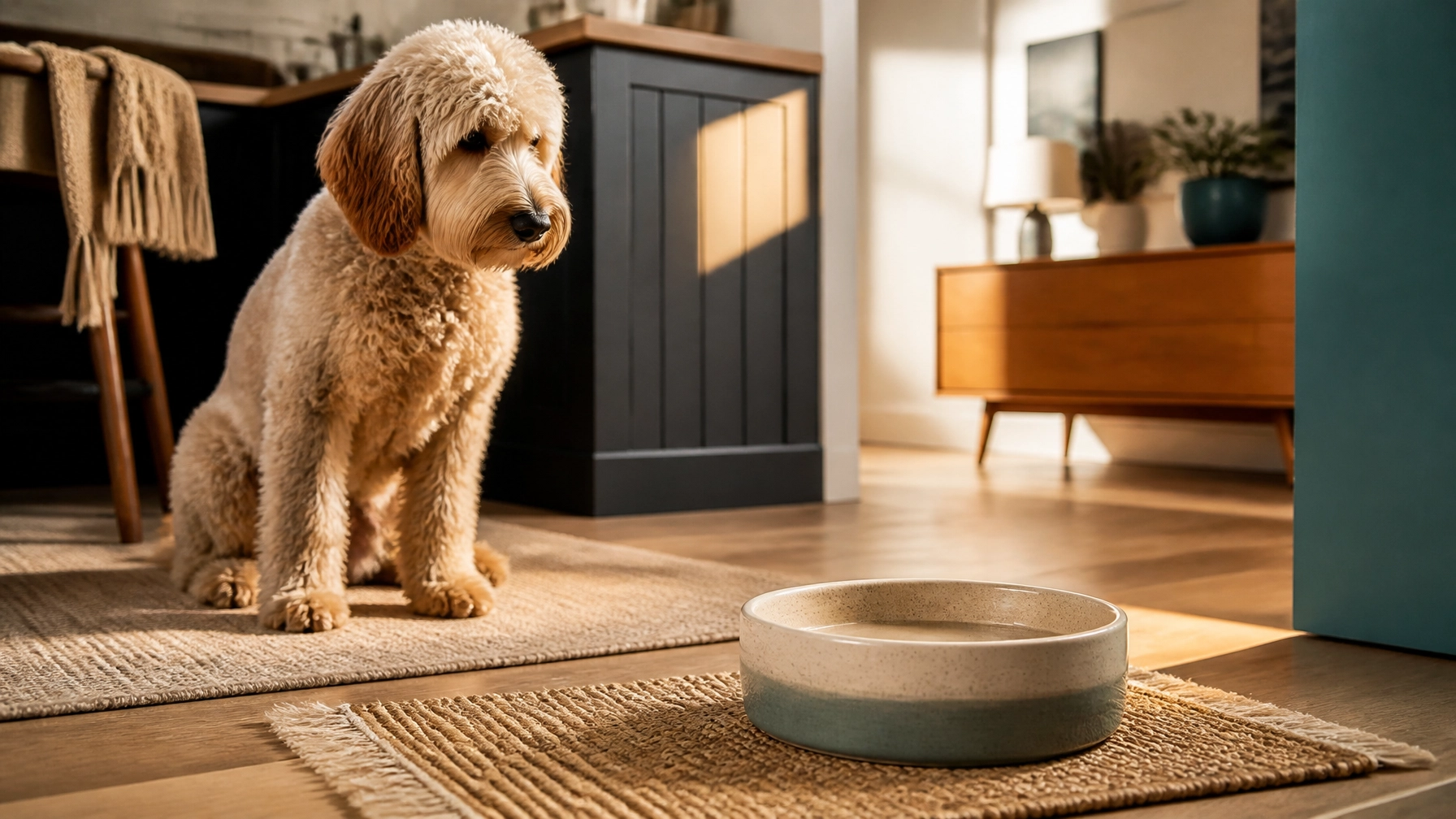
  • Best Dog Bowls That Don’t Look Like Pet Gear

    Best Dog Bowls That Don’t Look Like Pet Gear

    A dog bowl earns its place in the home by doing two things well: serving the dog comfortably and making daily cleanup manageable. Looking good is valuable, particularly when the bowl lives in the kitchen or an adjoining living space, but appearance cannot compensate for an awkward size, unstable base, or irritating care routine.

    We researched a selective group of ceramic, stoneware, elevated, handmade, and stainless-steel bowls. This is not a list of every attractive bowl available. It is a shorter guide to the options that offer a meaningful combination of function and considered design.

    For the broader philosophy behind choosing pet products that work within a real home, see Pet-Friendly Finds That Don’t Look Like Pet Gear. This guide focuses more narrowly on the buying decision: which bowls are actually worth considering?

    Disclosure: This article contains affiliate links. As an Amazon Associate, Things Well Chosen earns from qualifying purchases at no additional cost to you.

    Our Shortlist

    • Best practical option for larger meals or water: YETI Boomer 8 Dog Bowl
    • Best elevated design option: Gator & Phoebs Elevated Stoneware Pet Bowl
    • Best low-profile, design-forward bowl: Gator & Phoebs Marbled Ceramic Bowl – Brown & White
    • Best handmade option with a moderate footprint: Gator & Phoebs Handmade Ceramic Dog Bowl
    • Best colorful elevated ceramic option: Waggo Uplift Bowl
    • Best weighted ceramic option: Fable Bowl

    Editor’s note: Gator & Phoebs is a related business to Things Well Chosen. Its products are included only when they meet the same criteria we apply to every recommendation in this guide.

    Quick Comparison

    ProductBest forMaterialSize/capacityDishwasher safe?Elevated?Main tradeoff
    YETI Boomer 8 Dog BowlLarge-capacity food or water18/8 stainless steel8 cups / 64 oz; 8″ wide × 3.5″ highYesNoPractical and durable, but visually more utilitarian
    Gator & Phoebs Elevated Stoneware Pet BowlA raised bowl with a quiet homeware lookStonewareSmall: 2 cups, 5.25″ diameter × 2″ high; Medium: 4 cups, 6.5″ × 2.75″; Large: 8 cups, 8.5″ × 3.25″YesYesAdds bulk and was marked sold out at the time of research
    Gator & Phoebs Marbled Ceramic Bowl – Brown & WhiteA low, wide bowl for a design-conscious roomHigh-fire stonewareApproximately 9.5″ × 1.5″Yes; hand washing recommended to prolong finishNoLow profile may not suit every dog or meal size
    Gator & Phoebs Handmade Ceramic Dog BowlHandmade character and a moderate footprintCeramic7.5″ diameter × 2.5″ high; capacity not verifiedYes; hand washing recommended for longevityNoCapacity and stability features are not verified
    Waggo Uplift BowlColor and a lifted ceramic profileHand-dipped ceramicSmall, medium, and large; exact dimensions not verifiedYesYesHeavyweight ceramic is less convenient to move or travel with
    Fable BowlA weighted, easy-care ceramic bowlCeramicS/M: 4 cups, 6 inches diameter × 2.5 inches high; L/XL: 9 cups, 8.5 inches diameter × 3.5 inches highYesNoLarger size has a substantial footprint

    1. YETI Boomer 8 Dog Bowl: Best for Practical Everyday Function

    The YETI Boomer 8 is the most straightforward choice in this group. It does not try to look like pottery or furniture, but it solves several everyday problems cleanly: large capacity, easy washing, and durable stainless-steel construction.

    The bowl is made from 18/8 stainless steel and holds 8 cups, or 64 ounces. It measures 8 inches wide by 3.5 inches high. YETI states that it is dishwasher safe, food safe, BPA-free, rust-resistant, and puncture-resistant. The manufacturer also lists a five-year limited warranty.

    Why it made the shortlist

    This is the bowl to consider when usefulness matters more than decorative presence. Its capacity makes it suitable for larger dogs, generous water needs, or households that would rather not refill a small water bowl repeatedly. Stainless steel is also a practical material for people who want a bowl that can be washed frequently without worrying about ceramic glaze or breakage.

    Best suited for

    • Larger dogs or households that need substantial capacity
    • Food, water, or treats
    • Owners who prioritize easy cleaning and durability
    • Outdoor or utility areas where a more functional appearance is acceptable

    What to consider

    The Boomer 8 is wide and relatively tall, so it may occupy more visual and physical space than expected. It can feel oversized for a small dog, a narrow kitchen corner, or a feeding mat designed for compact bowls. Its stainless-steel appearance is also more obviously pet-oriented than the ceramic options here.

    Skip it if: You want the bowl to read as handmade pottery, need something for a very small dog, or have limited room beside an appliance, wall, or cabinet.

    2. Gator & Phoebs Elevated Stoneware Pet Bowl: Best Elevated Design Option

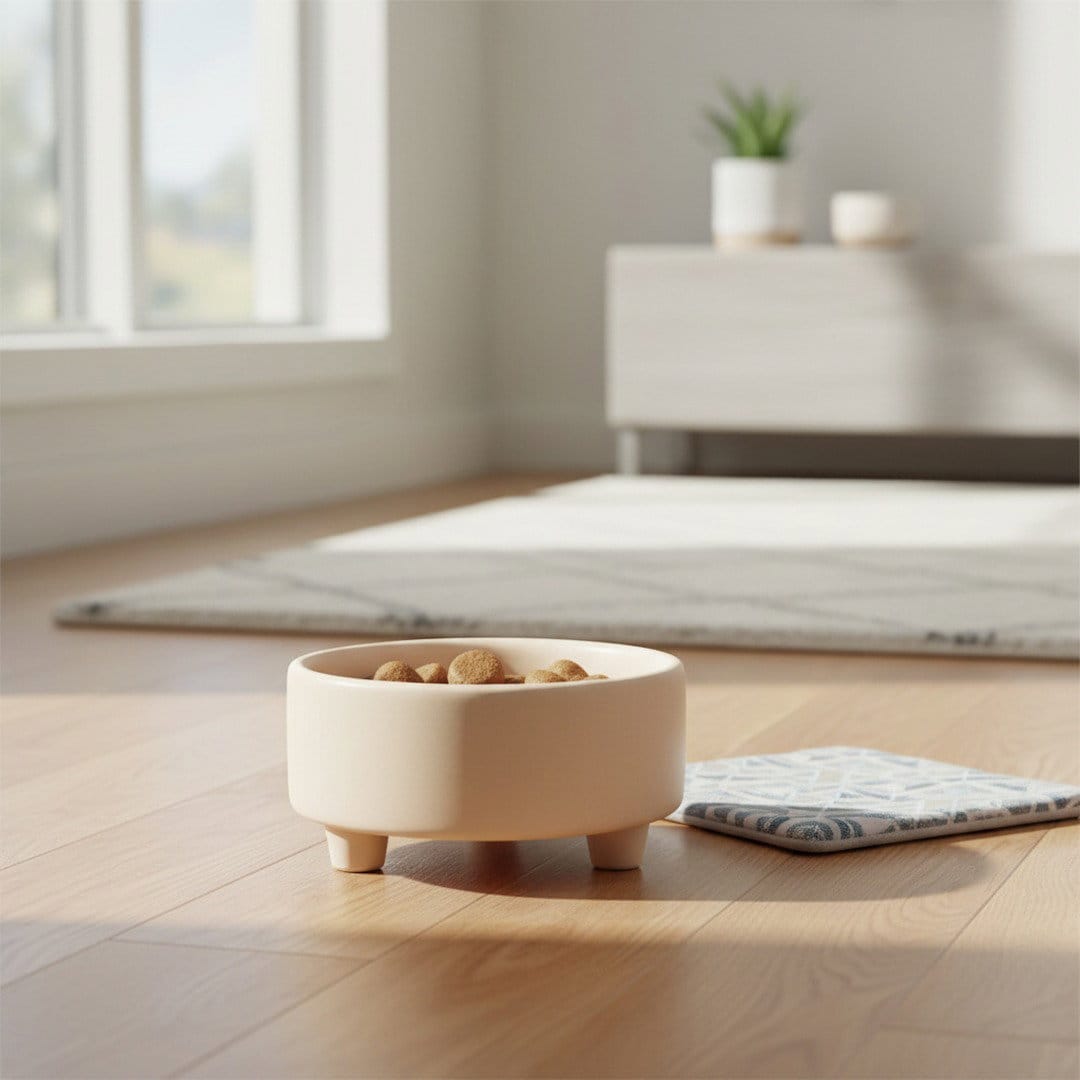
    Gator & Phoebs Elevated Stoneware Pet Bowl in a warm neutral interior

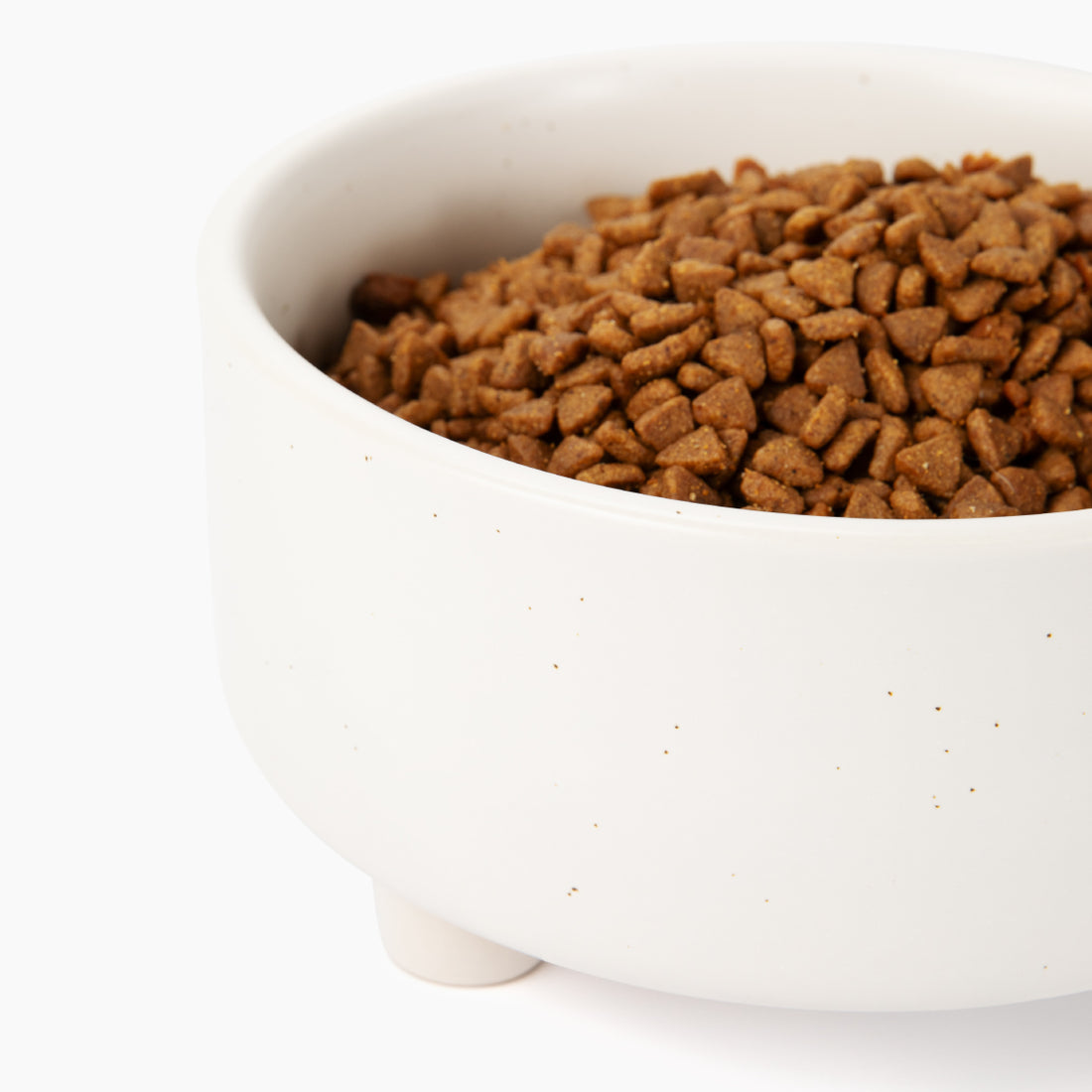
    The Elevated Stoneware Pet Bowl is the strongest Gator & Phoebs option for readers specifically seeking a raised bowl. Its design is more restrained than many elevated feeders, and its weighted stoneware construction gives it a grounded appearance rather than the look of a lightweight accessory.

    Three sizes are listed:

    • Small: 2-cup capacity, 5.25-inch diameter, 2-inch height
    • Medium: 4-cup capacity, 6.5-inch diameter, 2.75-inch height
    • Large: 8-cup capacity, 8.5-inch diameter, 3.25-inch height

    The manufacturer describes the construction as weighted and says the bowl is dishwasher safe. The Elevated Stoneware Pet Bowl is available in multiple sizes and colors. Availability varies by variant..

    Why it made the shortlist

    This is one of the few options here that addresses elevation without adding a separate stand or visibly industrial feeder structure. The modest height range may work well for readers who want a raised profile but do not want a tall feeding station dominating the room.

    Best suited for

    • Dogs that are more comfortable with a modestly raised bowl
    • Homes where the feeding area is visible from the kitchen or living room
    • Owners who want multiple size and color choices
    • Readers who value a heavier stoneware construction

    What to consider

    Elevation is not automatically healthier for every dog. The product page positions the raised profile as an ergonomic feature, but it should not be treated as a way to prevent bloat, improve digestion, or solve orthopedic problems. Bowl height and feeding setup should be discussed with a veterinarian when a dog has medical, swallowing, orthopedic, or gastrointestinal concerns.

    The bowl also occupies more vertical and visual space than a floor-level dish.

    Skip it if: Your dog eats comfortably from the floor, you want the smallest possible footprint, or you need a bowl currently available for immediate purchase.

    3. Gator & Phoebs Marbled Ceramic Bowl – Brown & White: Best Low-Profile Design

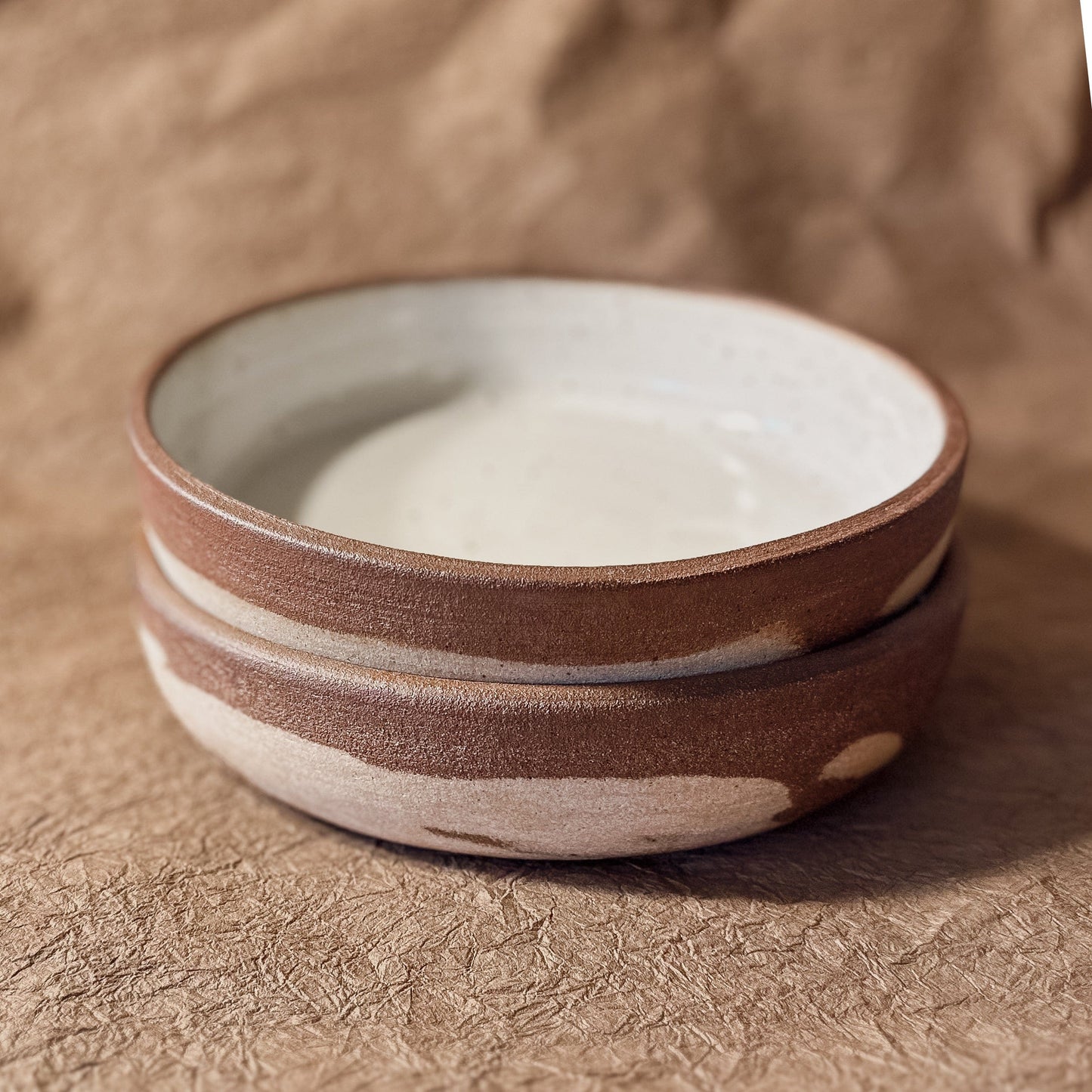
    Gator & Phoebs Marbled Ceramic Bowl in brown and white

    The Marbled Ceramic Bowl is the most visually integrated option in this guide. Its low, wide form looks closer to a shallow coupe bowl than conventional pet equipment, and the brown-and-white marbling brings warmth without requiring the room to be decorated around it.

    The bowl is made from high-fire stoneware with a glazed interior and natural tactile exterior. It measures approximately 9.5 by 1.5 inches. The product page describes its wide base as intended to reduce movement during feeding. It is food safe and dishwasher safe, although hand washing is recommended to prolong the finish.

    Why it made the shortlist

    The Marbled Bowl succeeds at the central design challenge of this article: it can remain visible without calling attention to itself as pet gear. Its broad footprint also appears more grounded than a narrow, lightweight dish, though the manufacturer’s stability description should not be treated as a guarantee for dogs that push or throw bowls.

    Best suited for

    • Medium or larger dogs that prefer a low, wide bowl
    • Dry food, wet food, or water when the shallow profile suits the dog
    • Homes with open kitchens or feeding areas visible from living spaces
    • Owners who prefer a quieter, sculptural object over a conventional pet bowl

    What to consider

    At approximately 1.5 inches high, this is a notably low bowl. That can be useful for some dogs but may be less comfortable for others, particularly if the dog prefers a deeper vessel or tends to scatter food. Capacity is not listed, so compare the bowl’s dimensions with your dog’s normal meal volume rather than assuming its wide diameter means it holds a large amount.

    Skip it if: You need verified capacity, your dog requires a deeper bowl, or you need a bowl with an explicitly documented non-slip base.

    4. Gator & Phoebs Handmade Ceramic Dog Bowl: Best Handmade Character

    The Handmade Ceramic Dog Bowl has the most expressive appearance of the Gator & Phoebs options, with multiple listed styles including floral and fruit-inspired patterns, stripes, and other decorative finishes. It measures 7.5 inches in diameter by 2.5 inches high.

    The bowl is ceramic and dishwasher safe, though hand washing is recommended for longevity. Capacity, weight, food-safety claims, and non-slip features are not verified on the product page.

    Why it made the shortlist

    This bowl is worth considering when the feeding area is part of a more collected, personal interior rather than a strictly neutral one. Its moderate diameter and 2.5-inch height make it less visually imposing than a large elevated bowl, while the handmade styling gives it more presence than a plain ceramic dish.

    Best suited for

    • Small to medium dogs, provided the unverified capacity suits their portions
    • Owners who want pattern or handmade variation
    • Kitchens where the bowl can relate to nearby ceramics, textiles, or artwork
    • People willing to hand wash more often to preserve the finish

    What to consider

    The missing capacity information is important. A 7.5-inch diameter does not, by itself, tell you whether the bowl is suitable for a dog’s normal meal or water needs. The product page also does not verify a weighted base or non-slip feature, so it may not be the right choice for an enthusiastic bowl pusher.

    Skip it if: Your dog regularly tips bowls, you need a precise capacity specification, or you prefer a plain surface with fewer decorative contours and patterns.

    5. Waggo Uplift Bowl: Best Colorful Elevated Ceramic Option

    Waggo Uplift ceramic dog bowls in restrained, colorful finishes

    The Waggo Uplift is a hand-dipped ceramic bowl with a lifted profile, heavyweight construction, and a broad color range. Waggo lists small, medium, and large sizes, though exact dimensions are not verified on the product page. The bowl is dishwasher and microwave safe.

    Why it made the shortlist

    Waggo offers more color flexibility than most design-forward dog-bowl brands. The Uplift can work well when the feeding area needs a deliberate accent rather than another neutral object. Its raised form also gives it a more furniture-like presence without requiring a separate stand.

    Best suited for

    • Owners who want a colored bowl that relates to the room
    • Dogs suited to a modestly raised feeding surface
    • Homes where a heavier ceramic bowl is preferable to a lightweight one
    • Readers who want dishwasher compatibility and several size choices

    What to consider

    The exact dimensions and capacities are not verified, so sizing requires checking the selected variant carefully before purchase. “Heavyweight” may help a bowl feel grounded, but it is not the same as a verified non-slip base. A heavy ceramic bowl can also be inconvenient to move, carry, or wash if your dishwasher arrangement is tight.

    Skip it if: You travel frequently with the bowl, need exact dimensions before ordering, or want the lightest possible option.

    6. Fable Bowl: Best Weighted Ceramic Option

    The Fable Bowl is a more practical replacement for the Polmedia listing because its size, capacity, care, and construction are documented on the current manufacturer page. It is a ceramic bowl with a matte exterior, glossy interior, and weighted bottom.

    Why it made the shortlist

    Fable gives readers a design-forward ceramic option without leaving the most important everyday details unclear. The two size choices cover a useful range: the S/M bowl holds 4 cups and measures 6 inches in diameter by 2.5 inches high; the L/XL bowl holds 9 cups and measures 8.5 inches in diameter by 3.5 inches high. The weighted bottom is intended to improve stability, while the glossy interior and dishwasher-safe care make it easier to live with than a bowl selected primarily for appearance.

    Best suited for

    • Owners who want ceramic with a documented weighted base
    • Dogs whose normal portions fit the 4-cup or 9-cup capacity
    • Design-conscious homes where a simple two-texture finish is preferable to decorative pattern
    • Readers who want dishwasher and microwave-safe care

    What to consider

    The L/XL size is a substantial bowl, so confirm that its 8.5-inch diameter will fit comfortably on the feeding mat and in the intended location. The S/M size is more compact, but capacity still matters more than the label; compare the 4-cup volume with the dog’s usual meal and water needs. A weighted ceramic bowl is still breakable if dropped or knocked against a hard surface, and “weighted” should not be treated as a guarantee against determined pushing.

    The official product page displayed $49 at the time of research. Color and variant availability can change.

    Skip it if: You need a lightweight travel bowl, your dog routinely throws bowls, or you prefer stainless steel for maximum handling durability.

    How to Choose a Dog Bowl That Actually Works in Your Home

    Material

    Ceramic and stoneware offer the most homeware-like appearance in this group. They are generally heavier and quieter than thin plastic or metal bowls, and their glazed surfaces can be straightforward to wash when intact. Stoneware is often denser than ordinary ceramic, but construction varies by product.

    The tradeoff is breakability. Ceramic and stoneware can chip, crack, or break if dropped or knocked against a hard surface. Inspect them regularly and retire any bowl with a damaged eating surface or sharp chip. Decorative texture and uneven finishes can also make cleaning more involved.

    Stainless steel is the practical alternative. The YETI Boomer 8 is dishwasher safe, durable, and large enough for food, water, or treats. Stainless steel is less visually quiet than stoneware, but it is often the better material for people who need durability, frequent washing, or a bowl that can tolerate more handling.

    Size and capacity

    Choose based on the dog’s normal meal and water volume, not the bowl’s diameter alone. A wide, shallow bowl can look substantial while holding less than expected. Conversely, a deep bowl may hold plenty but be awkward for a small dog.

    Among the selected products, capacities are verified for:

    • Gator & Phoebs Elevated Stoneware Pet Bowl: 2, 4, or 8 cups depending on size
    • YETI Boomer 8: 8 cups or 64 ounces
    • Fable Bowl: 4 cups in S/M or 9 cups in L/XL

    The capacity of the Gator & Phoebs Handmade Ceramic Dog Bowl, Marbled Ceramic Bowl, and Waggo Uplift Bowl is not verified in the researched product information. Do not infer capacity from appearance. Leave enough room for the food or water your dog normally receives without forcing it to the rim.

    Stability

    A stable bowl usually benefits from a broad base, substantial weight, or a verified non-slip feature. In this guide:

    • The Gator & Phoebs Elevated Bowl is described as weighted.
    • The Gator & Phoebs Marbled Bowl is described as having a wide base intended to reduce movement.
    • The Waggo Uplift is described as heavyweight.
    • The Fable Bowl is described as having a weighted bottom.
    • The YETI Boomer 8 has a documented BearFoot™ Non-Slip Ring. Non-slip features are not verified for the Gator & Phoebs Handmade Ceramic Dog Bowl in the information reviewed here.

    A bowl that slides across the floor during every meal is not functioning well, regardless of its finish. If a dog pushes or throws bowls, prioritize documented stability and observe the bowl’s interaction with the feeding mat and floor surface.

    Elevated versus floor-level

    An elevated bowl may be convenient for some dogs and households, particularly when a raised feeding position is more comfortable or easier to manage. It also changes the visual and spatial presence of the feeding area.

    Elevation should not be treated as universally healthier. It has not been established here as a way to prevent bloat, improve digestion, or prevent joint problems. If your dog has medical, swallowing, orthopedic, or gastrointestinal concerns, discuss the feeding setup with a veterinarian rather than selecting a height based only on appearance.

    For many dogs, a well-sized floor-level bowl is entirely practical. The better choice is the one that allows comfortable access, remains stable, and fits the dog’s normal routine.

    Cleaning and maintenance

    Dishwasher compatibility is useful, but it is not the only cleaning consideration. A bowl with deep decorative recesses, a rough exterior, or a finish that requires hand washing may create more work than its appearance justifies.

    The researched products vary:

    • YETI, Gator & Phoebs Elevated, Gator & Phoebs Handmade, Gator & Phoebs Marbled, Waggo Uplift, and Fable are listed as dishwasher safe.
    • Hand washing is recommended for the longevity of the Gator & Phoebs Handmade and Marbled bowls.
    • Waggo Uplift and Fable are also listed as microwave safe, though that feature may not matter for most dog-bowl routines.

    Wash food and water bowls regularly, follow the manufacturer’s instructions, and inspect ceramic or stoneware for damage.

    Where the bowl will live

    A bowl in a pantry or mudroom can prioritize capacity and cleanability. One in a kitchen or breakfast area deserves more attention to profile, color, and visual weight. A bowl visible from the living room may be worth choosing as deliberately as a vase or serving piece, but it still needs to work for the dog.

    Consider the surrounding setup:

    • Is there room for the dog to eat without blocking a walkway?
    • Will a low bowl sit securely on the feeding mat?
    • Is the bowl easy to lift and wash?
    • Does its color relate to the room without becoming a distraction?
    • Is water likely to splash onto a wood floor or cabinet toe-kick?

    The goal is not to conceal the fact that a dog lives there. It is to choose an object functional enough for the dog and considered enough for the home.

    Who Should Not Buy a Ceramic or Stoneware Bowl

    Ceramic and stoneware are not the right choice for every household. Consider stainless steel or another verified alternative if you:

    • Frequently drop bowls or expect them to be knocked against hard surfaces
    • Need an extremely lightweight bowl for travel
    • Move the bowl repeatedly between rooms or locations
    • Have a dishwasher setup where heavy bowls are inconvenient
    • Need a bowl that can tolerate rough handling with less concern about breakage
    • Have a dog that regularly pushes or throws bowls and cannot find a sufficiently stable ceramic option

    A stainless-steel bowl may look less integrated, but dependable cleaning and durability matter more than matching the kitchen.

    The Things Well Chosen Recommendation

    For the most practical choice, the YETI Boomer 8 is the strongest option here when its large size suits the dog and the feeding area. It offers verified capacity, dishwasher-safe stainless steel, and durability that ceramic bowls cannot match.

    For a bowl that integrates most naturally into a design-conscious home, the Gator & Phoebs Marbled Ceramic Bowl – Brown & White is the most distinctive choice, provided its low profile and unverified capacity suit the dog. The Gator & Phoebs Elevated Stoneware Pet Bowl deserves consideration when a raised profile is genuinely useful, not simply more attractive.

    For a documented weighted ceramic option, the Fable Bowl offers two verified capacity and size choices, with dishwasher-safe care and a restrained two-texture finish. For color and a lifted ceramic profile, the Waggo Uplift is a sensible alternative, but confirm the size before ordering.

    The best-looking bowl is not necessarily the best bowl. Start with capacity, stability, cleaning, and the dog’s comfort. Then choose the finish you will be happy to see every day.

  • Pet-Friendly Finds That Don’t Look Like Pet Gear

    Pet-Friendly Finds That Don’t Look Like Pet Gear

    Living with pets does not mean surrendering the look or function of your home. But the best pet-friendly choices begin with the animal: not with whether a bed matches the sofa or a feeding station photographs well.

    A comfortable bed that supports a dog’s body, a stable bowl that is easy to clean, or a scratching surface a cat will actually use is worth considering. If it also fits naturally into the room, that is a welcome benefit. The goal is not to disguise every sign of pet ownership. It is to choose pet essentials thoughtfully enough that they feel like part of the home rather than clutter added afterward.

    Here are the categories where a little more judgment can make the biggest difference.

    Start with a pet zone, not a pile of pet things

    Pet gear tends to spread when every item is assigned a different, improvised location. A leash lands on the entry table, toys collect under the sofa, food bags occupy a corner of the kitchen, and grooming supplies migrate from room to room.

    A better approach is to create one or two practical pet zones. An entryway, mudroom, laundry area, or quiet kitchen corner can hold the essentials that support daily routines. The sleeping area may belong in the living room or bedroom, where the pet naturally wants to be.

    The most useful zones usually include:

    • A comfortable resting place
    • Food and water in a calm, accessible location
    • A basket or cabinet for toys and walking gear
    • A washable mat or throw near high-traffic areas
    • Closed storage for food, treats, grooming supplies, and medications

    This is less about creating a dedicated pet room than about reducing visual and practical friction. Store things near where they are used, but do not place bowls or beds in a busy path simply because that is where there happens to be space.

    For more ideas on keeping everyday items contained, the Things Well Chosen Organization section is a useful place to continue.

    Choose a pet bed for comfort first

    A pet bed is one of the easiest pieces to make part of a room, but appearance should remain secondary to support, size, and cleanability.

    Dogs need enough room to lie in their preferred position without hanging over the edge. Older dogs or pets with joint concerns may benefit from a bed that is easier to step onto and offers more substantial support. A very soft, shapeless cushion can look appealing but may flatten quickly or provide little structure.

    Look for:

    • A size that accommodates the pet’s full resting position
    • A supportive interior rather than decorative fluff alone
    • A removable, washable cover
    • A surface that does not trap excessive heat for the individual animal
    • A stable base that will not slide across the floor
    • Materials suited to the pet’s habits, coat, and age

    A bed in a tightly woven fabric can sit comfortably beside a sofa or reading chair without becoming a visual interruption. Muted neutrals, earthy tones, or colors already present elsewhere in the room can help it feel more settled within the space, but color coordination is never a reason to choose a bed that is too small, difficult to wash, or poorly supported.

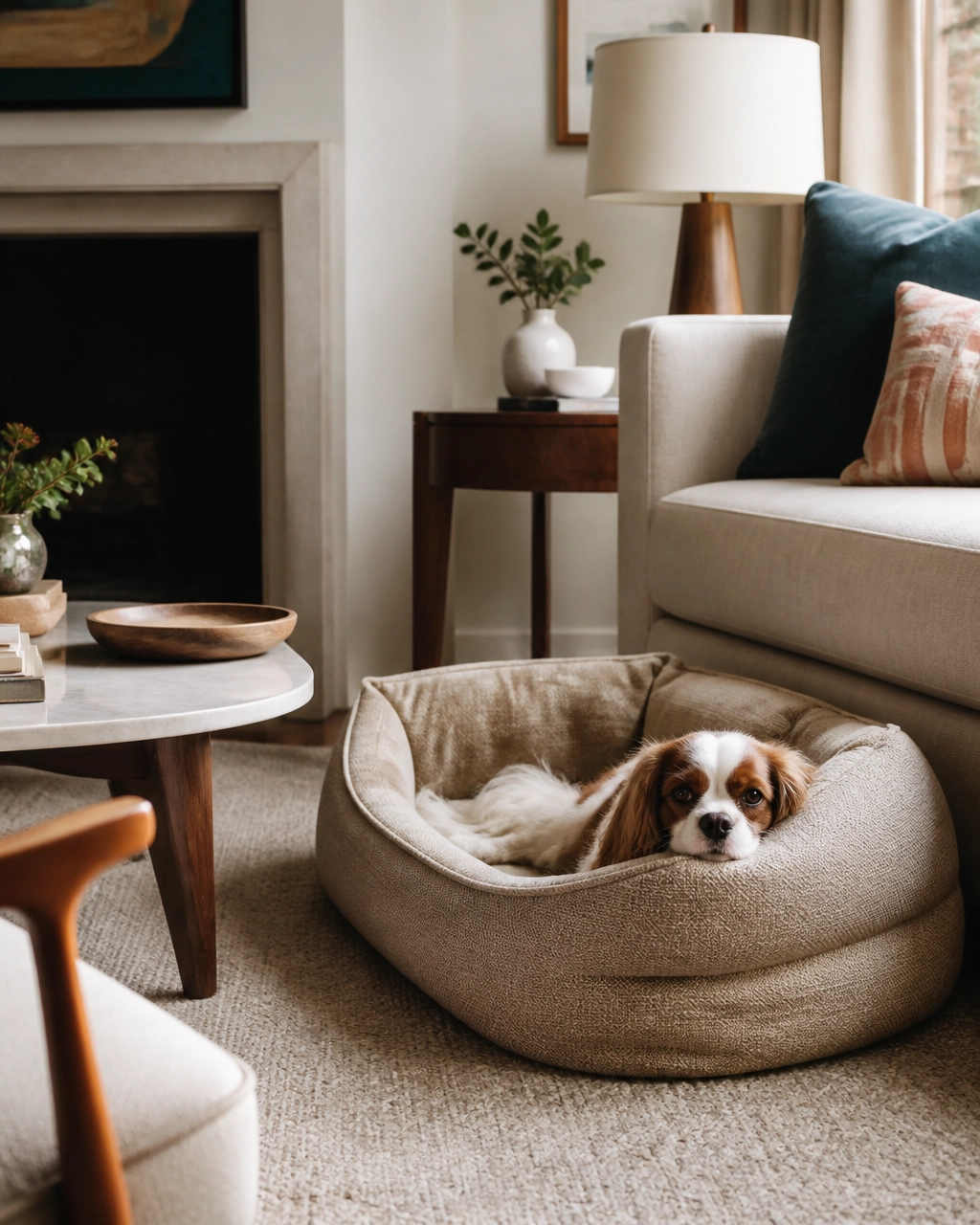
    A Cavalier King Charles Spaniel resting in a comfortable neutral pet bed beside a warm, modern sofa

    Placement matters as much as the bed itself. Many dogs prefer to rest near their people, but not in the middle of foot traffic. Avoid drafty areas, door swings, and spots where the bed will be repeatedly kicked or moved. If a pet has trouble getting up or down, a low, stable design is generally more practical than a raised frame chosen for its furniture-like appearance.

    A built-in nook can be attractive, particularly beneath a bench or inside a mudroom cabinet, but it should not be so enclosed that ventilation, visibility, or access become concerns. A pet should be able to enter and leave comfortably, and the space should be easy to clean thoroughly.

    Make feeding stations easy to live with

    Feeding supplies are used every day, which makes them a good candidate for a more deliberate setup. They do not need to be hidden completely; they simply need a stable home.

    The most useful feeding stations share a few qualities:

    • Bowls that are stable and easy to wash
    • A water-resistant or wipeable surface beneath them
    • Enough room for the pet to eat without crowding a wall or appliance
    • Nearby storage for food, treats, and supplements
    • Placement away from the busiest paths through the room

    A simple ceramic or stainless-steel bowl can look more settled than a collection of mismatched plastic containers, but material and cleaning requirements come first. A beautiful bowl that chips easily, slides across the floor, or is difficult to sanitize is not a better choice.

    A pull-out drawer or closed cabinet for food can keep bags and scoops out of sight, but avoid storing food where heat, moisture, or pests may be a problem. Sealed containers are often more useful than oversized decorative bins, especially when they make it easier to keep food fresh and measure portions consistently.

    Raised feeding stations may be appropriate in some situations, but height should never be chosen for appearance alone. A pet’s size, eating habits, comfort, and veterinary guidance matter more than how integrated the setup looks.

    Use attractive storage for the things that actually accumulate

    Leashes, harnesses, waste bags, brushes, towels, toys, and treats are small enough to create clutter quickly. They are also used often enough that completely hidden storage can become inconvenient.

    A modest cabinet, lidded basket, or drawer near the entry can contain most walking gear. Hooks inside a closet door or on the side of a console can keep leashes accessible without making them the first thing visible when someone enters the room.

    For toys, an open basket can work well if it is sturdy, easy to lift, and large enough to hold the toys without overflowing. Choose one with a stable base and no loose loops or fragile trim that could become a chewing hazard. A basket is not automatically safer simply because it is made from natural material; inspect the construction and watch how the pet interacts with it.

    Closed storage is better for:

    • Food and treats
    • Medications and supplements
    • Grooming tools
    • Cleaning products
    • Waste bags and spare supplies

    The most successful storage does not pretend pet ownership is invisible. It makes the daily evidence of it easy to manage.

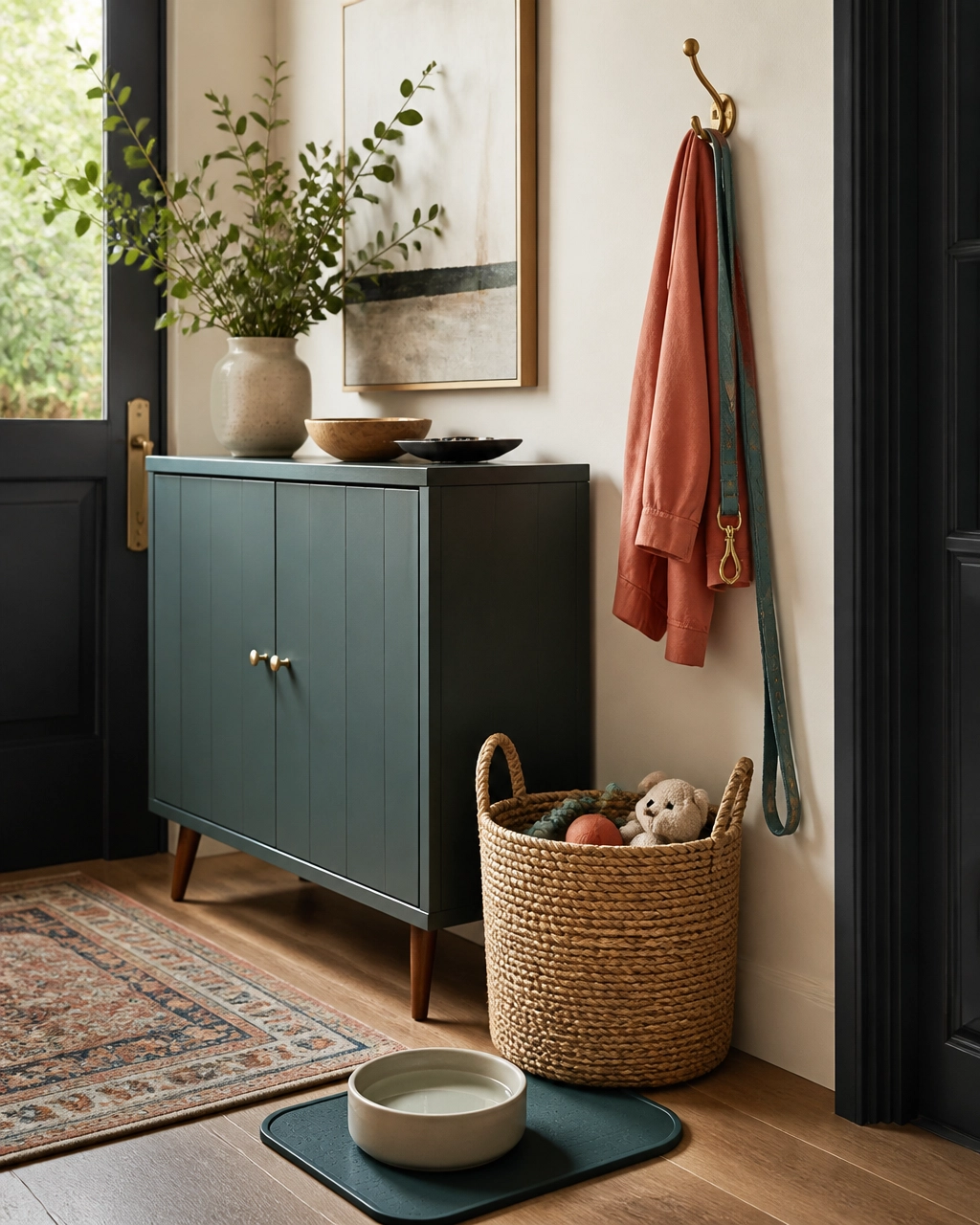
    A warm entryway with a closed cabinet, woven basket, leash storage, and a pet water bowl arranged for everyday use

    Consider crates and gates as part of the room

    Crates and gates serve important purposes, from training and rest to managing visitors, stairs, and areas that are not safe for an animal.

    A furniture-style crate can work when it provides adequate ventilation, secure construction, and enough room for the dog to stand, turn, and rest comfortably. It should not be treated as a decorative side table first and a containment space second. Avoid designs with unstable doors, narrow openings, poor airflow, or finishes that are difficult to clean.

    Similarly, a wooden or architectural-looking gate may blend into a room more gracefully than a brightly colored plastic barrier. But it still needs to latch securely, resist tipping, and suit the size and behavior of the pet. A gate that looks discreet but is easily pushed aside offers little practical value.

    When selecting a crate or gate, consider:

    • Whether the pet already feels comfortable using it
    • How easily the surface can be cleaned
    • Whether the construction can withstand scratching or chewing
    • Whether it blocks necessary airflow or visibility
    • Whether it can be removed or relocated as the pet’s needs change

    A discreet containment solution is worthwhile when it improves safety without compromising the animal’s comfort or the product’s basic purpose.

    Give cats vertical space and a real scratching surface

    Cat furniture is often the most visually conspicuous pet gear in a home. It is also an area where design-conscious choices can easily become too cosmetic.

    Cats need opportunities to scratch, climb, observe, hide, and rest. A sculptural scratching post that does not offer a satisfying scratching surface is less useful than a simple, well-built one that a cat chooses repeatedly.

    Wall-mounted shelves, window perches, and compact climbing routes can integrate more naturally than a large tower, particularly when they use a restrained palette and follow the lines of the room. But wall-mounted furniture must be securely installed, and the surrounding area should allow a cat to move between surfaces without awkward gaps or unsafe jumps.

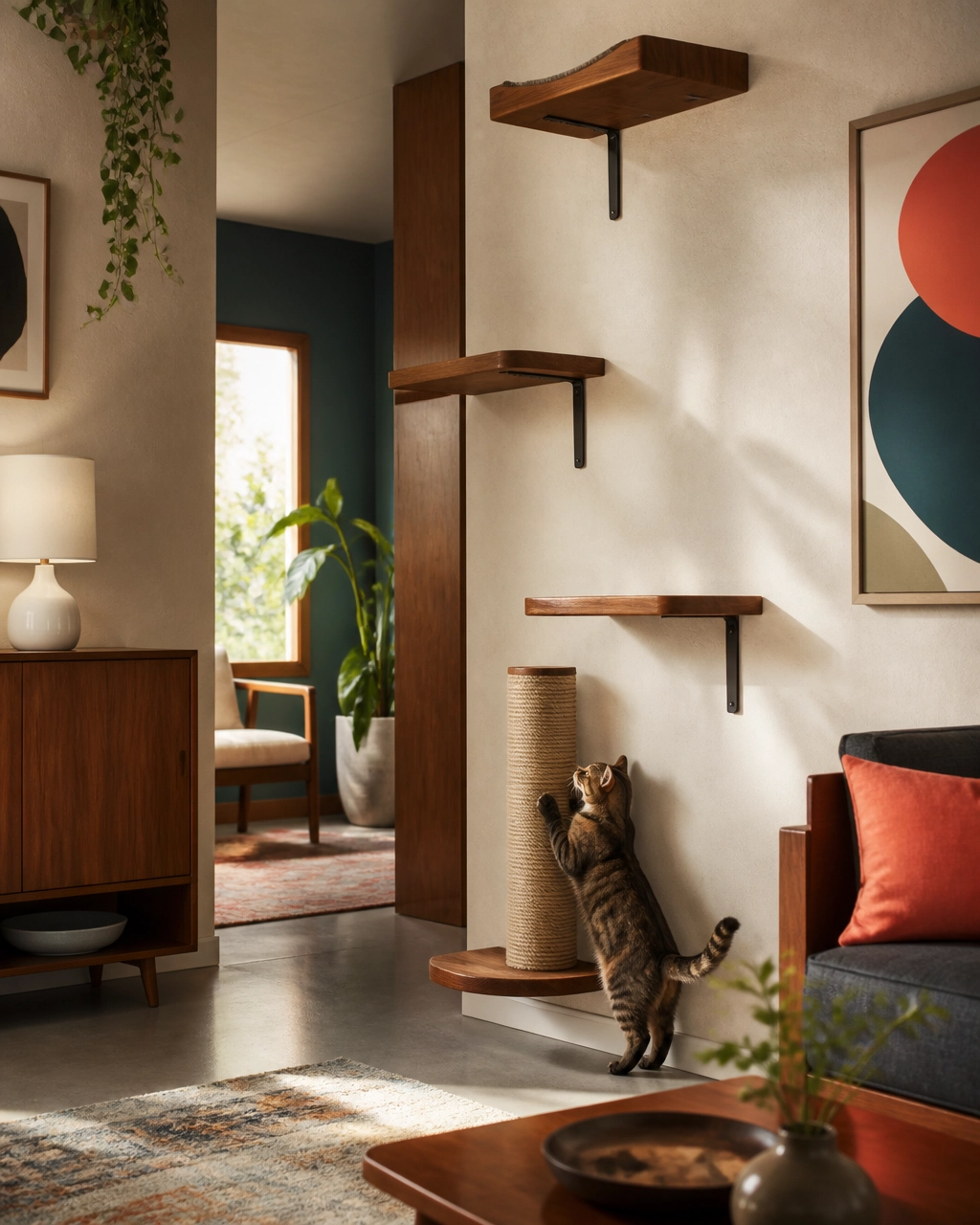
    A content cat using a compact scratching post beneath an integrated wall-mounted shelf in a warm, modern living room

    For scratching furniture, pay attention to:

    • The material and texture the cat prefers
    • A base that will not wobble during use
    • Enough height for a full stretch
    • Replaceable or renewable scratching surfaces where possible
    • Placement near furniture the cat is already tempted to scratch

    If a cat repeatedly ignores an attractive piece, the problem may be location rather than appearance. Moving it near a favored resting spot or an existing scratching area may matter more than changing the color.

    Litter boxes deserve the same practical discipline. A ventilated enclosure can reduce visual clutter, but it should not be cramped, difficult to access, or placed near food preparation. Easy cleaning and adequate ventilation are more important than making the box disappear entirely.

    Protect furniture with washable, intentional layers

    Throws, mats, and rugs can help protect a home without making it feel covered in protective equipment. The key is to use them selectively, where they solve a predictable problem.

    A washable throw over the section of sofa a dog consistently chooses is more practical than draping every piece of upholstery. A low-pile runner near an entry can catch dirt and moisture before it travels through the house. A washable mat beneath water bowls can protect floors from splashes and make cleanup easier.

    Prioritize:

    • Machine-washable covers or textiles
    • Low-pile surfaces that are easier to vacuum
    • Non-slip backing or a stable underlay
    • Tightly woven materials that do not catch claws easily
    • Colors and patterns that conceal ordinary fur and small marks

    Do not assume that “performance” automatically means comfortable or durable. Check care instructions, construction, and how the material feels underfoot. For pets that slip on smooth floors, a rug should improve traction rather than become another surface that slides away.

    The most useful protection is placed where it will be used consistently. A washable throw that is difficult to remove or too precious to launder will not make daily life easier.

    Know which design compromises are not worth making

    Some pet products look refined because they remove the features that make them functional. That is a poor exchange.

    Be cautious with products that have:

    • Decorative materials that are difficult to clean
    • Small openings or enclosed spaces with limited ventilation
    • Lightweight bases that tip or slide
    • Unsecured cords, tassels, or loose trim
    • Sharp corners or unstable elevated platforms
    • Finishes that may be damaged by moisture or chewing
    • Storage compartments that pets can open accidentally

    Keep medications, cleaning products, human foods that are unsafe for pets, and small chewable objects securely out of reach. Anchor tall furniture and keep cords managed, especially in rooms where cats climb or dogs may investigate.

    It is also worth observing the individual animal rather than relying on a product description. One dog may prefer a firm, open bed while another seeks a covered retreat. One cat may use a wall shelf; another may prefer a low hiding place. Good design supports those preferences instead of trying to override them.

    The better choice is the one that disappears into daily life

    A thoughtful pet-friendly home is not one where pet supplies are invisible. It is one where the supplies are comfortable, safe, easy to clean, and placed with intention.

    Choose the bed your pet will actually rest in, the bowl that stays stable and washes easily, and storage that makes daily routines simpler. Choose a gate or crate because it performs its job well, not because it resembles furniture. Then let the finishes, colors, and proportions help those essentials sit comfortably within the room.

    For more practical ideas for living well with animals, visit the Things Well Chosen Pets section. The best finds are not the ones that hide the fact that a pet lives there. They are the ones that make room for the animal without asking the rest of the home to stop functioning.