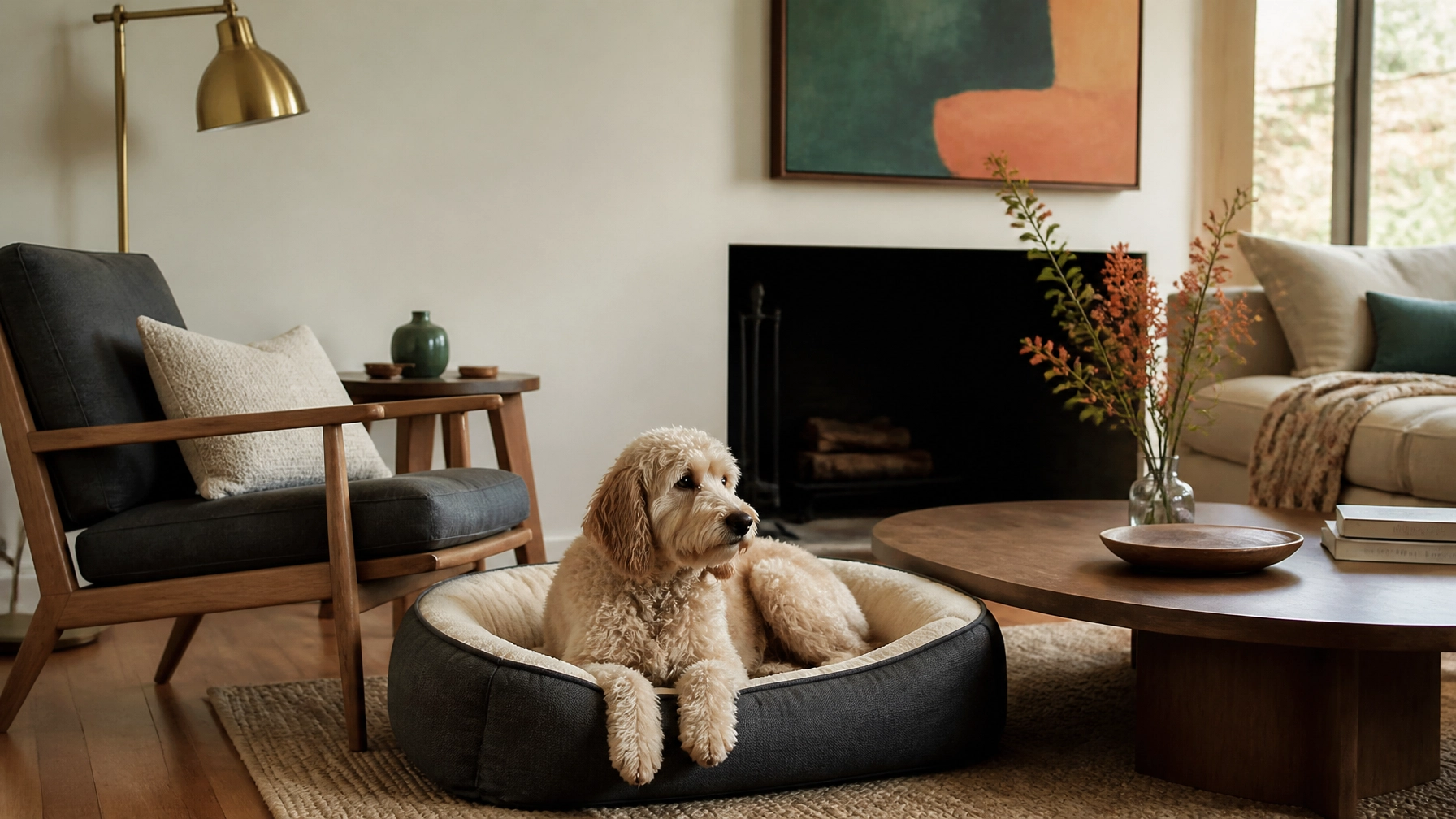
Living with pets does not mean surrendering the look or function of your home. But the best pet-friendly choices begin with the animal: not with whether a bed matches the sofa or a feeding station photographs well.
A comfortable bed that supports a dog’s body, a stable bowl that is easy to clean, or a scratching surface a cat will actually use is worth considering. If it also fits naturally into the room, that is a welcome benefit. The goal is not to disguise every sign of pet ownership. It is to choose pet essentials thoughtfully enough that they feel like part of the home rather than clutter added afterward.
Here are the categories where a little more judgment can make the biggest difference.
Start with a pet zone, not a pile of pet things
Pet gear tends to spread when every item is assigned a different, improvised location. A leash lands on the entry table, toys collect under the sofa, food bags occupy a corner of the kitchen, and grooming supplies migrate from room to room.
A better approach is to create one or two practical pet zones. An entryway, mudroom, laundry area, or quiet kitchen corner can hold the essentials that support daily routines. The sleeping area may belong in the living room or bedroom, where the pet naturally wants to be.
The most useful zones usually include:
- A comfortable resting place
- Food and water in a calm, accessible location
- A basket or cabinet for toys and walking gear
- A washable mat or throw near high-traffic areas
- Closed storage for food, treats, grooming supplies, and medications
This is less about creating a dedicated pet room than about reducing visual and practical friction. Store things near where they are used, but do not place bowls or beds in a busy path simply because that is where there happens to be space.
For more ideas on keeping everyday items contained, the Things Well Chosen Organization section is a useful place to continue.
Choose a pet bed for comfort first
A pet bed is one of the easiest pieces to make part of a room, but appearance should remain secondary to support, size, and cleanability.
Dogs need enough room to lie in their preferred position without hanging over the edge. Older dogs or pets with joint concerns may benefit from a bed that is easier to step onto and offers more substantial support. A very soft, shapeless cushion can look appealing but may flatten quickly or provide little structure.
Look for:
- A size that accommodates the pet’s full resting position
- A supportive interior rather than decorative fluff alone
- A removable, washable cover
- A surface that does not trap excessive heat for the individual animal
- A stable base that will not slide across the floor
- Materials suited to the pet’s habits, coat, and age
A bed in a tightly woven fabric can sit comfortably beside a sofa or reading chair without becoming a visual interruption. Muted neutrals, earthy tones, or colors already present elsewhere in the room can help it feel more settled within the space, but color coordination is never a reason to choose a bed that is too small, difficult to wash, or poorly supported.
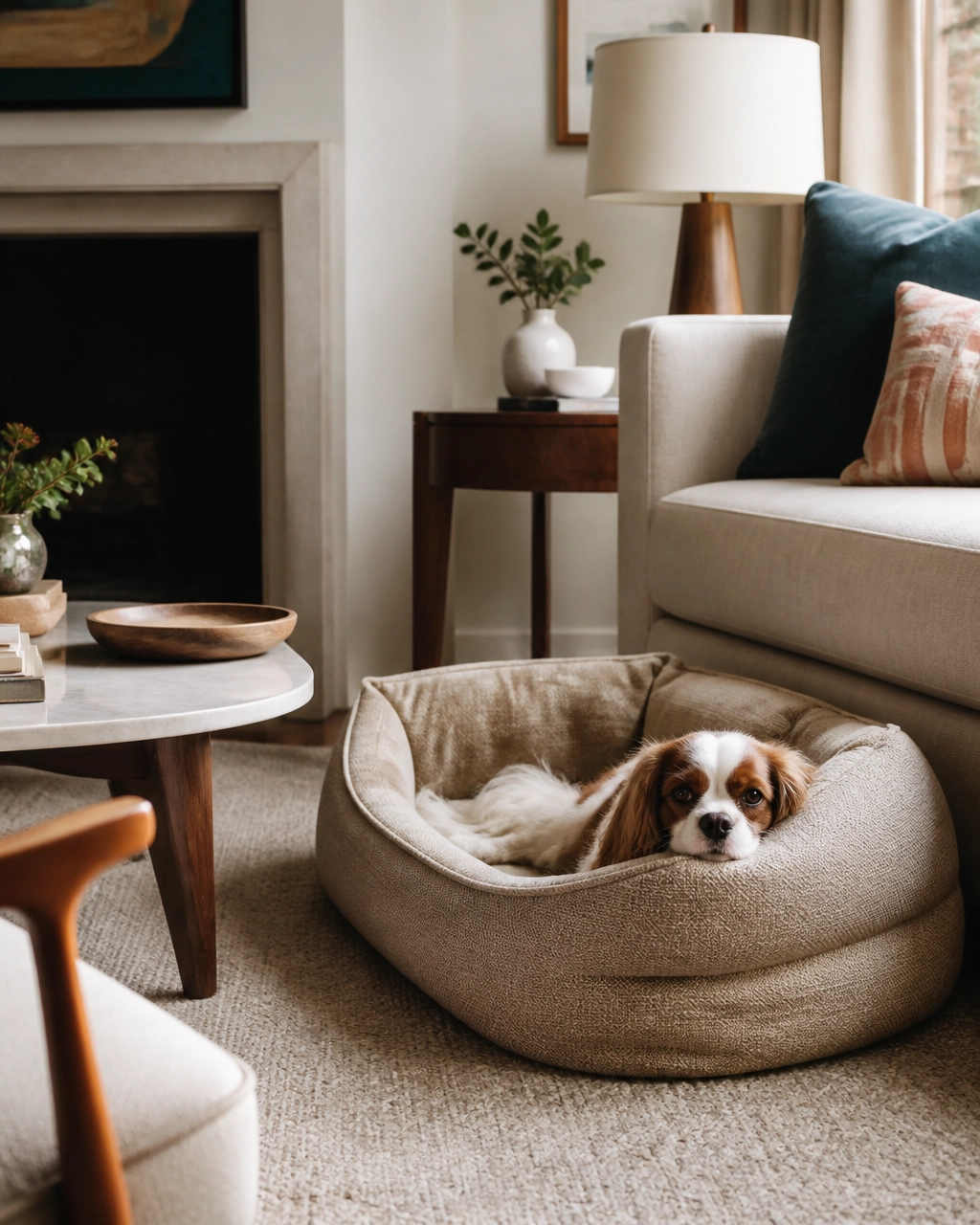
Placement matters as much as the bed itself. Many dogs prefer to rest near their people, but not in the middle of foot traffic. Avoid drafty areas, door swings, and spots where the bed will be repeatedly kicked or moved. If a pet has trouble getting up or down, a low, stable design is generally more practical than a raised frame chosen for its furniture-like appearance.
A built-in nook can be attractive, particularly beneath a bench or inside a mudroom cabinet, but it should not be so enclosed that ventilation, visibility, or access become concerns. A pet should be able to enter and leave comfortably, and the space should be easy to clean thoroughly.
Make feeding stations easy to live with
Feeding supplies are used every day, which makes them a good candidate for a more deliberate setup. They do not need to be hidden completely; they simply need a stable home.
The most useful feeding stations share a few qualities:
- Bowls that are stable and easy to wash
- A water-resistant or wipeable surface beneath them
- Enough room for the pet to eat without crowding a wall or appliance
- Nearby storage for food, treats, and supplements
- Placement away from the busiest paths through the room
A simple ceramic or stainless-steel bowl can look more settled than a collection of mismatched plastic containers, but material and cleaning requirements come first. A beautiful bowl that chips easily, slides across the floor, or is difficult to sanitize is not a better choice.
A pull-out drawer or closed cabinet for food can keep bags and scoops out of sight, but avoid storing food where heat, moisture, or pests may be a problem. Sealed containers are often more useful than oversized decorative bins, especially when they make it easier to keep food fresh and measure portions consistently.
Raised feeding stations may be appropriate in some situations, but height should never be chosen for appearance alone. A pet’s size, eating habits, comfort, and veterinary guidance matter more than how integrated the setup looks.
Use attractive storage for the things that actually accumulate
Leashes, harnesses, waste bags, brushes, towels, toys, and treats are small enough to create clutter quickly. They are also used often enough that completely hidden storage can become inconvenient.
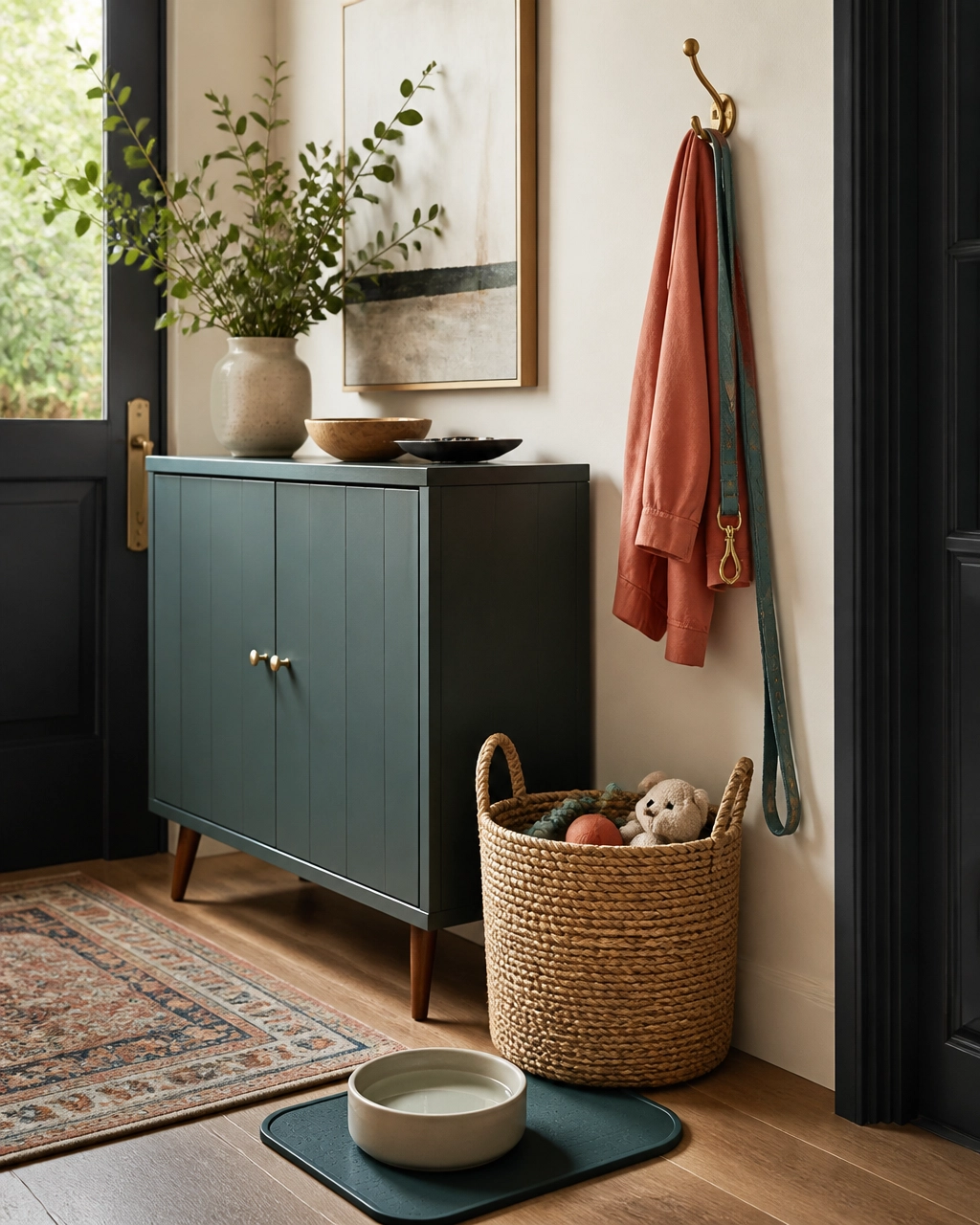
A modest cabinet, lidded basket, or drawer near the entry can contain most walking gear. Hooks inside a closet door or on the side of a console can keep leashes accessible without making them the first thing visible when someone enters the room.
For toys, an open basket can work well if it is sturdy, easy to lift, and large enough to hold the toys without overflowing. Choose one with a stable base and no loose loops or fragile trim that could become a chewing hazard. A basket is not automatically safer simply because it is made from natural material; inspect the construction and watch how the pet interacts with it.
Closed storage is better for:
- Food and treats
- Medications and supplements
- Grooming tools
- Cleaning products
- Waste bags and spare supplies
The most successful storage does not pretend pet ownership is invisible. It makes the daily evidence of it easy to manage.
Consider crates and gates as part of the room
Crates and gates serve important purposes, from training and rest to managing visitors, stairs, and areas that are not safe for an animal.
A furniture-style crate can work when it provides adequate ventilation, secure construction, and enough room for the dog to stand, turn, and rest comfortably. It should not be treated as a decorative side table first and a containment space second. Avoid designs with unstable doors, narrow openings, poor airflow, or finishes that are difficult to clean.
Similarly, a wooden or architectural-looking gate may blend into a room more gracefully than a brightly colored plastic barrier. But it still needs to latch securely, resist tipping, and suit the size and behavior of the pet. A gate that looks discreet but is easily pushed aside offers little practical value.
When selecting a crate or gate, consider:
- Whether the pet already feels comfortable using it
- How easily the surface can be cleaned
- Whether the construction can withstand scratching or chewing
- Whether it blocks necessary airflow or visibility
- Whether it can be removed or relocated as the pet’s needs change
A discreet containment solution is worthwhile when it improves safety without compromising the animal’s comfort or the product’s basic purpose.
Give cats vertical space and a real scratching surface
Cat furniture is often the most visually conspicuous pet gear in a home. It is also an area where design-conscious choices can easily become too cosmetic.
Cats need opportunities to scratch, climb, observe, hide, and rest. A sculptural scratching post that does not offer a satisfying scratching surface is less useful than a simple, well-built one that a cat chooses repeatedly.
Wall-mounted shelves, window perches, and compact climbing routes can integrate more naturally than a large tower, particularly when they use a restrained palette and follow the lines of the room. But wall-mounted furniture must be securely installed, and the surrounding area should allow a cat to move between surfaces without awkward gaps or unsafe jumps.
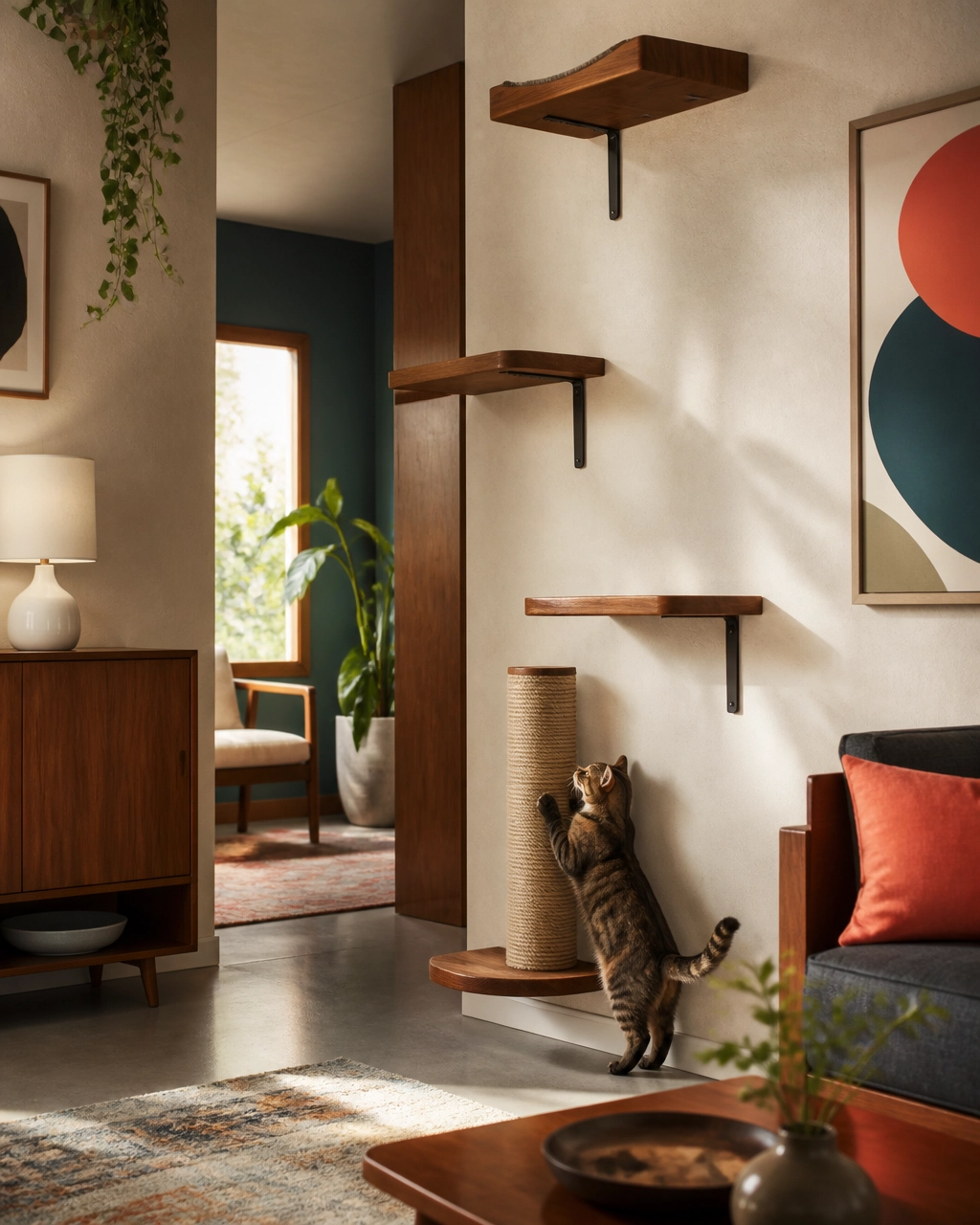
For scratching furniture, pay attention to:
- The material and texture the cat prefers
- A base that will not wobble during use
- Enough height for a full stretch
- Replaceable or renewable scratching surfaces where possible
- Placement near furniture the cat is already tempted to scratch
If a cat repeatedly ignores an attractive piece, the problem may be location rather than appearance. Moving it near a favored resting spot or an existing scratching area may matter more than changing the color.
Litter boxes deserve the same practical discipline. A ventilated enclosure can reduce visual clutter, but it should not be cramped, difficult to access, or placed near food preparation. Easy cleaning and adequate ventilation are more important than making the box disappear entirely.
Protect furniture with washable, intentional layers
Throws, mats, and rugs can help protect a home without making it feel covered in protective equipment. The key is to use them selectively, where they solve a predictable problem.
A washable throw over the section of sofa a dog consistently chooses is more practical than draping every piece of upholstery. A low-pile runner near an entry can catch dirt and moisture before it travels through the house. A washable mat beneath water bowls can protect floors from splashes and make cleanup easier.
Prioritize:
- Machine-washable covers or textiles
- Low-pile surfaces that are easier to vacuum
- Non-slip backing or a stable underlay
- Tightly woven materials that do not catch claws easily
- Colors and patterns that conceal ordinary fur and small marks
Do not assume that “performance” automatically means comfortable or durable. Check care instructions, construction, and how the material feels underfoot. For pets that slip on smooth floors, a rug should improve traction rather than become another surface that slides away.
The most useful protection is placed where it will be used consistently. A washable throw that is difficult to remove or too precious to launder will not make daily life easier.
Know which design compromises are not worth making
Some pet products look refined because they remove the features that make them functional. That is a poor exchange.
Be cautious with products that have:
- Decorative materials that are difficult to clean
- Small openings or enclosed spaces with limited ventilation
- Lightweight bases that tip or slide
- Unsecured cords, tassels, or loose trim
- Sharp corners or unstable elevated platforms
- Finishes that may be damaged by moisture or chewing
- Storage compartments that pets can open accidentally
Keep medications, cleaning products, human foods that are unsafe for pets, and small chewable objects securely out of reach. Anchor tall furniture and keep cords managed, especially in rooms where cats climb or dogs may investigate.
It is also worth observing the individual animal rather than relying on a product description. One dog may prefer a firm, open bed while another seeks a covered retreat. One cat may use a wall shelf; another may prefer a low hiding place. Good design supports those preferences instead of trying to override them.
The better choice is the one that disappears into daily life
A thoughtful pet-friendly home is not one where pet supplies are invisible. It is one where the supplies are comfortable, safe, easy to clean, and placed with intention.
Choose the bed your pet will actually rest in, the bowl that stays stable and washes easily, and storage that makes daily routines simpler. Choose a gate or crate because it performs its job well, not because it resembles furniture. Then let the finishes, colors, and proportions help those essentials sit comfortably within the room.
For more practical ideas for living well with animals, visit the Things Well Chosen Pets section. The best finds are not the ones that hide the fact that a pet lives there. They are the ones that make room for the animal without asking the rest of the home to stop functioning.