Category: Kitchen

  • Best Dish-Drying Racks for Small Kitchens That Don’t Take Over the Counter

    Best Dish-Drying Racks for Small Kitchens That Don’t Take Over the Counter

    A dish rack is one of the few things in a small kitchen that has to stay out while it works. The real tradeoff is straightforward: a rack that drains well and holds a real meal’s worth of dishes usually takes up meaningful counter space, while the compact options require you to rethink how and where you dry.

    The right choice depends less on appearance than on your kitchen’s layout. A countertop rack may be the most practical option for everyday dishes. An over-the-sink rack can return counter space, but only if your sink, faucet, and cabinets cooperate. A roll-up or folding rack may be better if you need drying space only occasionally.

    This is a research-based guide using manufacturer and retailer listing information. Dimensions and features can vary by version or listing, so confirm the current product details before ordering.

    Things Well Chosen may earn a commission from qualifying purchases made through links in this guide, at no additional cost to you.

    What actually matters in a small-kitchen dish rack

    Start with the sink, not just the counter

    A rack’s relationship to the sink determines whether water ends up where it should. Before looking at capacity, measure the sink length, usable rim or support area, faucet height, and the space between the counter and any upper cabinets.

    A rack that fits the counter but cannot drain toward the sink will need a tray, towel, or frequent wiping. That may be manageable for occasional use, but it becomes tedious if the rack stays out every day, especially if you are setting up a small kitchen so it recovers quickly after a meal.

    Check cabinet clearance above the counter

    Tall racks can use vertical space efficiently, but upper cabinets often make that space unavailable. Measure from the countertop to the bottom of the cabinets, not from the floor or cabinet exterior.

    Also consider doors and under-cabinet lighting. A rack may technically fit while still making a cabinet door difficult to open or blocking the light you use over the sink.

    Understand where water goes

    There are three common drainage approaches:

    • A countertop rack with a tray and spout directs water toward the sink.
    • An over-the-sink rack lets water fall directly into the basin.
    • A folding or roll-up rack may need to sit over the sink or use a separate mat or tray.

    A rack’s footprint and its usable capacity are not the same thing. Bolsters, prongs, utensil holders, and drainage trays all occupy space without necessarily holding dishes. Look at how much of the rack actually supports plates, bowls, glasses, or cookware.

    Pay attention to rust resistance

    “Stainless steel” is not a complete description of corrosion resistance. A listing that identifies 304 stainless steel gives you more useful information than one that simply says stainless steel. Coated wire can also work well, but chips and scratches in the coating may expose the underlying metal to moisture.

    This matters most when the rack sits beside a constantly wet sink. Drying the rack periodically and cleaning away mineral deposits will help, but the underlying material still matters.

    Consider cleaning before capacity

    Dish racks collect residue in predictable places: under trays, inside spouts, around feet, between prongs, and beneath utensil holders. A rack that comes apart or has removable components is easier to keep clean than one with fixed, narrow channels.

    If the rack will remain on the counter permanently, choose a design you are willing to wipe down and rinse regularly. Convenience disappears quickly when cleaning requires a small brush and several separate steps.

    Decide where it lives when it is not in use

    A folding rack only saves space if you have somewhere practical to store it. Measure the folded dimensions and decide whether it will live in a drawer, cabinet, beside the sink, or vertically against a backsplash.

    The same applies to roll-up racks. Their value is greatest when they can genuinely disappear rather than becoming another object leaned against the counter.

    Think about pots and pans

    Some racks are designed mainly for plates, bowls, and glasses. Others can handle a pan or small pot. If you regularly wash cookware by hand, look for open space and adequate support rather than assuming a rack’s listed capacity tells the whole story.

    A rack that holds many plates but has nowhere stable for a saucepan may not suit your routine.
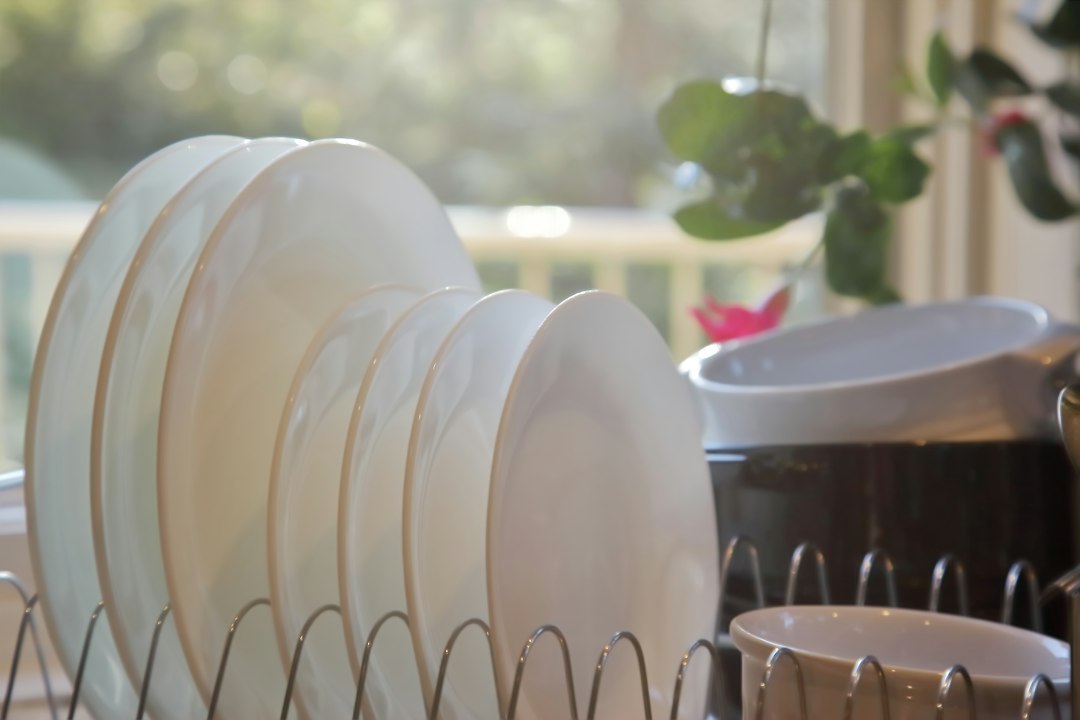
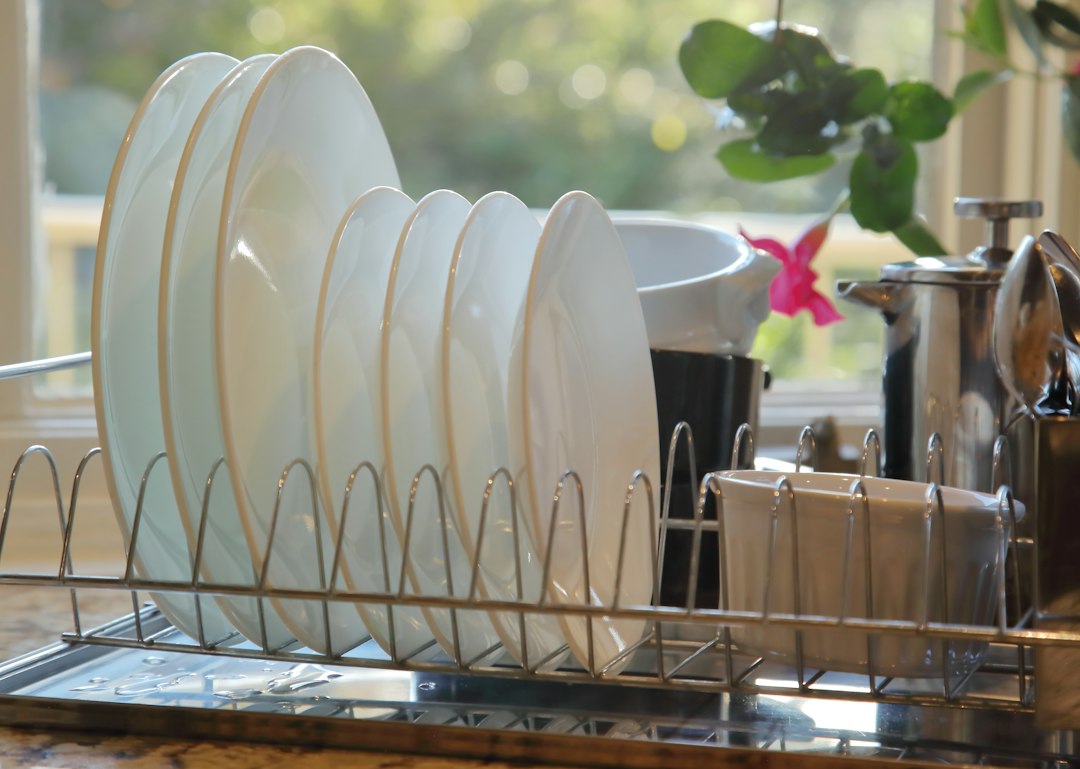
    White plates on a dish-drying rack, illustrating drying capacity and arrangement
    Dish-rack layout inspiration—not a photograph of the products recommended below. Photo: Anna Khromova / Unsplash.

    Five dish-drying racks for small kitchens

    simplehuman Compact Steel Frame Dishrack: Best compact countertop rack for everyday use

    Check current product options on Amazon

    The simplehuman Compact Steel Frame Dishrack is a practical option for someone who needs a rack out every day but cannot give up a large section of counter.

    Its brushed stainless steel frame measures approximately 15 inches wide, 15.5 inches deep, and 7.5 inches high. The rack uses a 360-degree swivel spout to direct water toward the sink, along with an anti-residue coating and moisture-control surface.

    Who it is for

    Choose it if you want a conventional countertop rack with directed drainage and enough structure for everyday plates, glasses, and utensils.

    What problem it solves

    It gives a small kitchen a real drying area without requiring a full-size rack or a permanently fixed drainage direction. The swivel spout is particularly useful when the rack needs to sit beside the sink rather than in one perfectly aligned position.

    What to know before ordering

    The approximately 15.5-inch depth is important. The rack may look compact because its width is only about 15 inches, but it still requires meaningful front-to-back counter space. Measure the usable depth beside your sink, including any backsplash lip or space needed to open drawers below.

    Limitation

    This is a light-to-moderate-capacity rack rather than a solution for a large meal’s worth of pots and pans. It also takes more counter depth than its compact width initially suggests.

    Trustmade 3-Tier Over the Sink Dish Drying Rack: Best for returning counter space

    Check current product options on Amazon

    The Trustmade 3-Tier Over the Sink Dish Drying Rack is the high-capacity option for kitchens where counter space matters more than a low visual profile.

    Retailer listings describe a stainless-steel structure that adjusts from approximately 23.5 to 36.6 inches wide, with a depth of about 11 inches and an overall height around 32.5 inches. The design includes hooks and a utensil holder, so the rack becomes the primary drying area rather than just a shelf for plates. Verify the material grade and dimensions of the specific listing before ordering.

    Who it is for

    Choose it if you have a wide enough sink, tall enough faucet clearance, and enough open vertical space above the basin to support a three-tier structure.

    What problem it solves

    Because it sits over the sink, water drains directly into the basin and the rack returns the counter area that a traditional drainer would occupy. The multiple levels also give you more capacity without spreading across the counter.

    What to know before ordering

    The listed fit requirements are unusually important. Measure sink width and surrounding countertop clearance against the chosen width; check faucet clearance against the shelves; and allow at least the full rack height, approximately 32.5 inches, beneath any upper cabinets. Confirm the precise fit instructions on the version you buy.

    Measure all three dimensions before ordering. Do not rely on the sink’s nominal cabinet size.

    Limitation

    The height rules out many small kitchens. Low upper cabinets, tall faucets, windows, and under-cabinet lights can all interfere. A three-tier rack can also make the sink feel occupied while you are cooking.

    Yamazaki Tower Folding Drainer Rack, Small: Best for occasional drying

    Check current product options on Amazon

    The Yamazaki Tower Folding Sink Drainer Rack, Small, is designed for households that do not need a full drying rack sitting out all day. Yamazaki lists its dimensions as approximately 16.5 by 10.2 inches and 0.3 inch thick. It folds or rolls up for compact storage and is intended for sinks with a front-to-back span of roughly 15 inches or less.

    The rack uses coated, plated steel with silicone end caps. Yamazaki specifies a maximum load of about 8.8 pounds. You can adjust its width by folding partway, and individual bars can be removed or repositioned to work around a faucet.

    Who it is for

    This is a sensible fit for one-person households, small households, occasional hand-washing, or kitchens where most dishes go directly into a dishwasher.

    What problem it solves

    It creates a temporary drying surface that can be stored in a drawer or beside the sink. It can also be folded partway when you need support without using the full surface.

    What to know before ordering

    The rack is better suited to controlled, light-use drying than to a full dinner’s worth of dishes. If you use it on the counter rather than over the sink, plan to place a tray or mat underneath.

    Limitation

    It is not built for large loads of plates plus pans. Its value comes from folding away, not from replacing a large everyday dish rack.

    Seropy Roll Up Dish Drying Rack: Best for kitchens with almost no storage

    Check current product options on Amazon

    The Seropy Roll Up Dish Drying Rack offers a flat, temporary drying surface. Listings describe stainless-steel tubes with silicone ends and dimensions of approximately 17.5 by 11.8 inches. The claimed load limit is up to 33 pounds; retailers also advertise heat resistance up to about 400°F and dishwasher-safe care. Confirm those claims for the exact variation purchased.

    It is designed for sinks no wider than approximately 16.5 inches and is not suitable for uneven farmhouse-style sinks.

    Who it is for

    Choose it if there is genuinely no place to store a conventional rack and your sink can support the rack securely on both sides.

    What problem it solves

    The rack rolls up to roughly the width of a rolled magazine and can go into a drawer when it is not needed. It drains directly into the sink without a separate tray or spout.

    What to know before ordering

    This is a flat drying surface, not a tiered dish rack. It works for glasses, plates set flat, produce, or a hot pan, but it has no dedicated utensil holder and offers limited capacity for multiple dishes at once.

    Measure the sink’s supporting width carefully. Both sides need to rest securely on the rim or counter.

    Limitation

    It will not work well with an uneven farmhouse-style sink or a basin that is too narrow to support its full width. It also requires more deliberate loading than a conventional rack.

    Joseph Joseph Extend Expandable Dish Drainer: Best for a visible, design-conscious countertop

    Check current product options on Amazon

    The Joseph Joseph Extend Expandable Dish Drainer is intended for kitchens where the dish rack remains visible and needs to look reasonably intentional. It has an integrated drainage spout and expands only when extra length is needed.

    Joseph Joseph lists the standard Extend model at approximately 12.5 by 14.25 by 6.25 inches when closed and 20.75 by 14.25 by 6.25 inches when extended. It includes removable non-scratch draining prongs, a removable steel rack, and a movable cutlery drainer. Do not confuse it with the narrower Extend Slim variant.

    Who it is for

    Choose it if you want a countertop rack that can stay compact most of the time but provide more room when you wash a larger load.

    What problem it solves

    The expandable design helps avoid committing the full counter to a longer rack every day. Its removable components also make it more practical to dismantle and clean than a fixed, one-piece tray.

    What to know before ordering

    The rack is hand-wash only, and the manufacturer notes that it should be cleaned by hand. The drainage spout also needs to be positioned over the sink, so it cannot sit just anywhere on the counter.

    Limitation

    It requires more maintenance than a dishwasher-safe or open roll-up design and costs more than simpler plastic options. Its expandable length is useful only if you have enough counter depth and a suitable position beside the sink.

    Why an over-the-sink rack isn’t automatically the answer

    An over-the-sink rack can be the best way to recover counter space, but it is not universally practical.

    The faucet may be too tall. The upper cabinets may be too low. The sink may be too short or narrow to support the rack. A tall rack can block a window, interrupt under-cabinet light, or make the sink feel awkward to use while you cook.

    There is also a less obvious tradeoff: an over-sink rack frees the counter only if you commit to emptying it. If dishes remain on the rack for days, the sink becomes a permanent storage zone instead of a work area.

    These racks make the most sense over wide sinks with tall faucets and generous cabinet clearance. If your layout does not meet those conditions, a modest countertop rack with a directed spout may be more useful.

    For the same reason, measuring the sink rather than assuming the counter will work is essential. Our guide to Best Over-the-Sink Cutting Boards for Small Kitchens covers the same fit principle in another sink-area category.

    What we would skip

    Some dish-rack designs add more inconvenience than organization:

    • Racks with integral drainboards that hold water and develop residue
    • Oversized two- and three-tier towers in kitchens with low cabinet clearance
    • Fixed trays that cannot be removed for cleaning
    • Lightweight dividers or feet that constantly shift
    • Racks that fill the entire counter and leave no flexible space
    • Designs that must be unloaded before the sink is usable
    • Wire racks with uncoated or thin plating in kitchens where rust already appears

    The goal is not to maximize the number of dishes a rack can hold. It is to make drying easier without creating another permanent obstacle.

    A dish rack should earn its place the same way any other visible kitchen object does. Our guide to The Things That Actually Make a Kitchen Counter Feel Less Cluttered offers a useful rule: frequently used items can stay, but they still need a defined boundary. The same standard applies to kitchen tools that justify the space they occupy.

    The Things Well Chosen recommendation

    Match the rack to the sink and cabinet clearance first, then to the number of dishes you actually leave to dry.

    A modest rack with directed drainage may suit everyday use better than a larger rack that permanently occupies the counter. The simplehuman Compact provides a conventional countertop setup, a tall over-sink design such as the Trustmade may work when the measurements permit, and the Seropy suits kitchens where compact storage is the primary constraint.

    The best rack is the one you will actually empty every night.

    Featured photograph: Anna Khromova / Unsplash.
  • Best Drawer Organizers for Deep Kitchen Drawers That Don’t Waste Space

    Best Drawer Organizers for Deep Kitchen Drawers That Don’t Waste Space

    Deep kitchen drawers are useful until smaller tools disappear beneath larger ones, tall drawer walls encourage stacking, and fixed trays leave awkward gaps on either side. Oversized compartments give utensils room to drift, while flatware, cooking tools, food-storage lids, and baking accessories compete for the same space.

    A deep drawer is not simply a larger shallow drawer. It needs a different kind of structure.

    The goal is not to divide every square inch or fill the drawer from bottom to top. It is to create enough order that frequently used items stay visible, accessible, and easy to put away. In many kitchens, that means a few broad boundaries, one dedicated solution for the messiest category, and some open space left deliberately.

    Things Well Chosen may earn a commission from qualifying purchases made through links in this guide, at no additional cost to you.

    What Actually Matters in a Deep Drawer Organizer

    Measure interior width and depth

    Start with the inside of the drawer box, not the cabinet opening or drawer front. Measure wall to wall for usable width, then front to back for usable depth.

    This matters because an organizer can look appropriately sized online and still leave an unusable strip along one side, or fail to fit at all. Expandable systems help when drawer dimensions are unusual, but they still have minimum and maximum ranges that need to match your space.

    Account for taper, hardware, and drawer stops

    The inside of a drawer is rarely a perfect open rectangle. Some drawer boxes taper slightly. Side-mount hardware may reduce usable width or height, and drawer stops can affect how far the drawer opens.

    Measure where the organizer will actually sit. If the drawer is narrower toward the back, use the narrowest measurement. The same principle applies to awkward cabinet storage: organize around the fixed parts rather than pretending they are not there. Our guide to under-sink organizers that work around plumbing uses the same approach.

    Choose adjustable versus fixed compartments

    Fixed compartments work best when the stored items are consistent. Flatware and similarly sized utensils often do well in a defined tray.

    Adjustable systems make more sense when the contents vary. Cooking utensils, baking tools, clips, and small gadgets may need different boundaries over time. The useful distinction is flexibility without needless complexity: adjustment should help the organizer fit the drawer or adapt to its contents, not create dozens of tiny decisions.

    Avoid excessive stacking

    A deep drawer does not need to be filled to its full height. A second level can be useful when the upper layer slides or lifts easily and the lower layer holds less frequently used items. But a tall stack that hides everything underneath only creates a different retrieval problem.

    Leave some flexible open space

    A completely filled drawer is hard to maintain. New tools have nowhere to go, larger pieces do not fit cleanly, and returning something to its place becomes less obvious.

    Open space is not wasted space if it keeps the drawer usable. It is the drawer equivalent of giving everyday kitchen items clear boundaries: organization works better when it supports decisions instead of hiding the fact that there are too many things.

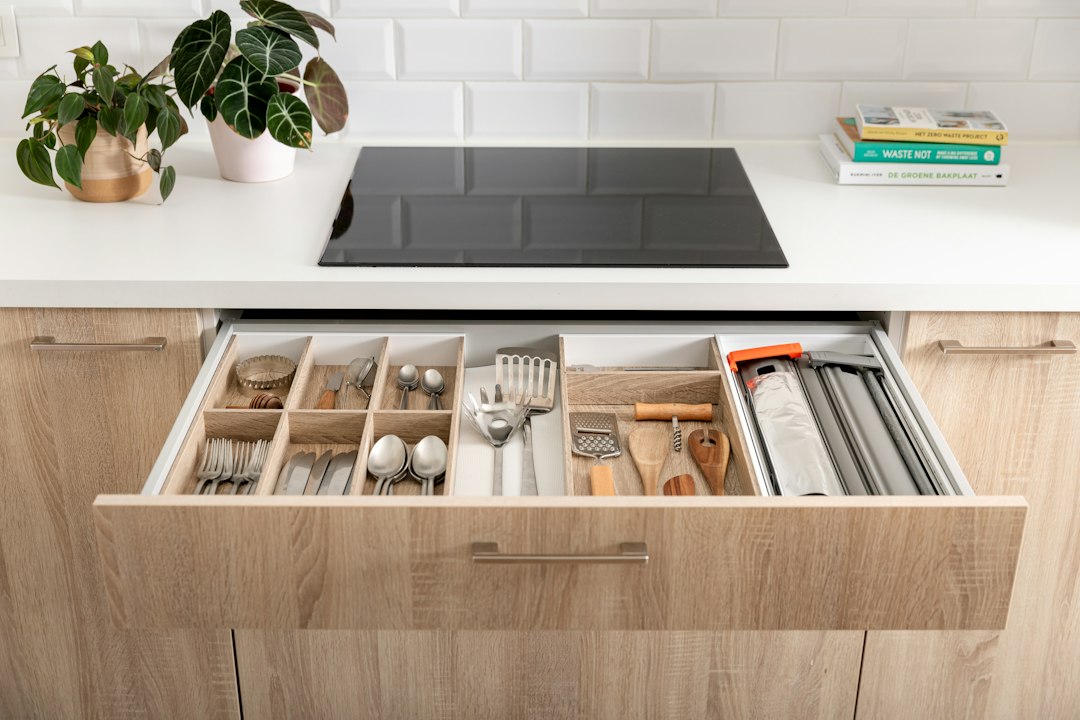
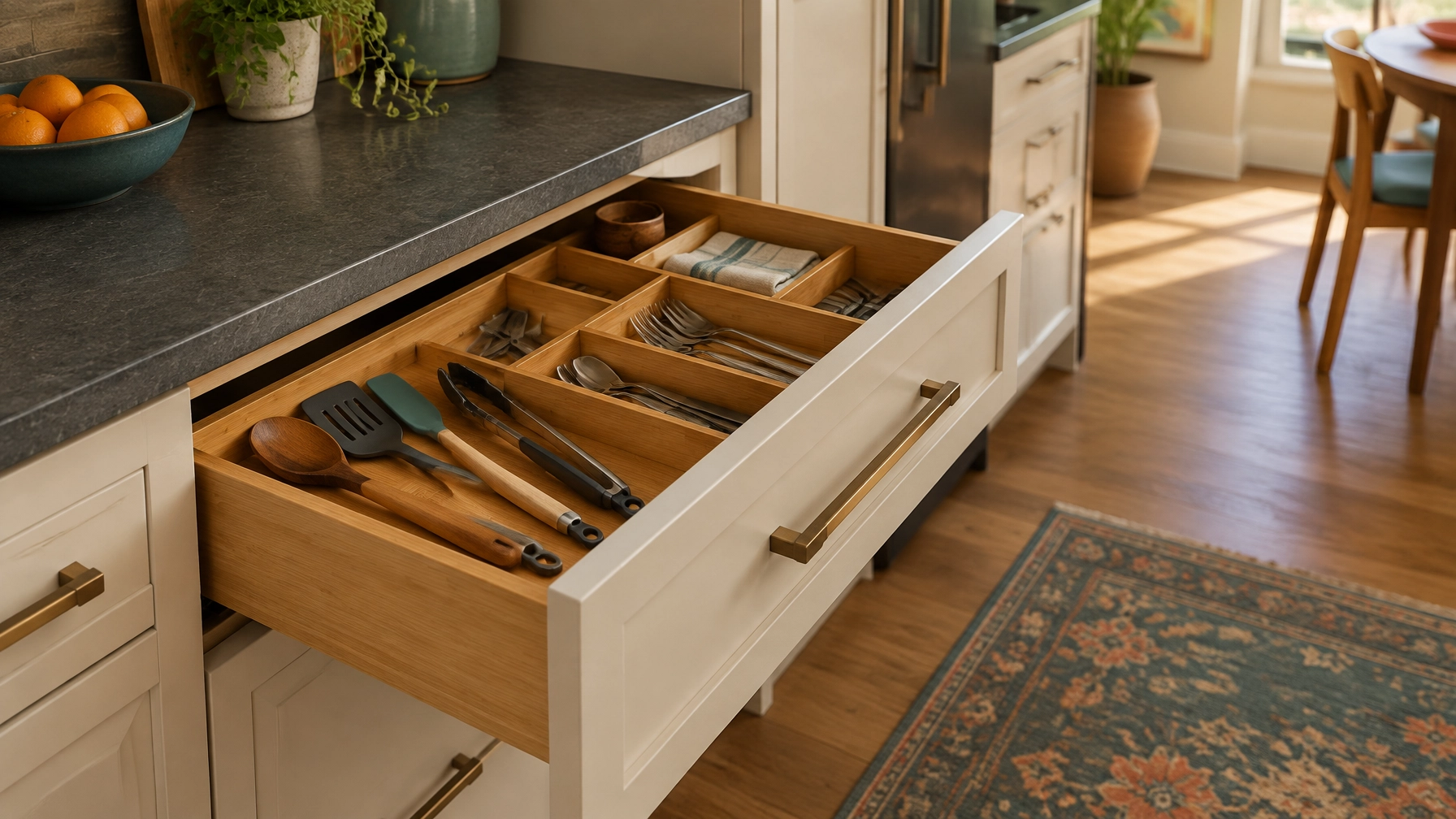
    An organized wooden kitchen drawer with a cutlery insert, illustrating how compartments affect access
    Drawer layout inspiration—not a photograph of the products recommended below. Photo: Orgalux / Unsplash.

    The Best Drawer Organizers for Deep Kitchen Drawers

    Pipishell Bamboo Expandable Silverware Drawer Organizer

    Best for: Wide drawers where a fixed tray would leave unusable gaps on both sides.

    The Pipishell is a low-profile bamboo organizer with an expandable width. The larger version is about 16.7 inches deep and 1.9 inches tall, expanding from roughly 12.9 to 19.7 inches wide.

    Why it works: Its advantage is fit. Instead of centering a fixed tray and accepting empty strips along the sides, you can adjust the organizer to the drawer’s usable width. It works well for flatware and everyday utensils without turning the entire drawer into a rigid grid.

    What to consider: The low profile organizes the drawer floor but does not make much use of extra vertical space. Dimensions also vary by model, so confirm the version before ordering.

    mDesign Expandable Drawer Dividers with Foam Ends, 4-Pack

    Best for: Mixed categories that need flexible boundaries rather than fixed compartments.

    These adjustable dividers use foam ends and a locking mechanism to create broad zones inside the drawer. Each divider is about 13.25 inches long when compact and expands from roughly 13.4 to 20.1 inches.

    Why it works: Their strength is restraint. Two or three dividers can separate cooking utensils, baking tools, and small accessories without forcing every object into its own compartment. If the drawer changes later, the boundaries can move with it.

    What to consider: Dividers do not fully contain very small loose items, and they need firm contact with parallel drawer walls to stay put.

    Joseph Joseph DrawerStore Bamboo Cutlery, Utensil & Gadget Organizer

    Best for: Consolidating flatware and shorter utensils into one deep drawer.

    This fixed bamboo organizer combines five overlapping cutlery compartments with three deeper sections for utensils and gadgets. It measures about 15.2 inches wide, 15.7 inches deep, and 2.5 inches tall, and it requires a drawer with at least about 3.25 inches of interior height.

    Why it works: The overlapping layout can hold more categories than a conventional flat tray without consuming the entire drawer. It is especially useful when you want one orderly system for flatware plus a few compact tools.

    What to consider: The fit is much less forgiving than an expandable tray, so measure carefully. The bamboo should be wiped clean rather than soaked, and the manufacturer recommends occasional food-safe oil.

    YouCopia DrawerFit Sliding Drawer Tray

    Best for: Deep drawers where frequently used small tools disappear beneath the lower layer.

    The DrawerFit creates a sliding upper level inside the drawer. It expands from about 15 to 23.7 inches, measures roughly 7.1 inches wide and 2 inches high, and includes two adjustable dividers.

    Why it works: This is one of the more direct ways to use vertical space without creating a permanent stack. Put the small tools you reach for most on the upper tray, then slide it aside when you need access to the drawer floor.

    What to consider: It works only when the drawer has enough width, frame support, and clearance below the tray for the items underneath.

    YouCopia StoraLid Expandable Container Lid Organizer

    Best for: The single messiest category in many deep drawers: food-storage lids.

    The StoraLid uses adjustable dividers to hold lids upright instead of letting them collapse into a pile. The expandable version is designed to dedicate one clear zone to lids so the correct size is visible without digging through a stack.

    Why it works: This is a good example of solving one difficult category instead of trying to make a universal tray handle everything. If lids are what make the drawer frustrating, giving them their own structure can do more than adding several smaller bins.

    What to consider: YouCopia sells more than one StoraLid configuration, so confirm the dimensions and divider height on the exact listing before buying.

    Before You Buy: Measure These Three Things

    • Interior drawer width: Measure wall to wall inside the drawer box, including the narrowest point if the sides taper. Note any side-mount hardware.
    • Interior drawer depth: Measure from the inside front to the back of the drawer, then check whether stops or hardware reduce how far the drawer opens.
    • Usable interior height: Measure from the drawer floor to the lowest obstruction or drawer top. Confirm clearance above the tallest item you plan to store.

    Nominal cabinet dimensions are not the same as usable space inside the drawer. Compare your measurements with the exact organizer listing, especially when choosing an expandable system or a product that comes in several sizes.

    What We Would Skip

    Fixed trays that leave unusable gaps on both sides. A fixed organizer can work in a well-matched drawer, but a poor fit turns valuable width into dead space.

    Organizers with too many tiny compartments. Small sections may look orderly at first, but they become frustrating when larger utensils or oddly shaped tools have nowhere to go.

    Tall stacking systems that hide the bottom layer. A second level is useful only when the lower layer remains reasonably accessible.

    Lightweight dividers that constantly shift. Adjustable boundaries are useful only if they hold position during normal use.

    Systems that fill the entire drawer. A drawer needs a little flexibility for new items, larger tools, and the ordinary variation of daily use.

    The Things Well Chosen Recommendation

    The best deep-drawer solution is usually modest structure plus breathing room: a few well-placed boundaries, the most-used items visible, and some open space left deliberately.

    Start with one problem category rather than buying a complete system. If wide flatware storage is the issue, an expandable bamboo tray may be enough. If items disappear beneath one another, consider a sliding upper layer. If lids are causing the pile, give them their own upright organizer instead of asking a general-purpose tray to do everything.

    A deep drawer does not need to be maximized to be well organized. It needs to make the things you use easiest to find, and leave enough room for the drawer to keep working as your kitchen changes. That is the same standard we use in 7 Small-Kitchen Tools That Actually Earn Their Space: an item should justify the space it occupies by making everyday work easier.

  • Best Under-Sink Organizers That Actually Work Around Plumbing

    Best Under-Sink Organizers That Actually Work Around Plumbing

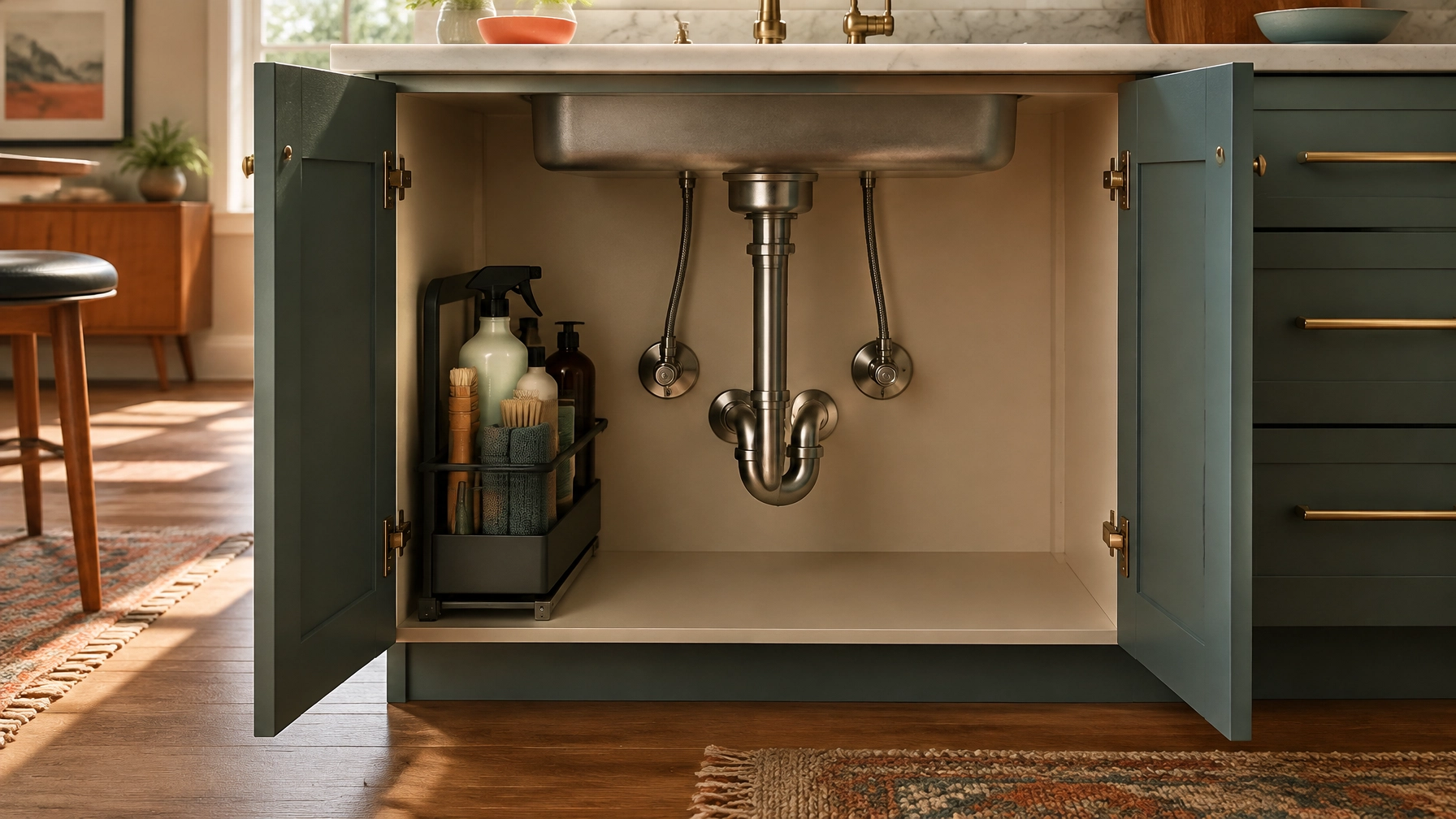
    Under-sink cabinets are unusually difficult to organize because the usable space is interrupted by everything a normal cabinet does not have: drainpipes, P-traps, garbage disposals, water filters, supply lines, hinges, and tall bottles competing for the same few inches.

    That is why the best under-sink organizer is not necessarily the one that holds the most. It is the one that fits your actual cabinet, leaves the plumbing accessible, and lets you reach what you store without unpacking the entire space. The same principle applies on the counter: giving everyday items a clear boundary usually works better than trying to eliminate them entirely.

    Things Well Chosen may earn a commission from qualifying purchases made through links in this guide, at no additional cost to you.

    What Actually Matters in an Under-Sink Organizer

    Measure the usable space, not just the cabinet

    Start inside the cabinet. Measure the narrowest usable width between hinges, side walls, and the cabinet frame, then measure depth and height to the lowest obstruction. A unit can technically fit inside the cabinet and still keep the door from closing or collide with plumbing as it slides.

    Work around the obstruction instead of across it

    Look at where the plumbing actually sits. A disposal may take up one side while a P-trap interrupts the center. The most useful systems either leave sections open, use an L-shaped profile, occupy a narrow lane beside the obstruction, or can be lifted out quickly if you need to inspect a leak.

    Make sure pull-outs have a clear path

    A sliding organizer is only useful if the drawer clears the cabinet opening, hinges, raised front lip, and pipes for its entire travel. Check that path before buying, not after installation.

    Leave room for bottles and maintenance

    Measure your tallest spray bottle and keep shutoff valves reachable. Under-sink storage should also leave enough visibility to notice moisture on the cabinet floor. Organization that makes a leak harder to find is not an upgrade.

    Choose materials that tolerate moisture

    Finished metal and wipe-clean plastic are practical in a humid cabinet where spills happen. The goal is not waterproof storage; it is an organizer that can be cleaned easily and removed without becoming another maintenance project.

    The Best Under-Sink Organizers That Work Around Plumbing

    Simple Houseware 2-Tier Heavy Duty Expandable Organizer

    Best for: Cabinets with plumbing that cuts through the middle of otherwise usable space.

    This expandable two-tier rack is one of the more forgiving options for awkward plumbing because its width adjusts from about 15.75 to 25 inches and the shelf panels can be arranged around pipes instead of forcing a solid shelf across them. The four shelf-height positions also give you some control over bottle clearance.

    The open metal construction makes it easy to see where the plumbing sits and keeps the system from feeling like a bulky box inside the cabinet. It does not pull out, however, so items stored at the back will still require some reaching. Choose it when adaptability around a centered or irregular pipe layout matters more than drawer access.

    REALINN L-Shaped 2-Tier Pull-Out Under Sink Organizer

    Best for: Cabinets with a disposal or plumbing occupying one side.

    The REALINN uses an L-shaped upper tier to leave room for plumbing while reclaiming storage below. The black two-pack version measures about 14.2 inches deep, 10.6 inches wide, and 11 inches high per unit, and the lower basket slides forward so bottles are easier to reach.

    This is a better fit than a full-width rack when you have a clear lane beside the disposal. The limitation is that the L-shape only helps when your obstruction is in the right place. Measure both the plumbing position and the drawer path before ordering. If the geometry matches your cabinet, the combination of vertical storage and pull-out access is hard to beat.

    LYNK PROFESSIONAL Pull-Out Cabinet Organizer, 11 x 21 Inches

    Best for: A narrow open zone beside a disposal, filter, or supply lines.

    A single low-profile slide-out shelf can be more useful than a large under-sink system when the cabinet has one clean strip of floor space. This LYNK organizer is about 11 inches wide by 21 inches deep and four inches high, so it turns that narrow lane into storage you can pull toward you.

    Its strength is restraint: it does not try to organize the entire cabinet. You can keep taller bottles on the shelf without an upper tier getting in the way, and the slide-out action makes a deep cabinet easier to use. Installation is more permanent than a freestanding bin because the organizer mounts inside the cabinet, so it makes the most sense when you know the layout works.

    YouCopia SinkSuite Under Sink Turntable

    Best for: Bottle-heavy cabinets where reaching the back is the main problem.

    The SinkSuite takes a different approach: instead of sliding forward, the 12-inch turntable rotates 360 degrees so the back of the cabinet comes to you. It includes three adjustable dividers, non-slip feet, and a low 3.3-inch profile, with a stated capacity of up to 30 pounds.

    It works best beside the plumbing rather than directly beneath the drain. The round footprint is less space-efficient than a rectangular bin, and it does not add vertical storage, but that tradeoff can be worthwhile when the real annoyance is losing bottles behind other bottles. It is also easy to lift out if you need access to the cabinet floor.

    Command Large Organizing Caddy

    Best for: Using the inside of the cabinet door without drilling.

    If the cabinet floor is crowded, the door may be the most useful unused surface. This Command caddy measures roughly 8.6 by 3.1 by 3 inches and mounts with adhesive strips rather than screws, making it a low-commitment place for sponges, dishwasher tablets, gloves, or other lighter supplies.

    The caddy is intentionally small and is rated to hold up to four pounds, so it should not become a home for a row of full cleaning bottles. You also need enough clearance between the door and the plumbing for it to close. Used selectively, though, it can move the small things that usually float around the cabinet into an easy-to-reach zone.

    mDesign Stackable Open-Front Storage Bins, 2-Pack

    Best for: Irregular cabinets where a removable, modular system makes more sense than one large organizer.

    Sometimes the best answer is not another rack. These clear open-front bins come as a two-pack and can be stacked where the cabinet has usable vertical room. Because they are freestanding, you can position them only where the plumbing allows and move them quickly if you need to reach a valve or inspect the floor.

    They are less convenient than a true pull-out in a very deep cabinet, and stacking only works when the pipe layout leaves enough height. But for a cabinet with several small pockets of usable space, modular bins often create a calmer result than forcing one oversized organizer around every obstruction.

    Before You Buy: Measure These Four Things

    1. Cabinet interior width. Measure the narrowest usable width, including hinges, side walls, and any face frame.

    2. Cabinet interior depth. Measure from the usable front edge to the back wall, and note any raised front lip a drawer would have to clear.

    3. Available height. Measure from the cabinet floor to the lowest pipe or obstruction, then compare that with the tallest bottle you want to store.

    4. Plumbing and disposal location. Note which side the obstruction occupies, how far it protrudes, and whether it sits high, low, centered, or toward the back. Include filters, supply lines, and shutoff valves.

    Always compare those measurements with the exact product listing before ordering. Small differences between variants matter more under a sink than they do in most cabinets.

    What We Would Skip

    Huge fixed shelving units that ignore plumbing. They may advertise impressive capacity, but a shelf that collides with the drain or disposal wastes more space than it creates.

    Deep solid bins that hide the back row. If you have to unload half the container to retrieve one bottle, the organizer has not actually improved access.

    Flimsy multi-tier systems. Full cleaning bottles add weight quickly. Thin shelves that bow or shift are not worth the extra tier.

    Anything that blocks shutoff valves or hides the cabinet floor. You should be able to reach the valves and spot moisture without dismantling the entire system.

    As with other kitchen items that earn the space they take up, the useful question is not how much an organizer can hold on paper. It is whether it removes friction in daily use.

    The Things Well Chosen Recommendation

    The best under-sink setup is usually a combination of easy access, modest capacity, and flexibility around plumbing—not an attempt to fill every inch.

    Start with the clearest usable zone. If pipes interrupt the center, an expandable rack is the most adaptable choice. If you have a clean lane beside a disposal, a narrow pull-out can make better use of depth. Add a turntable, door caddy, or removable bin only when it solves a specific remaining problem.

    That approach is less dramatic than installing a complete cabinet system, but it is more likely to leave you with storage that works around the plumbing rather than fighting it—and it follows the same practical logic as making a small kitchen work harder without crowding it.

  • The Things That Actually Make a Kitchen Counter Feel Less Cluttered

    The Things That Actually Make a Kitchen Counter Feel Less Cluttered

    A kitchen counter usually looks cluttered for a simpler reason than people think: not because there is too much on it, but because the things that stay out have no clear boundary. Coffee supplies spread across one end of the counter. Cooking oils end up beside utensils and spice jars. Mail and keys drift in from the entry. A toaster or espresso machine never quite gets put away. Dish soap, hand soap, sponges, and brushes slowly colonize the sink.

    That is why a calmer kitchen does not require completely empty counters. It requires decisions. The useful things need defined homes, visual order, and a reason to stay.

    Disclosure: Some links in this guide are affiliate links. If you make a purchase through them, Things Well Chosen may earn a commission at no additional cost to you.

    1. Start by deciding what deserves counter space

    Before you buy anything, decide what has actually earned the right to stay visible.

    A useful rule is simple: counter space should be earned by frequency of use. Frequently used objects can stay. Rarely used objects should usually move.

    Think in three groups:

    • Daily-use items
    • Occasional-use items
    • Items that are out only because they do not have a real home

    Daily-use items often deserve to stay. A coffee maker used every morning, the oil you cook with every night, or dish soap by the sink should not be treated like clutter simply because it is visible.

    Occasional items are different. If you use the blender once a week, the waffle maker twice a month, or the food processor only for specific projects, they usually belong in a cabinet, pantry, or nearby shelf instead of claiming work surface every day. The exception is a very heavy appliance you use often enough that moving it constantly would be unrealistic.

    The third group is where many counters go wrong. Keys, mail, charging cables, reusable bags, vitamins, pet medications, pens, and receipts often land in the kitchen because it is central and convenient, not because those things belong there.

    If you want the counter to feel calmer, clear away what is only passing through. Then decide what remains.

    In a tight layout, this editing step matters even more. Our guide to Small Kitchen Fixes That Make a Big Difference offers more ideas for making limited space work without making it feel crowded.

    2. Create zones instead of letting useful things spread

    Once you know what can stay, give it a boundary.

    The point of a kitchen zone is not to buy a matching container for every category. It is to define where each activity belongs so related objects stop drifting across the room.

    A coffee zone might include the coffee maker, beans or pods, sugar, and the spoon you actually use. A cooking zone near the stove may hold oil, salt, pepper, and a few most-used utensils. A sink zone may include dish soap, hand soap, a sponge, and maybe a brush or dishcloth.

    What matters is not how styled the zone looks. What matters is that coffee supplies stop spreading toward the toaster, cooking oils stop migrating toward the sink, and dishwashing supplies stop taking over the entire corner.

    Zones are especially helpful in small kitchens because they protect working space. If prep room is tight, our guide to Best Over-the-Sink Cutting Boards for Small Kitchens may help you gain surface area without crowding the counter further.

    3. Use trays as visual boundaries, not decoration

    One well-sized tray can make a counter look more ordered because it turns several separate objects into one visual group.

    This works especially well for:

    • Cooking oils, salt, and pepper
    • Coffee supplies
    • Dish soap and hand soap
    • A few breakfast items that genuinely stay in daily rotation

    The benefit is not decorative. A tray creates a border. It tells the eye where that cluster starts and stops.

    The risk is buying trays the way people buy baskets: too many, too large, and before deciding what needs to stay out in the first place. A tray should make a zone more disciplined, not give it permission to expand.

    If the tray is crowded, if items spill beyond its edge, or if you suddenly have one on every stretch of countertop, it is no longer helping.

    4. Use vertical space before sacrificing working surface

    When counters are limited, the first question should be whether something can move up rather than out.

    A compact riser can create a second level for a small coffee setup. An under-cabinet paper towel holder can remove a bulky everyday object from the work surface. In some kitchens, a narrow wall-mounted rail or magnetic strip can move a frequently used category off the counter entirely.

    The point is to recover usable space, not to build a miniature storage wall across the backsplash. If the vertical solution looks industrial, oversized, or busy for the room, it may solve one problem while creating another.

    Yamazaki Home Tosca Kitchen Rack

    Why we like it: It uses vertical space for a small coffee or cooking zone without requiring a large organizer.

    Best for: Small counters where a few daily-use items need a second level.

    What to consider: Measure cabinet clearance and backsplash depth; an open rack can make a zone look busier if overloaded.

    Kamenstein Perfect Tear Wall Mount Paper Towel Holder

    Why we like it: It moves a bulky everyday roll off the counter while keeping it accessible.

    Best for: Sink or prep areas with suitable cabinet or wall mounting space.

    What to consider: Mounting method and clearance matter; verify the surface and roll size before ordering.

    5. Move non-kitchen clutter out of the kitchen

    A lot of kitchen clutter is really household overflow.

    Mail, keys, charging cables, vitamins, pet medications, pens, receipts, and reusable bags tend to collect on counters because the kitchen is where people pass through, pause, and put things down. But a prettier bowl or canister does not solve that problem if the category itself does not belong there.

    The better fix is to relocate the category, not just contain it more attractively. Mail may need a landing spot near the entry. Keys may belong on a hook away from food prep. Chargers and USB cables usually make more sense in an office, drawer, or dedicated charging area. Reusable bags are rarely improved by living on a stool or corner of the counter.

    If an item returns to the kitchen every day and genuinely belongs there, give it a specific place. If it does not belong there, move it fully out rather than letting the kitchen become a holding area for the rest of the house.

    6. Be realistic about countertop appliances

    Appliances are where function and clutter often collide.

    Some earn their footprint. A coffee maker used every morning probably does. A toaster may too. A stand mixer might deserve to stay visible if it is very heavy and used often enough that hauling it in and out of storage would make cooking less practical.

    Others remain out mostly because they are awkward, because cabinet space is inconvenient, or because once an appliance has sat on the counter for long enough, it starts to feel permanent.

    A realistic filter helps:

    • How often is it used?
    • How much counter space does it take?
    • Is it heavy enough that moving it daily would be unreasonable?
    • Does the cord add visual clutter?
    • Is there nearby storage that is actually usable?

    If the answer points toward storage, store it. If the appliance genuinely improves your daily routine, let it stay, but keep its surrounding zone controlled. This is the same logic behind our guide to 7 Small-Kitchen Tools That Actually Earn Their Space: usefulness matters more than novelty, and space should be justified.

    7. Control cord clutter

    Cords are one of the quickest ways to make a counter feel messy, even when the objects themselves are reasonable.

    Usually the problem is not the appliance but the loose black line looping behind it, trailing toward an outlet, or pooling beside the backsplash. Chargers that migrated into the kitchen make it worse.

    Start with the low-effort fixes:

    • Remove chargers that do not need to live there
    • Route appliance cords toward the back
    • Shorten extra cable length
    • Keep cords away from heat and water

    If an appliance stays plugged in all the time, a small cord-management tool can help more than a larger organizer ever will.

    Siaomo Cord Organizer for Appliances, 4-pack

    Why we like it: It handles the loose cord that makes an otherwise tidy coffee or toaster corner look unfinished.

    Best for: Appliances that stay plugged in and have excess cord gathered behind them.

    What to consider: Adhesive products need a clean, suitable surface and may not be right for textured finishes or frequently moved appliances.

    8. Don’t solve clutter by buying more clutter

    This is where many organizing efforts go off course.

    Matching containers, large countertop organizers, decorative canisters, stacked shelves, and attractive social-media storage ideas can make a kitchen look intentionally arranged while actually taking up more room and adding more objects to clean around.

    The best organizer is often the one that removes something from the counter rather than adding another object to it.

    That is why it helps to be skeptical of anything large, highly visible, or unnecessary for your actual routine. Dry goods that fit neatly in cabinets do not need decorative canisters on the counter. A collection of little organizers may create more visual interruption than the items they hold. And if a storage product exists mainly to help you keep more things out, it may be solving the wrong problem.

    A few restrained tools can help when they create a real boundary or remove something from the surface entirely.

    Joseph Joseph Sink Caddy

    Why we like it: It gives wet-use items one defined place and is designed to come apart for cleaning.

    Best for: Sink areas where soap, a sponge, brush, and cloth are genuinely used every day.

    What to consider: The regular size is about 8.25 inches wide by 5 inches high and 4.5 inches deep, while the large size is about 12 inches wide by 5 inches high and 5.5 inches deep. Measure first; the large version takes meaningful counter space.

    Ibyx Acacia Magnetic Knife Strip

    Why we like it: It moves knives or other compatible metal tools off a drawer or counter while adding a warmer material than an all-metal strip.

    Best for: Kitchens with suitable wall space and a small collection of knives used frequently.

    What to consider: Measure the wall and knife clearance, and choose screw mounting if the surface or load makes adhesive uncertain. It is not the right choice if visible wall storage feels busier than a drawer.

    What belongs on the counter, in practice

    If you want a simple rule, keep only what is used often enough that putting it away would make the kitchen meaningfully less functional.

    That usually means some version of:

    • One or two daily-use appliances
    • A contained cooking zone
    • A contained sink zone
    • One clear prep area left open on purpose

    Everything else should justify itself.

    A good kitchen can look calm and still have the things you use every day within reach. It does not need to be empty or magazine-perfect. If you are deciding what stays out, ask one practical question: does this item help me use the kitchen better every day, or is it simply taking up settled space because I have not told it where else to go?

  • Best Over-the-Sink Cutting Boards for Small Kitchens

    Best Over-the-Sink Cutting Boards for Small Kitchens

    An over-the-sink cutting board can add useful prep space to a small kitchen, but only if it fits securely and leaves enough room to work. The wrong board can wobble, block the faucet, cover too much of the sink, or introduce a collection of accessories that are harder to clean than they are useful.

    This is a researched buying guide, not a firsthand product test. We prioritized products with clearly documented materials, construction, fit requirements, and current U.S. availability, and we flag where important sizing information still needs confirmation. The shortlist is intentionally small because the differences between these products matter more than the number of options.

    Disclosure: This article contains affiliate links. As an Amazon Associate, Things Well Chosen earns from qualifying purchases at no additional cost to you.

    Our Shortlist

    The most important decision is not material, color, or accessory count. It is fit. A beautifully made board that does not sit securely is a bad purchase.

    Quick Comparison

    ProductBest forMaterialSizeAdjustable?Useful extraMain tradeoff
    Dexas Over-the-Sink Strainer BoardConventional sinks / easy cleanupPoly board20 × 11.5 × 1 in.No2.5-qt collapsible strainerFixed span
    Crate & Barrel Over-the-Sink BoardDesign-conscious kitchensRichlite paper compositeConfirm before purchaseNo adjustment listedCollapsible silicone/steel colanderHand-wash only; availability may be limited
    KRAUS KCB-WS301SACompatible KRAUS workstation sinksWood-grain composite16⅞ × 11 × ¼ in.NoNoneSink-specific
    Lipper International #8841Wider sinks / adjustable fitBamboo23.75 × 11.5 × 0.75 in. closed; expands to 34 in.YesNoneLarger storage footprint; hand-wash

    Dimensions and features can change by model, color, or retailer. Confirm the current product page before ordering.

    1. Dexas Over the Sink Poly Cutting Board: Best Practical Choice for a Generic Sink

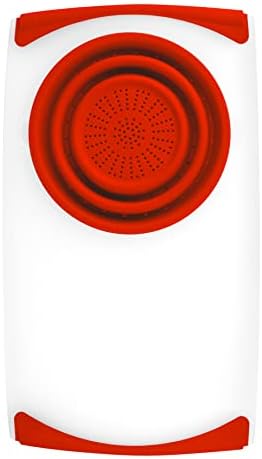
    Dexas over-the-sink plastic cutting board with removable colander

    The Dexas Over the Sink Poly Cutting Board with Collapsible Colander Strainer is the most straightforward option on this list. It is designed as a standalone over-the-sink board rather than as an accessory for one particular sink system.

    Why we selected it

    The design concentrates on two useful functions: a cutting surface and a removable strainer. The board measures 20 inches long by 11.5 inches wide and 1 inch thick. Its non-slip rubber edges are intended to grip the supporting surface, and the included strainer collapses for storage.

    The strainer has a documented 2.5-quart capacity and can also be used separately as a colander. The board is made from polyethylene, which Dexas describes as durable, non-porous, odor-resistant, and gentle on knives. The product listing also identifies the board and strainer as dishwasher safe.

    That combination makes more sense than many large accessory bundles. The colander has a clear purpose: rinse or drain produce directly over the sink.

    Who it suits

    This is the best fit for:

    • Renters or homeowners with a standard sink rather than a workstation sink
    • Kitchens where counter space is genuinely limited
    • Shoppers who prioritize easy cleanup over a furniture-like wood board
    • Anyone who wants an integrated strainer without committing to a sink-specific system

    Fit and construction

    The board is a fixed-size, rim-supported design. It does not use telescoping arms or a documented adjustment mechanism. Instead, the rubber edges are meant to grip the surfaces supporting the board.

    That makes the sink’s outside support width particularly important. Measure the area from one supporting edge to the other, not just the inside of the basin. Also check whether the sink rim is level and wide enough to support the board without rocking.

    What we like

    • Clear, useful accessory rather than an oversized bundle
    • Removable colander is easier to handle than a permanently attached insert
    • Dishwasher-safe construction simplifies cleanup
    • Fixed dimensions avoid the potential looseness of telescoping rails
    • Compact enough to store more easily than a large wood workstation

    Potential drawbacks

    The board is only 1 inch thick, and plastic will not have the visual or tactile presence of a substantial hardwood board. A raised edge and juice-channel design may also reduce the uninterrupted cutting area slightly.

    The board is not adjustable, so there is no substitute for measuring. A 20-inch length may work well across one sink but be awkward on another, especially if the counter lip is narrow, uneven, or interrupted by a double-basin divider.

    Who should skip it

    Skip the Dexas if you want a large, heavy wood surface for frequent batch preparation, or if your sink needs a board with adjustable arms. It is also not the right choice for a KRAUS workstation sink where a ledge-mounted accessory would provide a more secure fit.

    2. Crate & Barrel Over-the-Sink Colander and Cutting Board: Best for a More Refined Material Palette

    The Crate & Barrel Over-the-Sink Colander and Cutting Board is the most visually considered option in this group. Its cutting surface is made from Richlite paper composite, with a removable collapsible colander made from silicone and steel. Silicone feet are also listed as part of the design.

    Why we selected it

    The material choice sets it apart from the many bamboo-and-plastic combinations in this category. Richlite is a paper-based composite rather than wood, giving the board a darker, more architectural look while avoiding some of the care concerns associated with natural wood.

    The removable colander is a useful inclusion because it supports a real workflow: prepare ingredients on the board, move them into the colander, and rinse or drain them over the sink. It can also be removed when the full cutting surface is more useful.

    Who it suits

    This product is worth considering for:

    • Shoppers who want an over-sink board that feels less utilitarian
    • Kitchens where visible accessories need to coordinate with the room
    • Readers who prefer composite materials to bamboo
    • Anyone who values a removable prep accessory but does not need a large workstation kit

    Fit and construction

    Crate & Barrel describes the product as an over-the-sink board that fits over most sinks. However, the dimensions were not visible in the product information available for this review, and no adjustable span was documented.

    That limitation matters. Before ordering, confirm the current length, width, thickness, and support geometry directly with Crate & Barrel. Do not rely on the phrase “fits over most sinks” as a substitute for measuring your own sink.

    Treat it as a fixed, rim-supported design unless the current listing states otherwise. Check faucet clearance, the depth of the counter lip, and whether the board would interfere with a sink divider.

    What we like

    • Richlite composite is a distinctive alternative to bamboo or basic plastic
    • Removable colander serves a clear purpose
    • Silicone feet are intended to help keep the board in place while you work.
    • Less visually busy than many overbuilt workstation kits

    Potential drawbacks

    The lack of readily visible dimensions makes this a more difficult recommendation to buy confidently. A product can be well designed and still be wrong for your sink.

    Crate & Barrel currently lists this board as hand wash only, making it less convenient than the Dexas if dishwasher cleanup matters to you. It is also currently listed on clearance, so availability may be limited.

    Who should skip it

    Skip this option if you need a highly adjustable board, if your sink has unusual support geometry, or if you want exact fit information before making a purchase. It is also not the best choice for someone who wants the least expensive functional solution.

    3. KRAUS KCB-WS301SA: Best for a KRAUS Workstation Sink with More Prep Area

    KRAUS wood-grain composite workstation cutting board

    The KRAUS KCB-WS301SA Workstation Kitchen Sink Wood Grain Composite Cutting Board is not a universal over-the-sink board. It is a dedicated accessory for compatible KRAUS workstation sinks.

    Why we selected it

    For the right sink, a ledge-mounted board can be more secure and more integrated than a generic board resting on the rim. The KCB-WS301SA measures 16⅞ inches long by 11 inches wide and ¼ inch thick. Its wood-grain composite construction provides a broad, shallow prep surface that sits on the sink’s integrated workstation ledge.

    It is a good example of why a sink system can be more useful than a generic accessory: provided you already have the compatible geometry.

    Who it suits

    Choose this board if:

    • You already own a KRAUS workstation sink
    • Your sink’s specifications list the KCB-WS301 or KCB-WS301SA as a compatible accessory
    • You want a relatively broad work surface over the sink
    • You prefer composite construction to natural bamboo

    Fit and construction

    The board is designed to sit on the integrated ledge of a KRAUS workstation sink. It does not expand, telescope, or use extendable arms.

    Do not purchase it based on length alone. KRAUS states that its workstation cutting boards are intended for the company’s workstation sink line, and compatibility varies by sink model. A sink with a similar opening may still lack the ledge depth or support points required by the board.

    What we like

    • Dedicated ledge support can provide a cleaner fit than a generic rim board
    • 11-inch depth gives useful everyday prep space
    • Composite construction avoids natural-wood maintenance
    • No unnecessary colander or accessory bundle to store

    Potential drawbacks

    The board is only ¼ inch thick, so it is a different proposition from a thick butcher-block-style board. It also has no included strainer or bowl. That is a benefit for simplicity, but not if your primary reason for buying an over-sink board is rinsing ingredients.

    Most importantly, it is not a general-purpose board for any sink.

    Who should skip it

    Skip it if you do not have a compatible KRAUS workstation sink, or if you need a board that can move between kitchens. If you are still choosing a sink, treat the board as one part of a larger workstation system rather than as a standalone purchase.

    4. Lipper International Bamboo Over-the-Sink Expandable Cutting Board: Best Adjustable Option

    The Lipper International Bamboo Over-the-Sink Expandable Cutting Board is the most flexible choice here for kitchens that need more span than a fixed board can provide.

    Why we selected it

    Unlike the fixed boards above, the Lipper expands from 23.75 inches wide to 34 inches wide. It measures 11.5 inches deep and 0.75 inch thick, with a cutting-board section measuring 20.5 by 9.25 inches.

    That adjustability makes it useful for readers whose sinks are too wide for a fixed 20-inch board or who want a board that can also span part of a stovetop or counter area.

    Who it suits

    This is worth considering for:

    • Wider sinks that need more than a fixed 20-inch span
    • Readers who want an adjustable rather than sink-specific design
    • Kitchens where a substantial bamboo work surface is useful
    • Anyone willing to trade easier fit flexibility for additional storage size and wood maintenance

    Fit and construction

    The board expands to a maximum width of 34 inches. Do not assume that means it will fit every sink up to 34 inches; measure the actual support points and make sure enough of the board or extension mechanism will rest securely on both sides.

    The bamboo construction requires more care than a dishwasher-safe plastic board. The manufacturer specifies hand washing with mild soap and cool water, thorough drying, no soaking, and occasional treatment with food-safe mineral oil.

    What we like

    • Much broader fit range than the fixed-size boards
    • Substantial bamboo work surface
    • No collection of accessories to store
    • Can create temporary work space over a sink or other suitable surface

    Potential drawbacks

    Adjustability adds moving parts and the board is substantially larger to store than the Dexas. It is also not dishwasher safe, and bamboo requires more careful drying and maintenance.

    Who should skip it

    Skip it if a smaller fixed board already fits your sink securely, if dishwasher-safe cleanup is important, or if you do not have a practical place to store a board nearly 24 inches wide even when closed.

    How to Choose an Over-the-Sink Cutting Board

    Measure more than the sink opening

    Before comparing products, measure:

    1. Sink width : measure the relevant support span from left to right.
    2. Sink opening : measure the basin opening, not just the outer sink dimensions.
    3. Front-to-back dimensions : include the usable depth of the sink rim or workstation ledge.
    4. Surrounding counter lip : note whether the board will rest on stone, laminate, a narrow rim, or a recessed ledge.
    5. Faucet clearance : check the faucet base, handle movement, and any pull-down sprayer.
    6. Double-basin dividers : determine whether the divider can support the board or will cause rocking.
    7. Usable workspace : account for colanders, bowls, handles, and the part of the sink that will remain accessible once the board is installed.

    A product dimension is not automatically a fit dimension. The board may be 20 inches long, but the important question is where and how those 20 inches are supported.

    A piece of cardboard cut to the listed dimensions can help you visualize counter overhang and faucet interference. It cannot confirm load-bearing stability, but it can reveal whether the board would make your sink awkward to use.

    Choose the material based on maintenance

    • Plastic or polyethylene: Usually the easiest to clean, and the Dexas board reviewed here is listed as dishwasher safe. It is practical for produce preparation and households that prioritize low maintenance.
    • Bamboo: Offers a warmer appearance and a thicker, more traditional cutting-board feel. It requires more careful drying and should not be left immersed in water.
    • Composite: Can provide a slimmer, more architectural design with less natural-wood maintenance. Care instructions vary, so do not assume dishwasher safety or heat resistance without verification.

    Material quality matters, but it comes after fit and stability.

    Fixed versus adjustable designs

    Adjustable boards can span more sink widths, but adjustment mechanisms introduce additional parts that may flex, loosen, or collect food residue. A fixed board with broad, stable support can be the better design when it fits your sink precisely.

    If you choose an adjustable model, look for clearly published minimum and maximum dimensions. “Fits most sinks” is not enough information by itself.

    Simple board versus workstation system

    A simple board is usually easier to store and clean. A workstation system can offer better integration, but only when the sink has the intended ledges or support points.

    A colander is useful when you regularly rinse produce or drain ingredients directly over the sink. Extra bowls, trays, phone slots, knife holders, and storage features deserve more skepticism. Each accessory occupies space and adds another surface to wash.

    Plan for storage

    Measure the board when it is not in use. A 20-inch board may fit across the sink but not inside a standard cabinet. Thicker wood or bamboo boards often need to stand vertically, while collapsible accessories may reduce the total storage footprint.

    The best over-sink board is one you can put away without creating a second storage problem.

    Who Should Not Buy One

    An over-the-sink cutting board is probably not worth buying if you:

    • Already have enough counter space for a normal cutting board
    • Have a sink with a narrow, uneven, or poorly supported rim
    • Need unrestricted access to the entire sink throughout meal preparation
    • Frequently wash large cookware while cooking
    • Dislike storing a large board vertically or above the sink
    • Have a double-basin sink with a divider that cannot support the board securely
    • Prefer a dishwasher-only kitchen routine but are considering wood or bamboo
    • Would get more use from a narrow counter board, folding prep surface, or wall-mounted solution

    If the board blocks the faucet or turns a useful sink into an awkward shelf, it has not created workspace. It has only moved the inconvenience.

    The Things Well Chosen Recommendation

    For most readers with a conventional sink, the Dexas Over the Sink Poly Cutting Board with Collapsible Colander Strainer is the most sensible place to start. It has clear dimensions, a useful removable accessory, documented dishwasher-safe care, and no sink-specific workstation requirement.

    For readers who need an adjustable span, the Lipper International Bamboo Over-the-Sink Expandable Cutting Board is the more flexible choice, expanding from 23.75 inches to 34 inches wide. For owners of a compatible KRAUS workstation sink, the KCB-WS301SA offers a broad, integrated prep surface designed specifically for the workstation ledge.

    The Crate & Barrel option is worth considering for its refined composite material and restrained accessory set, but its dimensions should be confirmed before purchase. That is the larger lesson with this category: measure first, then choose the board that earns its space.

    For more ideas about making a small kitchen work harder without filling it with unnecessary equipment, see our guide to 7 Small-Kitchen Tools That Actually Earn Their Space and Small Kitchen Fixes That Make a Big Difference. Browse more practical recommendations in the Things Well Chosen Kitchen.

  • 7 Small-Kitchen Tools That Actually Earn Their Space

    7 Small-Kitchen Tools That Actually Earn Their Space

    A small kitchen does not necessarily need fewer useful tools. It needs fewer mediocre ones.

    Every cutting board, bowl, appliance, and organizer competes for limited drawer, cabinet, or counter space. That raises the standard. A tool should solve a problem you encounter often, replace more than one bulky item where appropriate, store efficiently, or noticeably improve cooking and cleanup.

    The seven categories below are worth considering because they can do more than look clever in a small space. None is universally right for every kitchen, though. The useful question is not whether a product saves space. It is whether it saves enough space and effort to justify the room it still takes up.

    For broader layout and organization ideas, see our guide to Small Kitchen Fixes That Make a Big Difference. This list takes a narrower view: tools that earn their physical place through repeated use.

    1. An over-sink cutting board or workstation

    The problem it solves: You need more prep surface but have little or no counter space.

    An over-sink cutting board turns the sink into temporary workspace. Depending on the design, it may also hold a colander or bowl for rinsing produce and collecting scraps. That combination can make meal prep more comfortable without requiring a permanent counter extension.

    It is most useful for apartment kitchens, galley layouts, and anyone who regularly prepares vegetables, fruit, sandwiches, or small meals. It can also help when the sink is wider than the available counter.

    Look for:

    • A stable fit for your actual sink width
    • A board that does not flex noticeably under a mixing bowl
    • Secure, non-slip supports or extendable arms
    • A smooth surface that is easy to clean
    • A removable colander only if you will genuinely use it

    The details that are often not worth paying extra for include elaborate juice channels, multiple attachments, and overly complicated sliding parts. Each added feature creates another surface or crevice to clean.

    The main tradeoff is fit. An over-sink board that sits unevenly, blocks the faucet, or leaves too little room for the basin is not useful storage: it is an awkward object in the way. Measure the sink before buying, including any divider, faucet clearance, and surrounding counter lip.

    Skip it if: you already have a comfortable prep surface or your sink shape makes a stable fit unlikely.

    Over-sink cutting board and drying rack in a compact kitchen sink area

    2. A roll-up over-sink drying rack

    The problem it solves: A conventional dish rack permanently occupies the counter.

    A roll-up rack uses the space above the sink for drying dishes, rinsing produce, or resting a hot item briefly, depending on its construction and stated heat resistance. When the sink area needs to work for another task, it can roll up and move to a drawer or cabinet.

    This category makes particular sense for households that hand-wash only a few dishes at a time or need a temporary drying area rather than a full-size rack. It may also be useful for rinsing produce without setting a colander directly on the counter.

    Prioritize:

    • A length and width that match your sink
    • Sturdy, corrosion-resistant rods
    • Non-slip ends that sit securely on the counter or sink rim
    • Enough support for the dishes you typically wash
    • A design with few tight crevices and easy-to-rinse surfaces

    Do not assume every roll-up rack is suitable for hot cookware. If you want to use one as a trivet, verify the manufacturer’s heat guidance rather than treating the feature as universal. Thin rods, loose silicone ends, and racks that sag under ordinary dishes are also poor compromises.

    The tradeoff is capacity. A roll-up rack is usually better for controlled, short-term drying than for a household that washes a large load of dishes by hand.

    Skip it if: your sink is too small for a stable fit or you need more drying capacity than the rack can reasonably provide.

    3. Nesting mixing and prep bowls

    The problem they solve: Several bowl sizes consume the space of several bowl sizes.

    A well-designed nesting set gives you several useful bowl sizes for whisking, tossing, holding ingredients, serving, and sometimes storing leftovers while taking up little more cabinet space than the largest bowl. That is a straightforward form of space efficiency: the tools remain useful because they are not sacrificing the primary job of a bowl.

    Nesting bowls are especially worthwhile for people who cook from ingredients rather than relying entirely on one-pot meals. They are also useful in kitchens where cabinet shelves are shallow or where loose bowls tend to become an unstable stack.

    Look for smooth interiors, sturdy rims, and shapes that nest without requiring careful rearrangement. Stainless steel is durable and light, while glass or thick, well-made plastic may offer advantages for storage or microwave use. Choose based on your routine rather than assuming one material is best for every kitchen.

    Features that may not justify a higher price include built-in graters, elaborate lids, unusual shapes, and measurement markings you are unlikely to use. A lid is useful when it fits securely and stores neatly; a collection of loose lids can erase the space savings.

    The tradeoff is that a nested set may not include the exact size or depth you need. Some lightweight bowls also move around while mixing, while heavier materials take more effort to lift and store.

    Skip it if: you already own a compact set of bowls that stacks well and your kitchen has no recurring bowl-storage problem.

    Nesting bowls, immersion blender, and compact kitchen storage in a warm editorial setting

    4. A magnetic knife strip or other vertical knife storage

    The problem it solves: Knives take up valuable drawer space and become difficult to retrieve safely.

    Vertical knife storage can free valuable drawer space and make frequently used knives easier to identify and retrieve. A magnetic strip is one option; a wall-mounted knife block or slim in-cabinet rack may be better for renters, households with children, or anyone who prefers concealed storage.

    The important features are not decorative wood species or oversized capacity. Look for secure mounting, enough length for the knives you actually own, and a surface that holds each knife firmly without requiring forceful removal. Installation hardware matters because a storage solution is only as good as its attachment to the wall.

    Avoid paying for a strip sized for an imaginary knife collection. More capacity usually means more visual presence, not more usefulness. Also be cautious with magnetic designs that leave blades exposed in a busy walkway.

    The tradeoffs are safety, installation, and appearance. Wall-mounted storage requires drilling in many cases, and open knives may not suit every household. A strip also needs to be positioned where handles and blades will not interfere with nearby cabinets or food preparation.

    Skip it if: you rent without permission to mount it, have young children who can reach it, or already have a safe drawer insert that works well.

    5. A compact immersion blender

    The problem it solves: You want to blend soups, sauces, dressings, or small batches without storing a full-size blender.

    An immersion blender stores in a drawer or narrow cabinet and can often blend directly in a pot or tall container. That makes it useful for cooks who prepare soups, sauces, purées, or smaller portions more often than smoothies and frozen drinks.

    Choose a model with a detachable blending shaft, a comfortable grip, and food-contact parts that are straightforward to wash. A stainless-steel shaft can be a sensible durability choice. If the product includes a whisk or chopper attachment, consider whether you will use it enough to justify storing it.

    Extra speed settings, oversized accessory kits, and a storage stand are not automatically valuable. A large set can turn one compact tool into several loose pieces. The best version is one whose core function justifies the space it takes up without relying on a large collection of attachments.

    The tradeoff is capability. An immersion blender may not produce the same results as a full-size blender for large batches or very smooth frozen drinks. It can also splash if used in a shallow container.

    Skip it if: you rarely blend anything or already own a countertop blender that handles your routine without creating storage problems.

    6. A shelf riser or vertical cabinet organizer

    The problem it solves: Cabinet height is being wasted, while short stacks of dishes or pantry items become difficult to reach.

    A shelf riser creates a second level inside a cabinet. A vertical divider can do a similar job for cutting boards, baking sheets, trays, or lids. These are not exciting purchases, but they can make existing storage significantly easier to use without adding another piece of furniture.

    This category benefits people with tall cabinets, deep shelves, or a collection of flat items that currently lean in an unstable pile. It earns its place when it improves access as well as capacity. If you can remove one plate without disturbing everything around it, the organizer is doing useful work.

    Prioritize dimensions, load stability, and a surface that will not slide easily. Adjustable versions can be helpful when the cabinet may change, but adjustment mechanisms should not make the unit wobbly or difficult to clean.

    Do not pay for elaborate modular systems when a simple, correctly sized riser will solve the problem. Avoid organizers that make a cabinet technically hold more while leaving no clearance to remove anything.

    The tradeoff is that every riser also takes up some vertical and horizontal room. Poorly chosen versions can reduce flexibility rather than improve it.

    Skip it if: your cabinets are already easy to access or you have not edited out duplicate dishes and unused pantry items first.

    7. A compact toaster oven: only when it replaces something

    The problem it solves: You need small-batch baking, reheating, or toasting without relying on a full-size oven or keeping several separate appliances.

    A compact toaster oven is the one category on this list that deserves unusually strict scrutiny. It can earn its footprint when it replaces a toaster and gets frequent use for reheating, roasting, or cooking smaller portions. It may also reduce the need to heat a full-size oven for modest tasks.

    Before buying, measure the available counter depth and check the required clearance around the appliance. Then consider capacity. A model that cannot accommodate the dishes or portions you actually cook may be too limited, while a larger one may consume the space it was supposed to save.

    Useful features include removable racks and a crumb tray, controls that are easy to wipe, and a door and rack system that feel sturdy. Preset programs and digital displays are secondary. They are not worth much if the appliance is difficult to clean or awkward to store.

    The tradeoff is permanent footprint and heat. Unlike the other tools here, a toaster oven usually needs a designated counter position and cannot simply disappear into a drawer after use. It may also duplicate an oven, toaster, or air fryer.

    Skip it if: you do not expect to use a small oven frequently, cannot provide the manufacturer-required countertop clearance, or already have another appliance covering the same jobs.

    The space test for anything else

    Before bringing home another kitchen tool, ask five questions:

    1. What recurring problem does it solve?
    2. How often will I realistically use it?
    3. Does it replace or improve on something I already own?
    4. Can I clean it without adding an unwanted chore?
    5. Where will it live when the task is finished?

    A product does not earn space merely because it folds, nests, mounts, or collapses. Those features matter only when the tool still performs its main job reliably.

    The strongest small-kitchen purchases are usually quiet ones: a workstation that creates prep space, bowls that store as one, a blender that replaces a larger machine, or an organizer that makes existing cabinets easier to use. For more practical ideas, explore the Things Well Chosen Kitchen section. The goal is not to fit more into the room. It is to make room for the tools you will actually reach for.