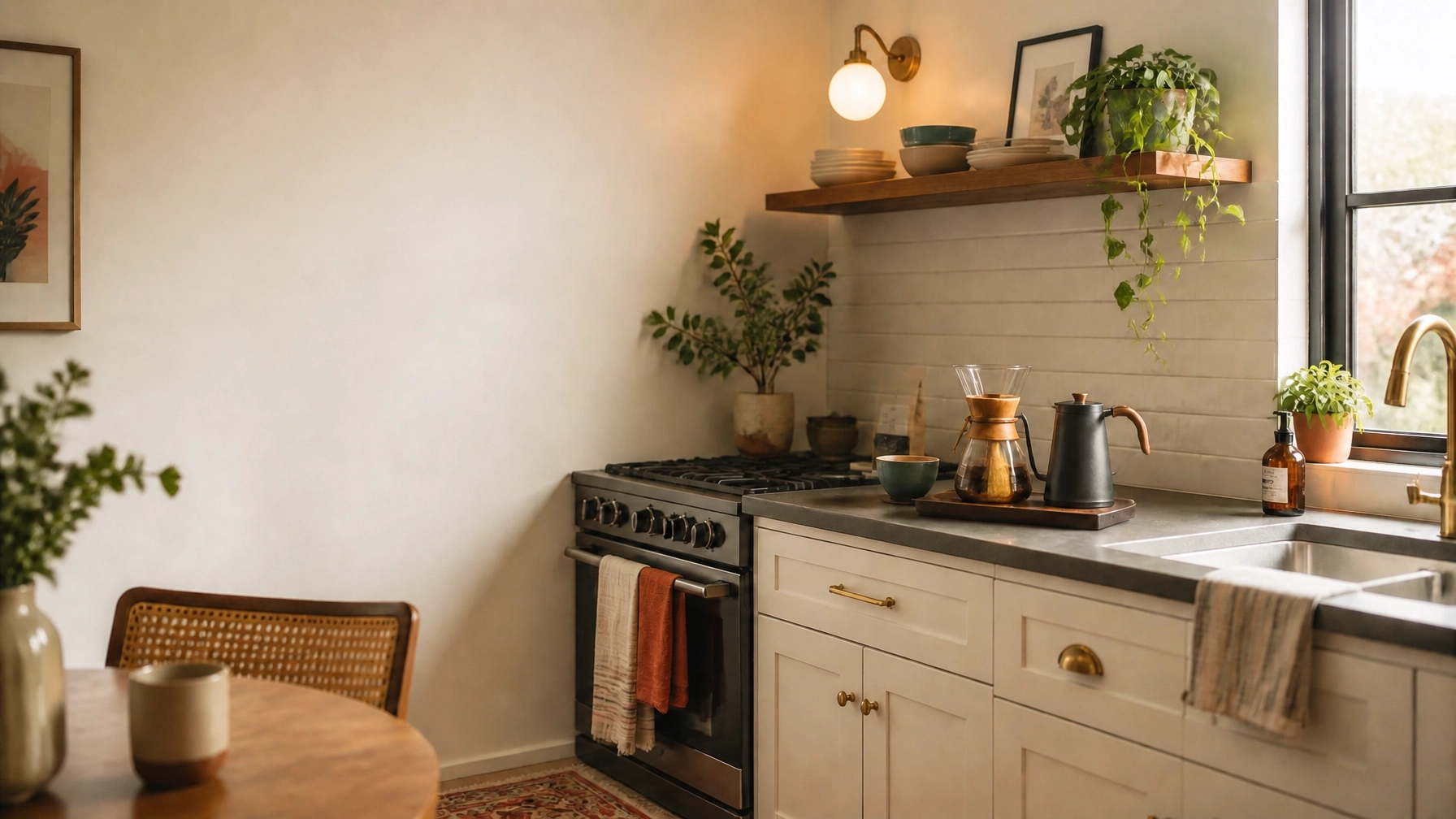
A small kitchen usually does not have a space problem so much as a decision problem. Too many tools live too close together, the counter becomes storage, and everyday tasks start taking more effort than they should.
The fixes that help most are rarely dramatic. They are the quiet changes that make the room easier to move through, easier to clean, and easier to keep that way.
Whether you are working with a galley kitchen, a compact apartment layout, or a kitchenette with limited cabinets, the goal is the same: make space for the tasks you actually do, not the version of cooking you imagine doing someday.
Start with subtraction, not storage
Before you buy anything, edit what is already there.
Small kitchens punish indecision. Duplicate tools, bulky serving pieces, mismatched containers, and one-job gadgets take up space long after they stop being useful. In many cases, the first improvement is simply removing what does not earn its place.
Work one zone at a time:
- Remove broken, incomplete, or expired items
- Pull out duplicates
- Move seasonal pieces elsewhere
- Set aside tools you rarely reach for
- Reconsider appliances that take up significant shelf or counter space
This part is not glamorous, but it is often the highest-return step. A drawer with fewer things in it works better than a drawer with better organizers and the same clutter.
It is also the right time to measure. Check drawer depth, cabinet height, shelf width, and the clearance under the sink before buying inserts or bins. Many organizing products are helpful; many are also slightly the wrong size.
Organize by task, not by label
A kitchen works better when the things you use together live together.
That sounds obvious, but plenty of small kitchens are arranged by vague category rather than actual routine. If your prep bowls are across the room from your cutting board, or your cooking utensils live nowhere near the stove, the room is asking you to do extra work all day.
A simple zone setup is usually enough:
- Prep: knives, cutting boards, mixing bowls, measuring tools, oils, salt
- Cook: pans, pot lids, spatulas, wooden spoons, oven mitts
- Store: leftovers, food containers, wraps, pantry overflow
- Clean: dish soap, brushes, cloths, dishwasher pods, trash bags
- Coffee or tea: mugs, beans or tea, filters, kettle, grinder if you use one
If your layout is awkward, do not chase perfection. Prioritize frequency. Daily-use items should be easiest to reach. Weekly-use items can go one shelf higher or lower. Rarely used pieces can leave the kitchen entirely.
That distinction matters. In a small kitchen, convenience should be reserved for what actually supports daily life.
Protect your counter space aggressively
Counter space is not empty space waiting to be filled. It is your primary work surface.
When a small kitchen feels frustrating, the counter is often the reason. If it is holding appliances, mail, oils, fruit bowls, and decorative extras, there is no room left for the tasks a kitchen needs to do well.
Keep out only what earns a near-daily spot. For some households, that may be a coffee maker and toaster. For others, it may be an electric kettle and one crock for utensils. Everything else should justify its presence with real frequency of use.
A few additions can be worth considering if they create working space without becoming permanent clutter:
- Over-sink cutting boards
- Roll-up drying racks
- Nesting mixing bowls
- Collapsible colanders
- Folding or collapsible prep tools
These categories make sense because they give something back when space is tight. They are most useful when they store flat, nest compactly, or disappear when the task is over.
What is usually worth skipping: countertop gadgets bought for occasional ambition, bulky decor that blocks work space, and organizers that create the feeling of order while still taking up the surface you need.
Use the walls and cabinet interiors before adding furniture
In a small kitchen, the next good storage area is often vertical, not freestanding.
Unused wall space, cabinet doors, and the insides of lower cabinets can do more than people expect, especially if the goal is to store awkward items cleanly rather than add more volume everywhere.
A few categories are especially useful:
- Magnetic knife strips
- Narrow wall shelves
- Inside-door racks
- Vertical dividers for cutting boards, trays, and baking sheets
- Shelf risers for short stacks of dishes or pantry items
- Pull-out shelves in deep lower cabinets
These are worth considering because they improve access, not just capacity. That is an important distinction. A cabinet packed more tightly is not necessarily better organized if you still have to unload half of it to reach one item.
There are tradeoffs. Open wall storage can look good in photos and feel chaotic in real life if you are not naturally tidy. Pull-out shelves can be helpful in lower cabinets, but only if the dimensions work and the items stored there justify the cost. A magnetic knife strip frees up drawer space, but it may not suit renters or households with very young children depending on placement.
A narrow cart can help too, but only if it has a defined job and a defined parking spot. If it becomes a rolling pile of overflow, it is adding clutter on wheels.
Fix the cabinets you already have
Deep cabinets and catch-all drawers create friction because they hide things well.
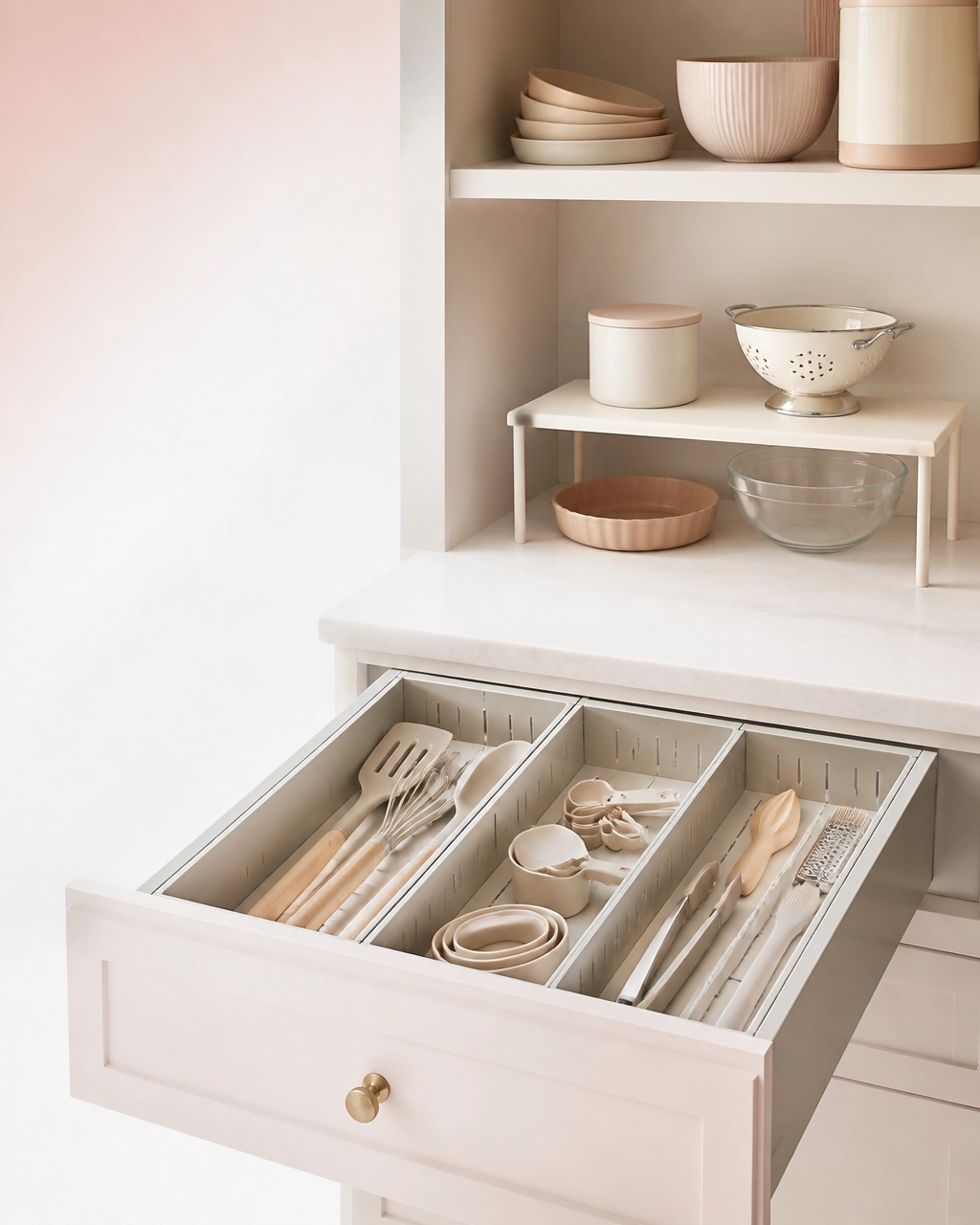
This is where a few restrained upgrades can do real work. Shelf risers help when vertical space is being wasted. Pull-out shelves make heavy or bulky items more accessible. Vertical dividers stop trays and lids from collapsing into each other. Underused height becomes usable only when you can still see and reach what is there.
Drawers need the same level of honesty. If a drawer has become a mixed pile of utensils, measuring spoons, bag clips, peelers, and batteries that wandered in from another room, no one is going to enjoy using it. Simple dividers are often enough.
A few standards tend to hold up:
- Store the most-used items in the easiest spot
- Keep heavier equipment low
- Store lids vertically where possible
- Keep appliance attachments with the appliance
- Leave enough room to remove one item without shifting several others
Food-storage containers deserve special scrutiny. A small, stackable system is often more useful than a large assortment of random shapes. The goal is not aesthetic uniformity for its own sake. The goal is being able to put containers away without creating a plastic avalanche every time.
Build a pantry system that is easy to maintain
You do not need a walk-in pantry to store food well. You do need a system that is visible, consistent, and realistic.
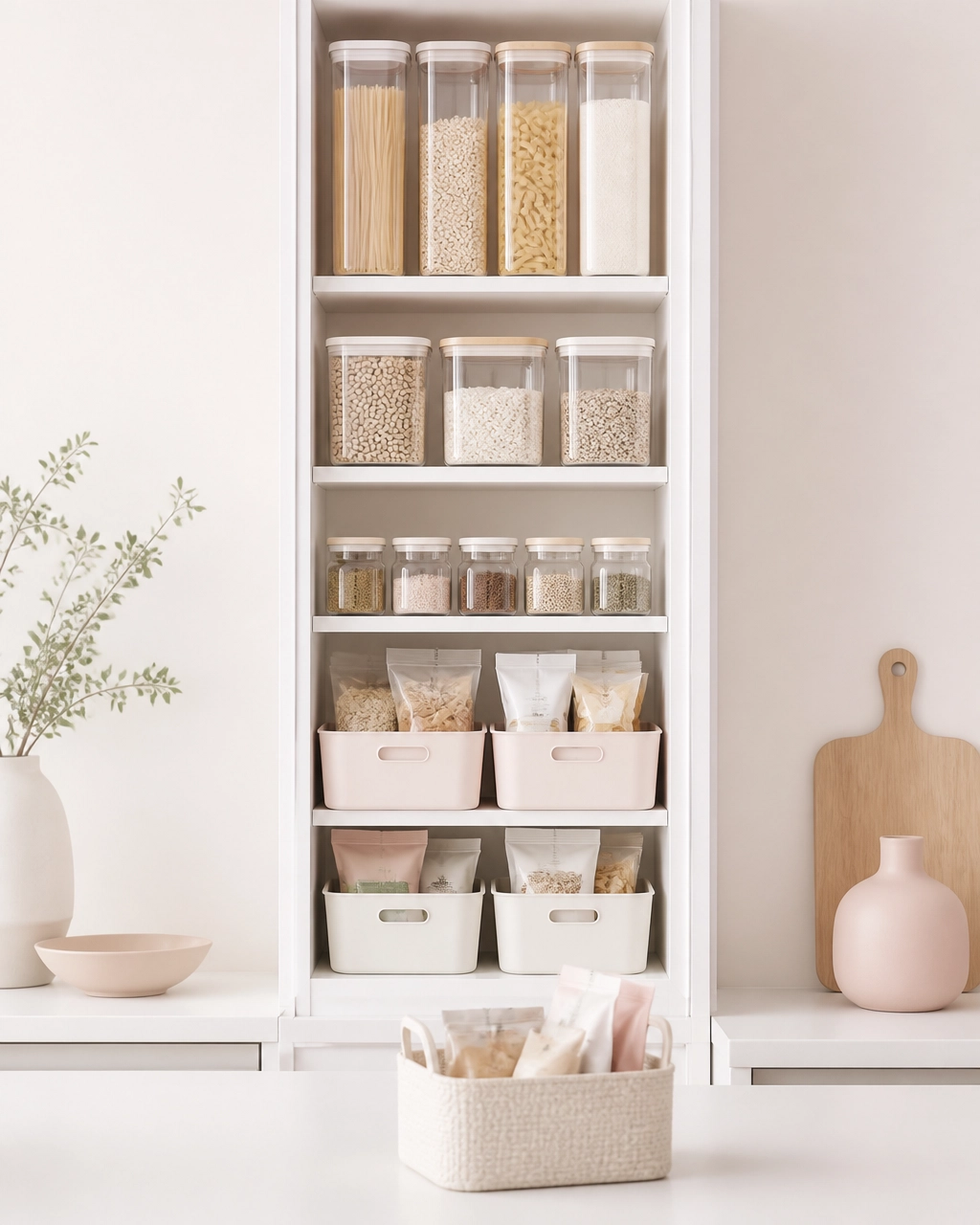
Group food by use rather than by packaging. Breakfast items together. Baking supplies together. Snacks together. Canned goods together. Items that need to be used soon in one obvious place.
Bins are often more practical than a full set of matching canisters. They contain smaller packets, keep like items together, and make it easier to pull out a category at once rather than hunt through the back of a shelf.
If you want this to last, keep the rules simple:
- Group by use
- Label broad categories, not every single item
- Keep a visible “use first” area
- Leave open space for groceries coming in
The most successful pantry systems are the ones that still make sense on a busy weeknight.
Be harder on appliances than on almost anything else
Small kitchens are where appliance optimism goes to die.
An appliance may be useful in theory and still not deserve space in your home. Footprint matters. Cleanup matters. Storage matters. Frequency matters. In a larger kitchen, those tradeoffs are easier to ignore. In a smaller one, every extra machine competes with something more important.
Before buying one, ask:
- Will I use it weekly, or am I shopping for a version of myself?
- Does it replace another tool, or does it simply add one more?
- Can I store it without making the rest of the kitchen worse?
- Is it easy enough to clean that I will realistically keep using it?
Some categories can make good sense in a compact kitchen, depending on routine:
- Slim multi-cookers
- Compact toaster ovens
- Immersion blenders
- Folding or collapsible prep tools
These can be worth considering because they either combine jobs or store more easily than bulkier alternatives. But none of them are universally worth buying. A multi-cooker that rarely leaves the cabinet is still a large object to store. A compact toaster oven is only useful if it genuinely replaces other cooking tasks in your home. An immersion blender is appealing partly because it stores more easily than a full-size blender, but that matters only if it covers the jobs you actually need done.
What is often worth skipping: niche single-purpose appliances, oversized machines bought for occasional projects, and anything that does not have an obvious place to live before it comes home.
Set up the sink area to recover quickly
A small kitchen can go from calm to chaotic after one meal. The sink area determines how quickly it comes back.
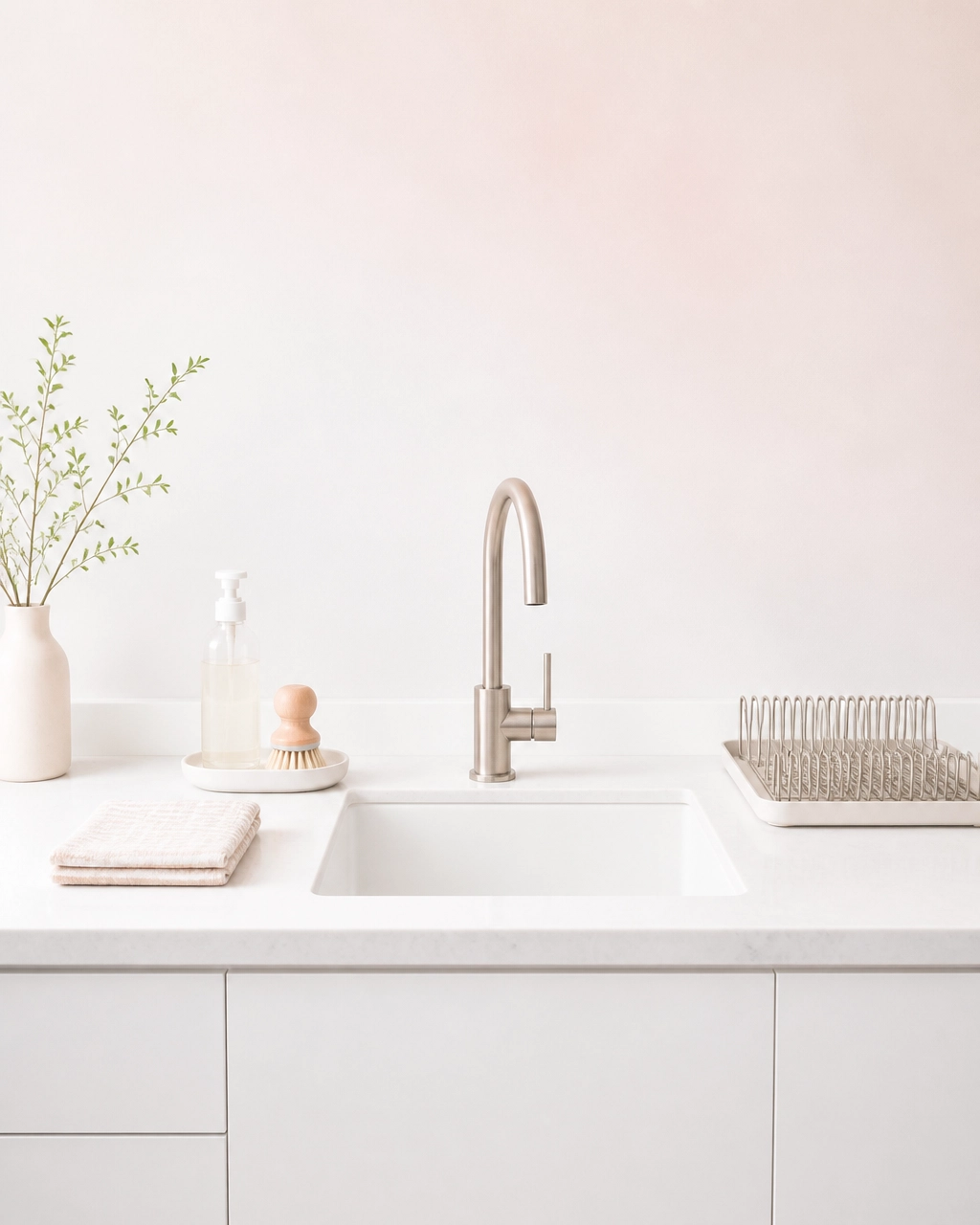
Keep dish soap, brushes, sponges, cloths, and dishwasher supplies close together and easy to reach. Under-sink organizers can be useful here because the space is usually awkward, and loose bottles tend to migrate into a messy cluster fast.
If you are considering cleanup-related categories, these are the ones most likely to earn their place:
- Under-sink organizers
- Compact dish racks
- Slim recycling bins
- Countertop compost containers with lids
- Reusable cleaning cloths
The test is simple: does it make cleanup easier enough to justify the space it takes? A dish rack that permanently dominates a tiny counter may not. A slim bin that fits where a wider one cannot may. A compost container can be helpful if you actually empty it consistently; otherwise it becomes one more thing sitting out.
Try to make reset easy, not elaborate. In a small kitchen, a few habits matter more than a perfect system: deal with dishes before they pile up, wipe the counter after prep, and put ingredients away before the clutter spreads.
Add light where the work happens
Lighting affects function more than many kitchen upgrades do.
If your main prep area is shadowy, the whole kitchen can feel smaller and more tiring to use. Under-cabinet task lights can be a smart addition here, especially versions that brighten the work surface without requiring a major installation. In rentals, plug-in or rechargeable options may be the most practical route.
This is one of those improvements that sounds cosmetic until you live with better visibility. Chopping, measuring, reading labels, and cleaning all get easier when the light is where the work is.
Just keep the goal clear: better task lighting, not decorative clutter under the cabinets.
Change one friction point first
The best small-kitchen fix is usually the one that removes your most repeated annoyance.
Start with the problem that interrupts you most often:
- The counter is never clear
- The pantry is hard to scan
- Baking sheets fall over every time you reach for one
- Food containers do not stack
- Cleanup supplies are scattered
- You have no comfortable place to prep
Then solve that problem with the lightest effective change.
That might mean decluttering first. It might mean adding vertical dividers. It might mean switching to nesting bowls, bringing in a roll-up drying rack, or moving an appliance out of the kitchen entirely. The point is not to organize everything at once. The point is to make the room easier to use this week.
A small kitchen works well when it is edited well. If an item saves time, earns frequent use, and fits your routine, it is worth making room for. If it takes up space, creates one more thing to manage, or solves a problem you do not actually have, you can skip it.
Explore more Things Well Chosen guides for practical ideas, useful upgrades, and things genuinely worth bringing home.