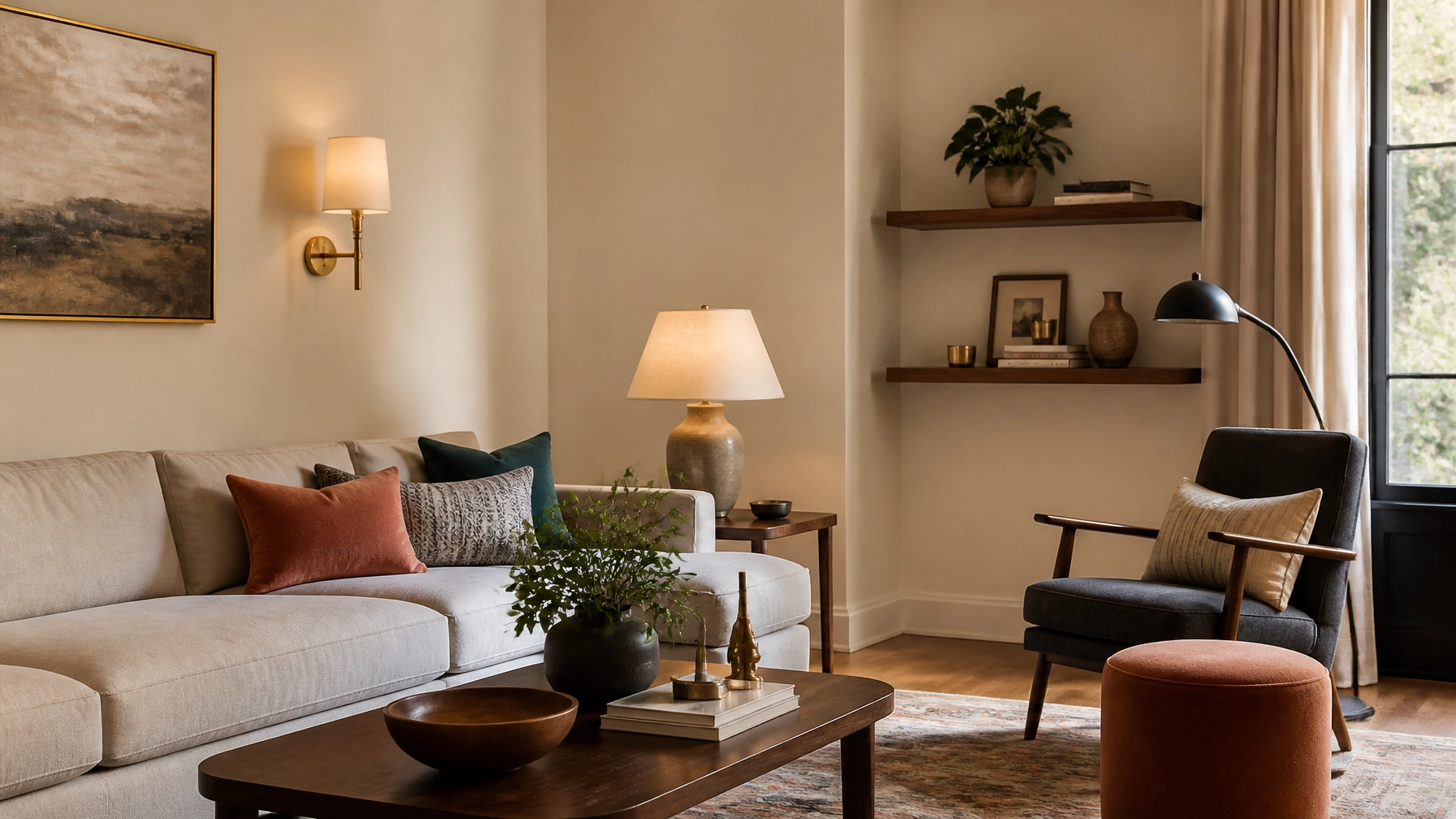
The best small home upgrades are not always the most dramatic ones. They are the changes that remove a repeated annoyance, improve comfort, or help a room work better every day.
That might mean adding light where you actually prepare food, giving keys and shoes a reliable landing place, or replacing a bathroom fan you avoid turning on because it is noisy and ineffective. The improvement may be easy to overlook, but you notice it each time you use the room.
This is the standard worth applying before spending money: What problem does this solve, and will I still appreciate the solution a year from now?
Here are the upgrades most likely to earn their cost, effort, or space in a normal home.
1. Add lighting where the work happens
A single overhead fixture rarely does everything a room needs. It may provide enough general illumination while leaving a kitchen counter, reading chair, desk, or bathroom mirror in shadow.
Layered lighting is often a more meaningful improvement than replacing one decorative fixture. Think in terms of:
- Ambient light for general visibility
- Task light for cooking, reading, grooming, or working
- Accent light for warmth and visual balance
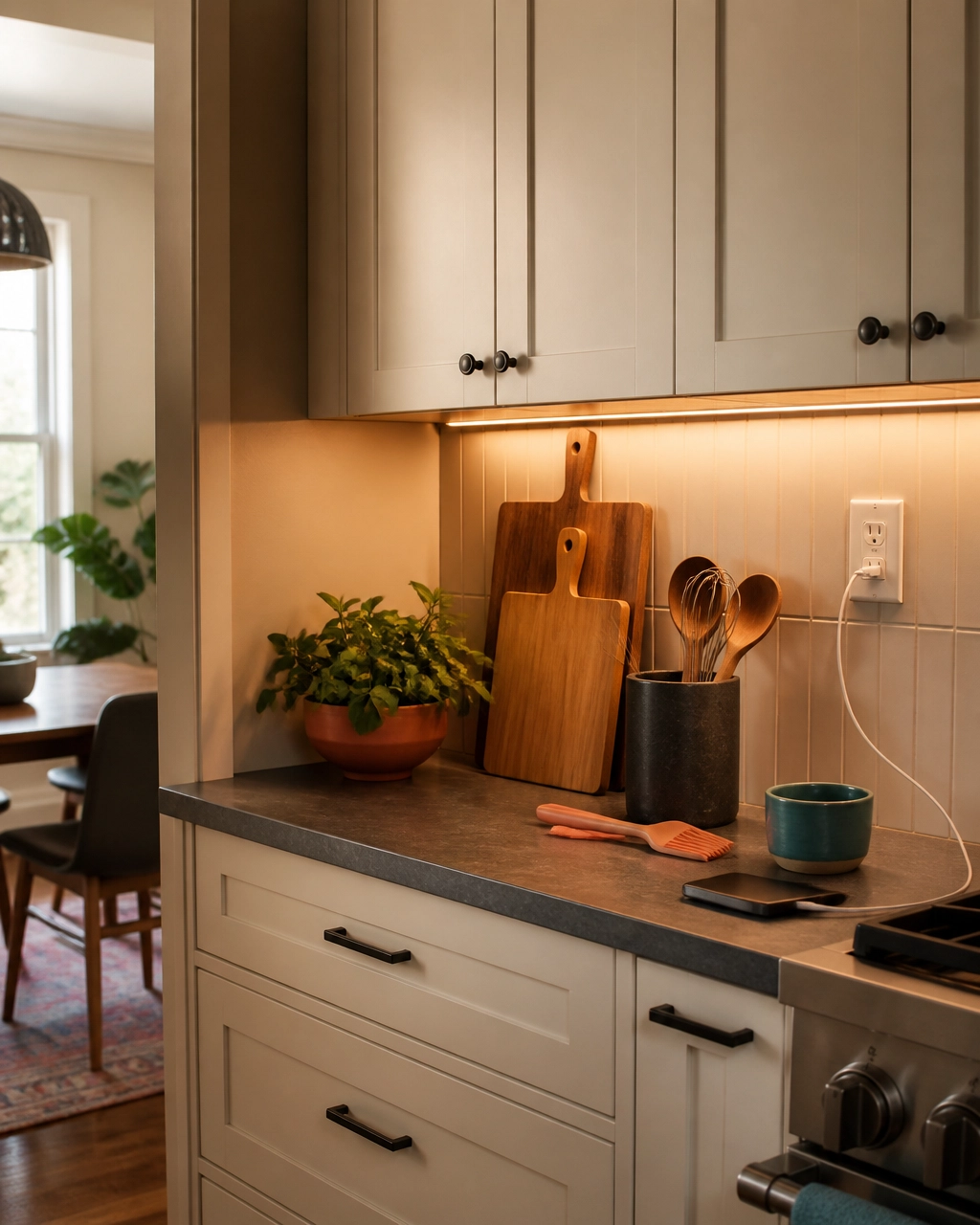
You do not need to rewire the entire room. A well-placed table lamp, floor lamp, plug-in sconce, or under-cabinet light can address the specific area that feels difficult to use.
Who benefits most
This is especially worthwhile in kitchens with shadowy counters, living rooms with one central ceiling fixture, bedrooms without bedside lighting, and home offices where overhead light creates glare.
Renters and anyone avoiding electrical work can look for plug-in, rechargeable, or battery-operated options. Homeowners may also find that a simple lighting change solves the problem without the expense of adding new wiring.
What makes it worth doing
The upgrade earns its place when it improves a repeated activity. Better visibility can make food preparation, reading, cleaning, or getting ready in the morning less tiring. Dimmers can also make a room more adaptable: brighter when you need to see clearly, softer when you are settling in for the evening.
Warmer light often feels more relaxed in living spaces and bedrooms, while kitchens and bathrooms may benefit from a crisper light where tasks require it. More important than choosing one color temperature everywhere is avoiding an accidental mix of noticeably different whites within the same room.
Common mistakes and tradeoffs
Adding lamps without considering cords, switch access, or walking paths can create a new annoyance. Under-cabinet lights should illuminate the counter rather than shine directly into your eyes. A decorative lamp is not automatically useful if it leaves the chair or surface you use most in darkness.
Dimmers and replacement switches also require compatibility checks. Some fixtures and bulbs are not designed to work together, and electrical changes may be better handled by a qualified professional if you are not comfortable with the work.
This upgrade is probably not worth prioritizing if the room already has adequate, well-placed light or if the real issue is a blocked window, dark paint, or furniture arranged in the wrong place.
2. Improve switches, outlets, and charging access
A home can look finished and still be inconvenient to use. The evidence is usually found in the extension cords, crowded power strips, and phones charging on the floor.
Improving electrical access can be a practical upgrade when it is based on how the room is actually used. A dimmer in a living room or bedroom may provide more value than a new ceiling fixture. An outlet with charging access near a desk or entryway may reduce daily clutter. A switch placed in a more intuitive location can make a room easier to navigate.
Who benefits most
Consider this category if you regularly use extension cords, unplug one appliance to use another, charge devices in awkward places, or rely on a lamp that is difficult to reach.
It can be particularly helpful in older homes, rooms that have changed purpose over time, and homes where furniture placement no longer matches the location of the outlets.
What makes it worth doing
The useful question is not whether a newer outlet looks more modern. It is whether the change makes a repeated routine safer or easier.
Before making changes, observe the room for a few days. Where do devices naturally get charged? Which lamp do you wish you could dim? Which outlet is hidden behind furniture? That information is more valuable than installing upgrades everywhere at once.
Common mistakes and tradeoffs
Do not assume every outlet or switch is a straightforward DIY replacement. Existing wiring, box depth, circuit requirements, and local codes can affect what is appropriate. Smart controls can add convenience, but they may require a reliable connection, app management, or a compatible system. More features are not necessarily better if the basic switch is already easy to use.
When an electrical change involves new wiring, unfamiliar components, or a safety concern, bring in an appropriately qualified electrician. The upgrade is not worth compromising safety to complete quickly.
3. Create a real entryway drop zone
Many homes do not have a formal entryway. They still need one.
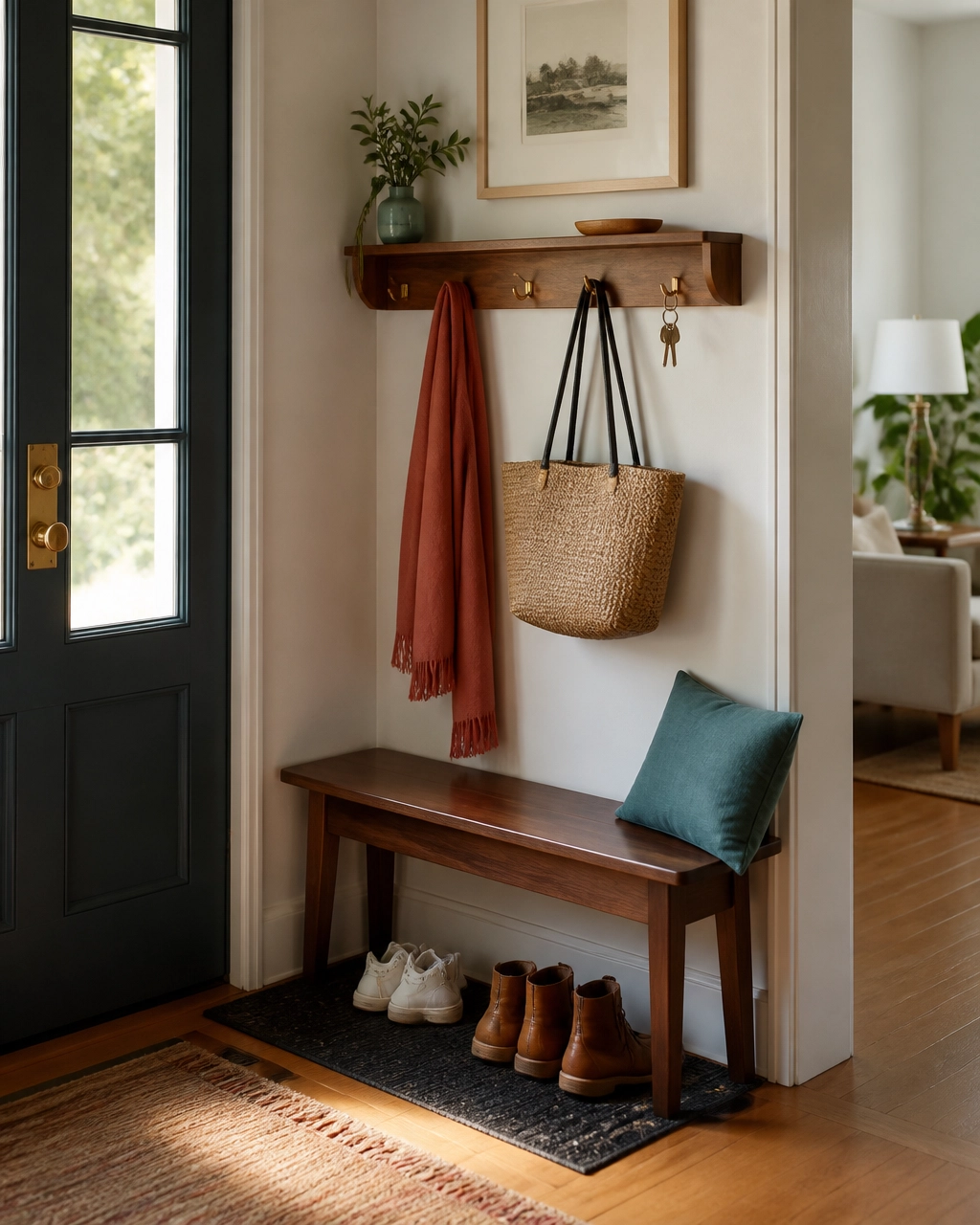
Without a defined landing place, keys, mail, shoes, bags, and outerwear spread across the nearest available surfaces. A narrow wall, a small corner, or the space behind a door can often become a functional drop zone with less furniture than people expect.
A useful setup may include:
- A few sturdy hooks at a practical height
- A shallow shelf or ledge
- A tray for keys and small items
- A low shoe rack or washable mat
- A small bench if the space allows
Who benefits most
This upgrade is most useful for households where clutter collects near the door, where people enter through a narrow hallway, or where shoes and bags tend to migrate from room to room.
It can also help renters because many versions are removable or require only limited installation. A row of hooks and a slim shelf may be enough; a full bench is optional.
What makes it worth doing
The value comes from reducing decisions. When the key tray, bag hook, and shoe location are obvious, the room is easier to reset. A drop zone can also protect floors by giving wet or dirty shoes a contained place to land.
The right arrangement depends on the people using it. Hooks placed too high for children will not solve the household’s actual problem. A beautiful shelf that is too narrow for the items being dropped there will become a decorative obstacle rather than useful storage.
Common mistakes and tradeoffs
Do not create a drop zone larger than the problem requires. A large cabinet can consume valuable circulation space, especially in a small hallway. Open hooks are convenient, but they can look crowded when every coat and bag is left out. Closed storage offers a calmer appearance but requires more effort to put things away.
This upgrade is probably not worth the money if the entryway is already functional and the clutter is really coming from having too many coats, shoes, or bags. Edit the volume first. Storage cannot correct an excess problem indefinitely.
4. Upgrade window treatments for privacy, light, and proportion
Window treatments earn attention when they solve a practical issue as well as improving the room’s appearance.
The right shade or curtain can reduce glare, improve privacy, soften harsh daylight, and make a room feel more settled. In bedrooms, room-darkening layers may support better rest. In home offices, light-filtering treatments can make screens easier to use. In bathrooms, privacy matters more than decorative effect.
Who benefits most
This is worth considering if curtains stop short of the floor, rods are too narrow for the window, rooms feel exposed at night, or sunlight makes certain spaces uncomfortable during the day.
It can also help rooms with awkward proportions. Curtains mounted thoughtfully can give a short window more presence or make a low-ceilinged room feel visually taller.
What makes it worth doing
Prioritize the function of the room. A lined curtain or layered shade may be more useful than a thin decorative panel. In a bedroom, light control matters. In a living room, privacy and softness may matter more. In a bathroom, select materials and mounting methods suited to moisture.
One carefully chosen treatment in the room that causes the most trouble may be enough. There is no need to replace every treatment at once.
Common mistakes and tradeoffs
Oversized or poorly supported rods can sag. Curtains that are too short can make a room feel unfinished, while excessively long fabric may collect dust and become a tripping concern. Pattern and color also deserve restraint; a window treatment should support the room rather than dominate it.
Do not buy treatments before measuring the window, wall, mounting area, and clearance around nearby furniture. An inexpensive panel that does not fit the space is not a value.
5. Make storage easier to reach, not simply larger
Storage improvements are worthwhile when they improve access. Adding more shelves, bins, or furniture without addressing how things are retrieved can make a room feel more crowded and no more functional.
Start with a problem area: a deep cabinet, a chaotic closet, a narrow bathroom, or an entryway with no place for small items. Then choose the lightest solution that makes the contents visible and reachable.
Useful categories can include:
- Adjustable shelf risers
- Vertical dividers for trays and boards
- Wall-mounted shelves or peg rails
- Pull-out organizers for deep cabinets
- Narrow baskets for grouped items
- Hooks on the backs of doors
Who benefits most
This is particularly valuable in small homes, rentals with limited built-ins, and rooms where everyday items disappear into deep or poorly divided storage.
What makes it worth doing
A storage upgrade earns its space when it saves time repeatedly and remains easy to maintain. The best systems do not require elaborate rules. They make it clear where an item belongs and leave enough room to remove one thing without disturbing everything around it.
Measure first. Check shelf depth, door clearance, wall construction, and the size of the items being stored.
Common mistakes and tradeoffs
Bins can hide clutter as easily as they contain it. Open shelving makes frequently used items accessible but requires a level of visual order. Freestanding furniture may add capacity while reducing floor space and making a walkway less comfortable.
If the area contains things you no longer use, decluttering is the upgrade. New storage is unlikely to justify itself when it is only creating a better container for unused belongings.
6. Improve the bathroom’s light, ventilation, and small points of contact
A bathroom does not need a full renovation to feel more comfortable and usable. Small functional changes can matter more than new finishes.
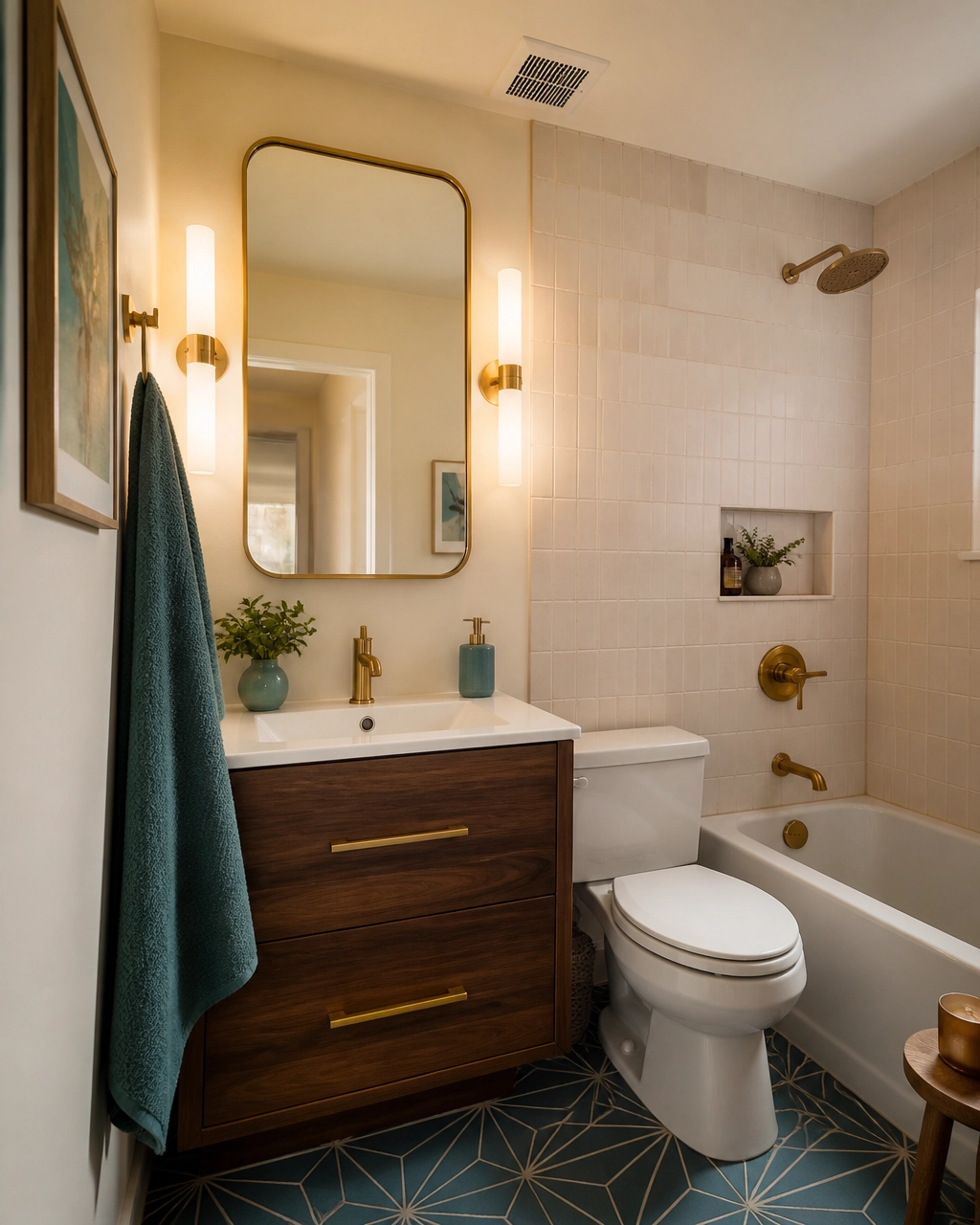
Better vanity lighting can improve grooming and reduce shadows. A sturdier towel hook can keep linens off the floor. A timer or humidity-sensing control may make it easier to run an exhaust fan long enough after a shower. Replacing a tired showerhead or adding a simple shelf may also help if the existing setup is inconvenient.
Who benefits most
Look here if the mirror area is poorly lit, towels never have a practical place to dry, the bathroom stays humid for too long, or shower products collect on the floor or edge of the tub.
What makes it worth doing
Ventilation is a comfort and maintenance issue, not just an aesthetic one. If a bathroom remains damp, start with basic maintenance: clean the fan grille and make sure the fan is operating as intended. If performance is still poor, have the system evaluated before assuming that replacing the fan alone will solve the problem.
A small shelf or hook is worthwhile when it keeps frequently used items off wet surfaces. A light fixture is worthwhile when it improves visibility without producing harsh glare.
Common mistakes and tradeoffs
Do not choose bathroom accessories only for appearance. Materials, mounting strength, moisture exposure, and cleaning needs matter. Adhesive products may be convenient, but they are not suitable for every surface or load. A shelf that makes the shower feel crowded may be less useful than a simple hook outside it.
A bathroom upgrade is probably not worth doing if it adds another surface to clean or solves a problem that could be addressed by moving existing items.
A better way to choose your next upgrade
Walk through your home and note the small frustrations that repeat:
- A work surface that is always too dark
- A door area that collects clutter
- An outlet in the wrong place
- A cabinet that wastes depth
- A window that creates glare or privacy problems
- A bathroom that stays damp or lacks useful storage
Choose one problem, measure the space, and look for the least complicated solution. If the improvement makes a frequent task easier without adding significant maintenance, it is likely worth evaluating.
For more practical ideas for real homes, explore the Things Well Chosen House & Home section. The same editorial test applies throughout: a home upgrade should earn its place by being useful, durable, comfortable, or quietly pleasing to live with—not merely different.